U.S. Forces Train With Allies in Jungle Exercises
U.S. Forces Train With Allies in Jungle Exercises
Anonymous
Key Points
1
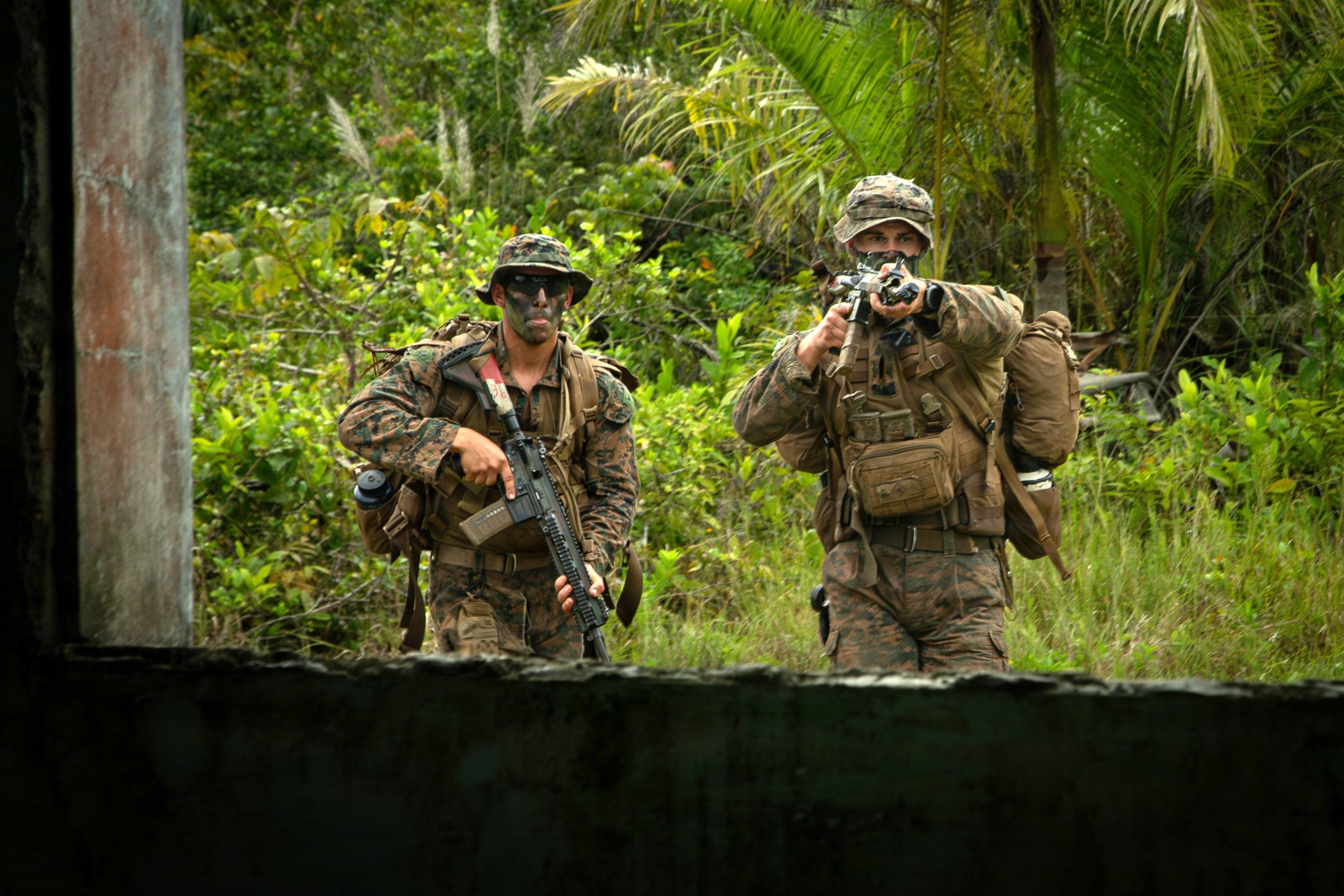
Yudh Abhyas 2026 involved Soldiers from the U.S. Army’s 11th Airborne Division and the Indian Army operating in Auli, India. Their jungle squad drills used simulation rounds as units navigated dense vegetation and engaged targets.
2
The Yudh Abhyas training concluded with a joint rappelling exercise down a rock face, reinforcing mountain-warfare skills considered important for operations in the high-altitude terrain around Auli.
3
Capt. Jared Fonzi of U.S. Army Western Hemisphere Command described the physical strain of operating in the Peruvian jungle by saying, “Multiply fatigue by 10,” citing the combined effects of climate, terrain and exhaustion.
4
Southern Vanguard gave U.S. troops an opportunity to learn from Peruvian forces with extensive local knowledge of Amazon terrain—experience that U.S. Army reporting said is difficult to replicate in the United States.
U.S. troops trained alongside Indian and South American forces in two major jungle exercises designed to sharpen combat skills in extreme terrain. During Exercise Yudh Abhyas 2026 in India's Auli region, American soldiers from the 11th Airborne Division practiced small-unit tactics and mountain warfare with the Indian Army. Simultaneously, about 400 U.S., Peruvian and Chilean personnel conducted waterborne operations and survival training in Peru's Amazon basin during Southern Vanguard 2026.
Both exercises emphasized learning from allied nations' specialized expertise. A U.S. Army captain noted that operating in Peru's jungle multiplies fatigue "by 10" due to heat, rugged terrain and water obstacles. U.S. Army reporting stressed that the Peruvian forces' deep knowledge of Amazon conditions is difficult to replicate back home.
Mountain Warfare Drills in the Indian Himalayas
Soldiers from the U.S. Army's 11th Airborne Division deployed to Auli, India, to train with Indian Army forces on high-altitude jungle operations. The exercise included squad-level drills where troops navigated dense vegetation while using simulation rounds to practice targeting. Army Recognition reported that both nations also trained together on the M777A2 and Dhanush 155mm howitzers to improve artillery coordination.
The training concluded with a joint rappelling exercise down a rock face, a skill essential for mountain-warfare operations in high-altitude terrain. U.S. Army noted that soldiers from both nations also tested equipment and flew drones together, building hands-on familiarity with each other's military systems.
Amazon Jungle Operations Test Physical Limits
About 400 U.S., Peruvian and Chilean personnel gathered in Peru for Southern Vanguard 2026, conducting waterborne movement, jungle swimming and survival drills in Amazon terrain. The austere environment presents unique challenges: extreme heat, dense vegetation, swollen rivers and limited infrastructure complicate even basic movement. Capt. Jared Fonzi of U.S. Army Western Hemisphere Command said the physical strain "multiplies fatigue by 10" compared to standard training conditions.
The exercise gave American troops direct access to Peruvian and Chilean forces with extensive local knowledge. U.S. Army emphasized that this hands-on learning from allies with deep Amazon expertise is extremely difficult to replicate in U.S. training facilities, making field exercises in Peru invaluable for building jungle-operations capability.
Building Long-Term Military Interoperability
Both exercises served a broader strategic purpose: strengthening U.S. military ties with India, Peru and Chile. Joint training builds mutual trust and shared understanding of tactics, equipment and operational procedures. When allied forces train together regularly, they can coordinate more effectively during actual deployments or crisis response.
The exercises also allow American forces to learn defensive strategies suited to specific regions. Mountain warfare in the Himalayas differs sharply from jungle survival in the Amazon. By rotating personnel through diverse allied exercises, the U.S. military expands its tactical toolbox and prepares soldiers for the varied terrain and climates they may encounter worldwide.
Sentiment
Mostly PositiveNEGATIVENEUTRALPOSITIVE
Publishers
16
Articles
9
Reach
25
A
AnonymousAuthor


