Trilateral Military Exercises Begin
South Korea, U.S., and Japan Launch Freedom Edge 2026 Trilateral Military Exercises
Anonymous
Key Points
1
Freedom Edge 2026 is the exercise’s fourth iteration. At the opening ceremony, Lt. Gen. Stephen Jost said the three countries “stand together on common interests” and are prepared to preserve Indo-Pacific peace and security.
2
The three countries will jointly operate an exercise control group during the drills, adding a coordinated command-and-control element to the maritime, air and cyber activities.
3
South Korea’s Ulchi Freedom Shield exercise was originally scheduled for Aug. 17-27 but ended Aug. 21; associated live-training events were reduced, canceled or converted to simulations. President Donald Trump cited the cost of the drills and his relationship with North Korean leader Kim Jong-un, calling the exercises a “totally inappropriate and hostile” signal to Pyongyang.
4
South Korea is participating with the Aegis destroyers ROKS Seoae Ryu Seong-ryong and ROKS Yulgok Yi I, while Japan has deployed the Aegis destroyer JS Atago, destroyer JS Asahi, a P-1 maritime patrol aircraft, an SH-60K helicopter and F-15 fighters. The U.S. destroyer USS Benfold, which arrived in Busan on Sept. 3, is also viewed as a possible participant.
5
Freedom Edge began in June 2024, followed by iterations in November 2024 and September 2025; Seoul said this year’s force scale would be comparable to last year’s and emphasized that the drills are defensive and conducted in accordance with international law.
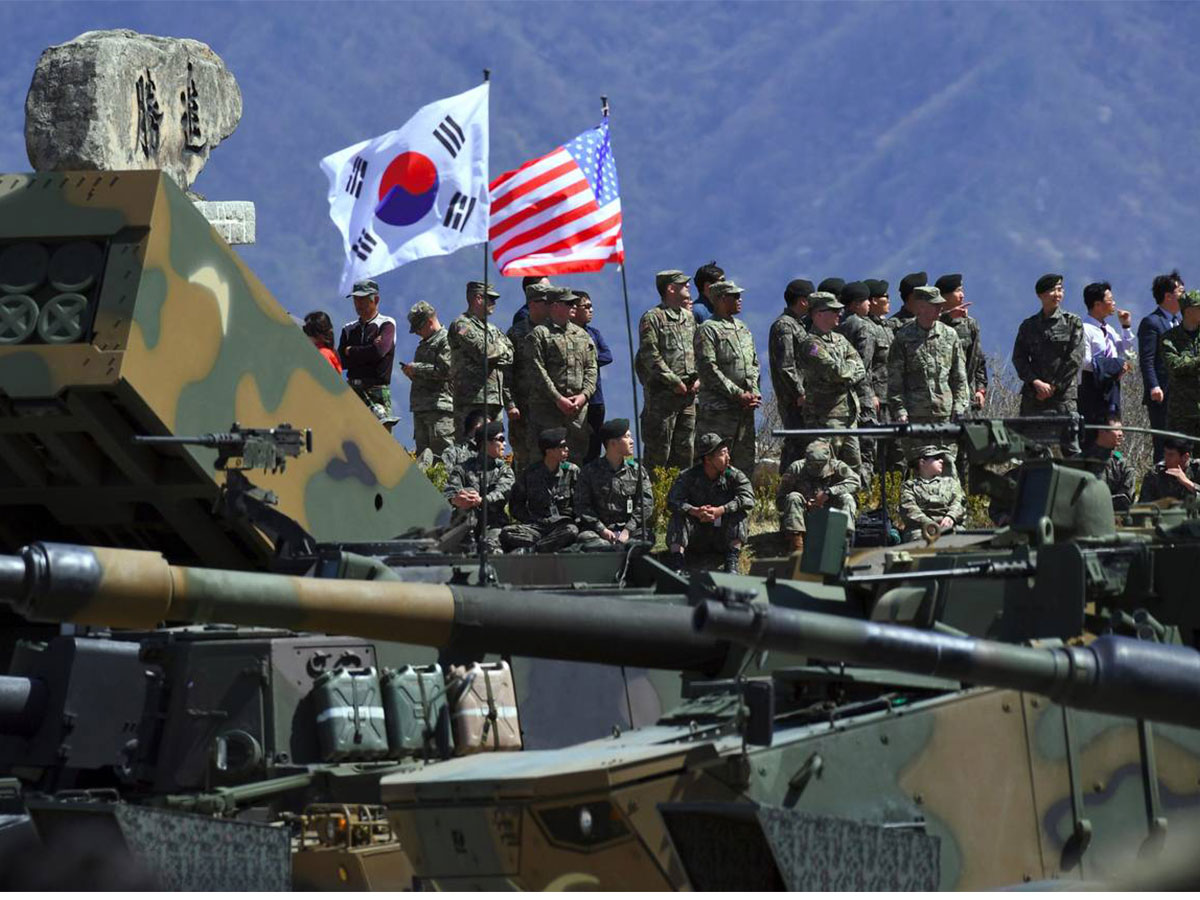
South Korea, the United States and Japan launched Freedom Edge 2026 on September 7, a five-day trilateral military exercise designed to strengthen coordination and deter North Korea's nuclear threats. UPI reported the drills span maritime, air, cyber and integrated air-and-missile-defense operations in international waters near Jeju Island, involving Aegis destroyers, fighter jets and patrol aircraft from all three nations.
The exercise marks the fourth iteration of Freedom Edge and comes as Army Recognition notes rising North Korean missile threats intensify pressure on the alliance. However, the absence of a U.S. aircraft carrier for the second straight year reflects Washington's stretched military commitments in the Middle East, signaling potential shifts in Korea-focused deterrence strategy.
Trump's Cuts to Korean Drills Stir Seoul Concerns
President Donald Trump recently ordered the U.S.-South Korea Ulchi Freedom Shield exercise shortened and reduced, citing costs and his relationship with North Korean leader Kim Jong-un. The exercise, originally scheduled for August 17-27, ended August 21 with many live-training events canceled or converted to simulations. Trump called the drills "totally inappropriate and hostile" signals to Pyongyang, alarming defense officials in Seoul who worry Washington is deprioritizing Korea.
Three-Nation Command Structure Adds Coordination Layer
QNA highlighted that the three countries will jointly operate an exercise control group during Freedom Edge 2026, adding a coordinated command-and-control element to maritime, air and cyber operations. This unified structure strengthens interoperability and demonstrates shared commitment to regional security, a key objective of the trilateral alliance amid North Korea's expanding weapons programs.
Warships and Aircraft Deployed Across the Alliance
South Korea is participating with Aegis destroyers ROKS Seoae Ryu Seong-ryong and ROKS Yulgok Yi I. Japan deployed Aegis destroyer JS Atago, destroyer JS Asahi, a P-1 maritime patrol aircraft, an SH-60K helicopter and F-15 fighters. The U.S. destroyer USS Benfold, which arrived in Busan on September 3, is expected to join the drills in international waters.
Defensive Posture Amid Growing Regional Tensions
North Korea Times reported that officials from all three nations emphasized the drills are defensive and conducted in accordance with international law. Lt. Gen. Stephen Jost said at the opening ceremony that the allies "stand together on common interests" and are prepared to preserve Indo-Pacific peace and security. Seoul confirmed this year's force scale remains comparable to last year's, maintaining consistent deterrence messaging to the North.
Sentiment
Mostly NegativeNEGATIVENEUTRALPOSITIVE
Publishers
33
Articles
46
Reach
79
Topics
A
AnonymousAuthor


