North Korea Threatens Response to Trilateral Drills
North Korea Threatens Response to Trilateral Drills
Anonymous
Key Points
1
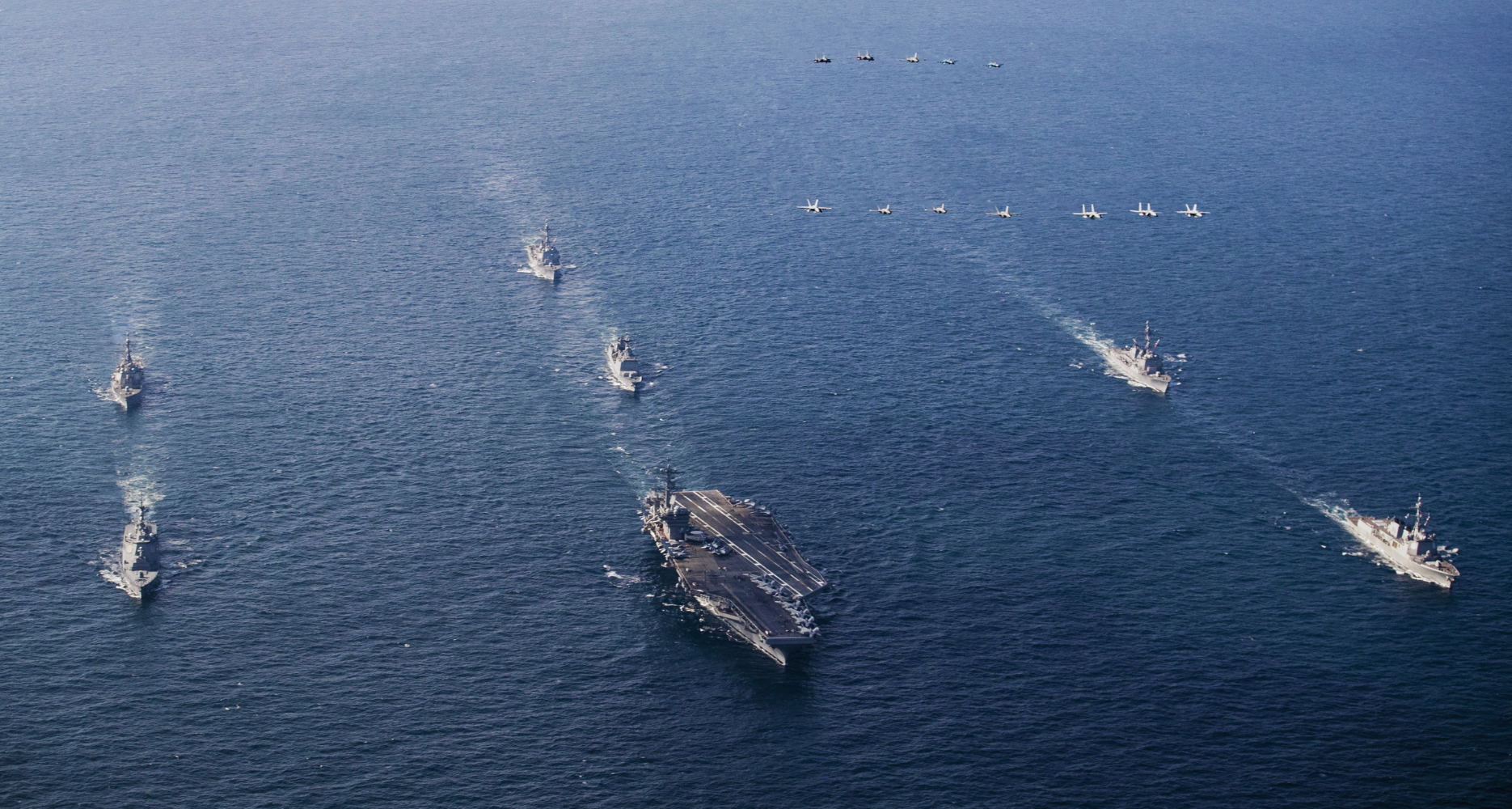
Freedom Edge was designed to improve the three countries’ joint capabilities in air, maritime, cyber and integrated missile-defense operations. The exercise took place in international waters and airspace south of South Korea, with activities also conducted at military installations and command posts across Japan.
2
North Korea’s second 5,000-ton destroyer, the Kang Kon, was commissioned at the eastern port of Wonsan in a ceremony attended by Kim Jong Un and his teenage daughter, whom South Korea’s spy service identifies as his likely heir.
3
Experts cited in the report said the Kang Kon and the previously commissioned Choe Hyon were likely built with Russian assistance; North Korea also said in July that it had test-fired nuclear-capable cruise missiles from the Kang Kon.
4
Kim Song-gi, North Korea’s defense minister, characterized the U.S.-Japan-South Korea security framework as “a dangerous, aggressive entity accompanied by nuclear elements” and said Pyongyang would take “powerful and reflexive countermeasures” against any new military confrontation.
5
The report says President Donald Trump had instructed Defense Secretary Pete Hegseth to scale back a separate U.S.-South Korea drill because of its cost and concern about relations with Kim Jong Un, but North Korea rejected the conciliatory gesture rather than changing its policy.
North Korea is escalating its military posture in response to joint drills by the United States, South Korea, and Japan. NK News reports that Pyongyang's new defense minister, Kim Song Gi, warned of a "powerful" response to the Freedom Edge exercise, calling it a "dangerous, aggressive entity accompanied by nuclear elements." The trilateral drill focused on air, maritime, cyber, and missile-defense operations in international waters south of South Korea.
Kim Jong Un has commissioned a second 5,000-ton destroyer called the Kang Kon at the eastern port of Wonsan, signaling North Korea's shift toward naval capabilities. NK News notes that experts believe the vessel was built with Russian assistance and can fire nuclear-capable cruise missiles. The commission ceremony included Kim's teenage daughter, identified by South Korea's spy service as his likely successor.
North Korea Vows Forceful Countermeasures to Drills
Defense Minister Kim Song Gi pledged that North Korea would take "powerful and reflexive countermeasures" against any new military confrontation. NK News reports he labeled the US-Japan-South Korea security framework as a dangerous challenge to Pyongyang's interests. North Korea has consistently characterized such trilateral exercises as nuclear provocations designed to encircle the regime.
The Freedom Edge exercise tested joint capabilities across multiple domains. NK News reports that activities took place in international airspace and waters south of South Korea, as well as at military installations and command posts across Japan. The drill was designed to strengthen coordination among the three allies on defense and deterrence operations.
Kim Jong Un Expands Naval and Nuclear Arsenal
The Kang Kon represents North Korea's second major warship commissioning in recent years. NK News confirms the vessel is a 5,000-ton destroyer equipped with cruise-missile capabilities. North Korea claimed in July that it had successfully test-fired nuclear-capable cruise missiles from the Kang Kon, demonstrating operational readiness of the platform.
Experts believe Russian assistance played a key role in building both the Kang Kon and the previously commissioned Choe Hyon destroyer. This partnership reflects deepening military ties between Pyongyang and Moscow. Kim Jong Un is prioritizing naval strength alongside his existing missile program to create a more "reliable, diversified nuclear deterrent," according to analysts.
Trump's Conciliatory Gesture Rejected by Pyongyang
President Donald Trump instructed Defense Secretary Pete Hegseth to scale back a separate US-South Korea military drill over cost concerns and worries about relations with Kim Jong Un. This move was intended as a diplomatic overture to reduce tensions. However, North Korea rejected the gesture without reciprocating with policy changes.
South Korea's Defense Minister Ahn Gyu-back has called for renewed dialogue between the US and North Korea. Korea Herald reports that Seoul is offering military support to facilitate diplomatic talks. The administration faces pressure to balance deterrence with dialogue while managing broader regional security commitments with its allies.
Military Buildup Obscures Growing Humanitarian Crisis
Human-rights advocates warn that North Korea's weapons expansion is overshadowing the regime's worsening humanitarian conditions and continued abuses. The Epoch Times reports that Greg Scarlatoiu, CEO of the Committee for Human Rights in North Korea, highlighted how military focus diverts attention from civilian suffering. The disconnect between arms development and domestic welfare reflects the regime's priorities.
The humanitarian crisis includes food shortages, limited access to healthcare, and systematic human-rights violations. NTD reports that experts argue policymakers must address both security concerns and the civilian population's needs. North Korea's isolation and sanctions have deepened poverty, even as leadership pursues advanced military systems.
Sentiment
Mostly NegativeNEGATIVENEUTRALPOSITIVE
Publishers
15
Articles
4
Reach
19
Topics
A
AnonymousAuthor


