Aerospace Defense Partnership
Hyundai Rotem and KAI Partner to Develop KF-21 Long-Range Air-to-Air Missiles
Key Points
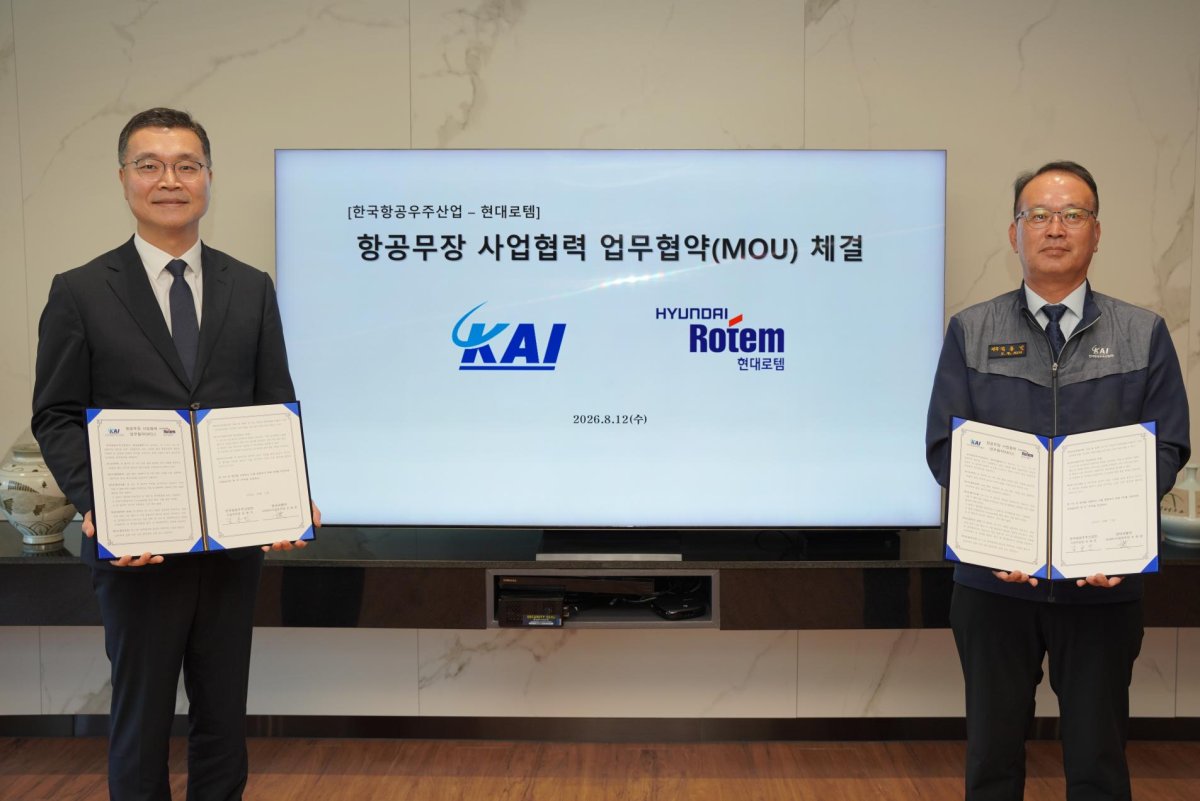
The MOU signing took place on Aug. 12, 2026, at KAI's Sacheon headquarters in South Gyeongsang Province, with Hyundai Rotem executives and KAI leaders in attendance to formalize the aviation-weapons collaboration.
KAI plans to deliver the KF-21 Boramae in multiple batches, targeting 40 aircraft by 2028 and a total of 120 by 2032.
Hyundai Rotem is expanding into aerospace propulsion and hypersonic research, including methane-engine technology for reusable launch vehicles and the HyCore hypersonic vehicle under ADD oversight.
The partnership aims to strengthen South Korea's space industry competitiveness and broaden domestic and overseas markets through Hyundai Rotem's space capabilities in addition to its defense collaboration with KAI.
South Korea's Hyundai Rotem and Korea Aerospace Industries (KAI) signed a memorandum of understanding on Aug. 12, 2026, to jointly develop long-range air-to-air missiles for the KF-21 Boramae fighter jet, according to UPI. The signing took place at KAI's headquarters in Sacheon, South Gyeongsang Province, with executives from both companies in attendance.
The deal marks a major pivot for Hyundai Rotem, best known for ground weapons like tanks. The company is now pushing into aerospace, combining its guided-weapon and propulsion expertise with KAI's aircraft platform know-how to offer bundled defense packages for export, UPI reported.
KF-21 Boramae Gets a Weapons Integration Partner
The KF-21 Boramae is South Korea's homegrown supersonic fighter jet, developed by KAI. Under the new MOU, Hyundai Rotem will work with KAI to integrate long-range air-to-air missiles directly onto the aircraft platform, according to The State. The goal is a fully integrated weapons-and-aircraft system, not just a plane delivered without its firepower.
KAI has ambitious delivery targets for the Boramae. The company plans to hand over 40 aircraft by 2028 and reach a total of 120 jets by 2032, Herald Sun reported. Having a dedicated weapons integration partner helps KAI meet those targets with a combat-ready product from day one.
Bundled Export Packages Target Global Defense Market
The two companies plan to market a "package-type" export model — selling aircraft and onboard weapons together as a single deal. This approach targets the growing global demand for integrated defense solutions, where buyers want one vendor for the plane and its missiles, according to Sacramento Bee.
South Korea has been aggressively expanding its arms exports in recent years. By bundling the KF-21 with domestically developed missiles, Seoul could offer a complete combat package that competes directly with Western and Russian suppliers. The two companies said they will pursue both domestic contracts and overseas marketing together, Star-Telegram reported.
Hyundai Rotem Bets on Aerospace and Hypersonic Research
For Hyundai Rotem, this MOU is part of a broader shift beyond tanks and ground vehicles. The company is investing in aerospace propulsion, including methane-engine technology for reusable launch vehicles, according to UPI. It is also developing the HyCore hypersonic vehicle under oversight from South Korea's Agency for Defense Development (ADD).
Hypersonic vehicles travel at speeds above Mach 5 — five times the speed of sound. By entering this field, Hyundai Rotem is positioning itself alongside global defense giants pushing next-generation weapons. The company said it also aims to boost South Korea's space industry through its new aerospace capabilities, Herald Sun reported.
What the MOU Means for South Korea's Defense Industry
The agreement is more than a business deal — it signals a shift in how South Korea builds its defense industry. Rather than developing weapons and aircraft in separate silos, companies are now teaming up to offer total solutions, according to The State. That model makes South Korean exports more competitive on the world stage.
Both companies said the partnership will strengthen national defense capabilities and deepen technology cooperation. They plan to identify new export opportunities and coordinate global marketing efforts together. The MOU sets the stage for a long-term relationship as the KF-21 program ramps toward its 120-aircraft target by 2032, Star-Telegram reported.
Sentiment
Mostly PositivePublishers
12
Articles
28
Reach
40


