Uber Eats Takes Flight with Zipline
Uber Eats Partners with Zipline to Launch Autonomous Drone Delivery Service Across U.S.
Key Points
Uber's strategic investment in Zipline accompanies a valuation of about $7.6 billion for Zipline after an $800 million funding round earlier this year.
Zipline's drone network has flown over 135 million autonomous miles, completed more than 2.7 million deliveries of more than 20 million items, and serves more than 5,000 hospitals, saving more than 12,000 lives annually.
The rollout will commence in Zipline's current U.S. markets, including Dallas and Houston.
Dara Khosrowshahi has described the demand for fast delivery as insatiable, underscoring Uber's motivation behind the drone partnership.
Uber describes building a hybrid delivery network that integrates couriers, sidewalk robots, and drones to match every delivery with the best mode of transportation.
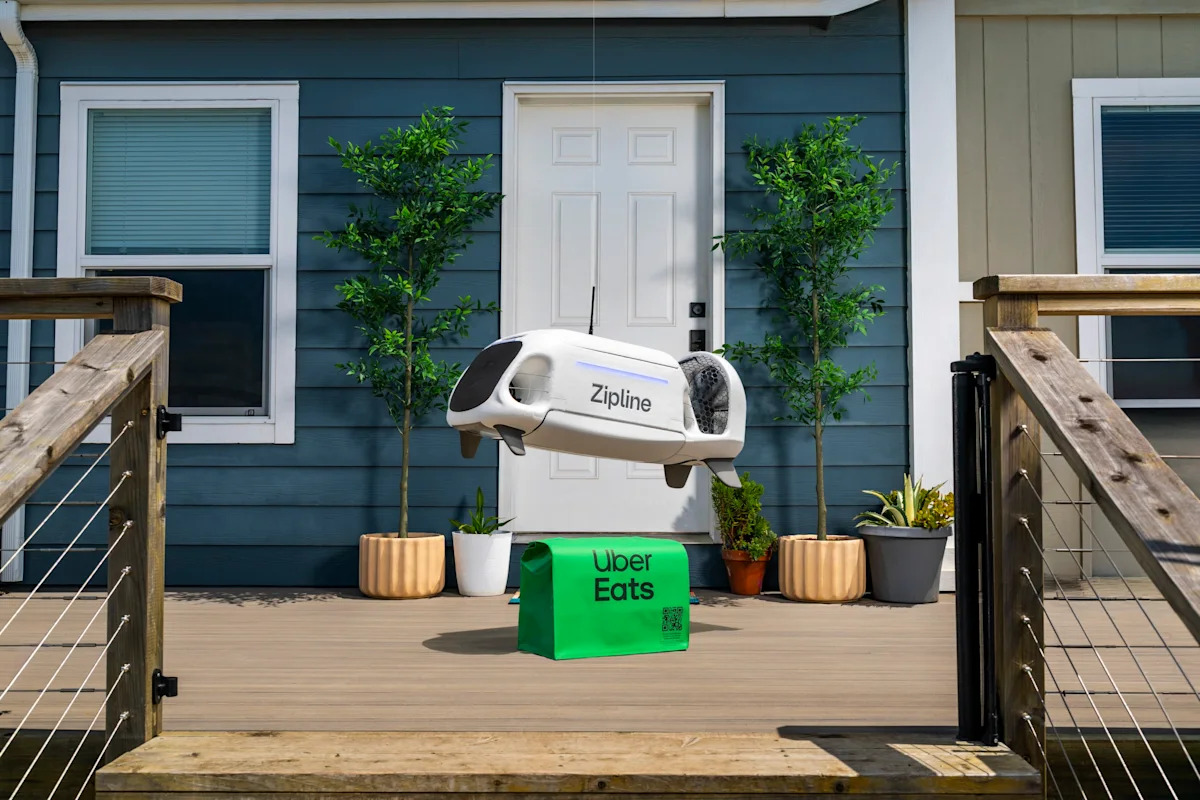
Uber and Zipline announced a partnership to bring autonomous drone delivery to Uber Eats customers across the United States, with a target of one million drone deliveries per day by the end of 2029, according to TechCrunch. Uber is also making a strategic investment in Zipline, which was valued at roughly $7.6 billion after an $800 million funding round earlier this year.
CEO Dara Khosrowshahi has called demand for fast delivery "insatiable," framing drones as a natural next step. The rollout begins later this year in Zipline's existing U.S. markets, including Dallas and Houston, before expanding to dozens of additional cities, Yahoo Finance reported.
Zipline's Drone Network Already Has a Strong Track Record
Zipline is not a startup experimenting with drones. The company has already flown more than 135 million autonomous miles and completed over 2.7 million deliveries, moving more than 20 million items, according to Yahoo Finance. It serves more than 5,000 hospitals across four continents and saves more than 12,000 lives every year.
Zipline is already active in markets like Dallas and Houston. That existing footprint gives Uber a ready-made launchpad. The two companies plan to scale from those cities outward as Zipline expands its U.S. presence nationwide.
Uber Builds a Hybrid Delivery Network With Drones and Robots
Uber is not replacing human couriers. Instead, it is building what it calls a hybrid delivery network, one that mixes couriers, sidewalk robots, and drones, according to TechCrunch. The goal is to match each delivery with the best mode of transport based on speed, distance, and cost.
Zipline says its drones can drop off items in minutes. That kind of speed is hard for a human courier to match in dense or congested areas. The partnership also aims to cut traffic and reduce emissions by taking short trips off the road entirely.
Uber's Drone Push Follows an Earlier Partnership With Flytrex
This is not Uber's first move into drone delivery. The company previously partnered with Flytrex on a similar effort, according to Traders Union. The Zipline deal mirrors that playbook but at a much larger scale, targeting dozens of U.S. cities instead of a handful of test markets.
Zipline will handle the hardware and flight operations. Uber brings the platform, the customer base, and the brand. Together, they are betting that drone delivery can move from a novelty to a core part of how Americans get food and goods at home.
One Million Daily Deliveries Is an Ambitious but Defined Goal
The one million deliveries per day target by end of 2029 is a concrete milestone, not a vague aspiration. TechCrunch reported that both companies are committed to expanding into "dozens of U.S. cities" as part of the deal. That scale would make the Uber-Zipline network one of the largest autonomous delivery operations in the world.
Reaching that number will require rapid regulatory approvals, infrastructure buildout, and consumer trust. But Zipline's existing track record across four continents gives the partnership a credibility that most drone startups lack. The clock starts now, with the first U.S. deployments expected before the end of this year.
Sentiment
Mostly PositivePublishers
16
Articles
130
Reach
146


