Floating Nuclear Power
Startup Bluecore Secures $50 Million to Build Floating Nuclear Reactors for AI Data Centers
Anonymous
Key Points
1
CEO Kofi Asante compared Bluecore’s approach with naval nuclear technology, saying the Navy has used portable nuclear systems for roughly 70 years without an accident and that Bluecore is making the technology smaller and faster to deploy.
2
The reactors are designed to use ocean water for cooling and could be positioned miles from a port, with the barges either moored or anchored like offshore oil rigs.
3
The NRC and Coast Guard have a memorandum of understanding coordinating requirements for the design, construction, operation and oversight of civilian floating nuclear plants; the NRC has said existing federal frameworks can be used to license maritime reactors.
4
Bluecore’s longer-term plans include adding further reactor units as demand grows and eventually supplying power to cargo ships, beyond its initial focus on ports, coastal infrastructure and AI data centers.
5
The new funding round closed in eight weeks and included follow-on investments from Slauson & Co., Harlem Capital and Ripple co-founder Chris Larsen, as well as new backing from Collab Capital, Kevin Hart’s Hartbeat Ventures and angel investors associated with Tesla, Uber, Amazon and Google.
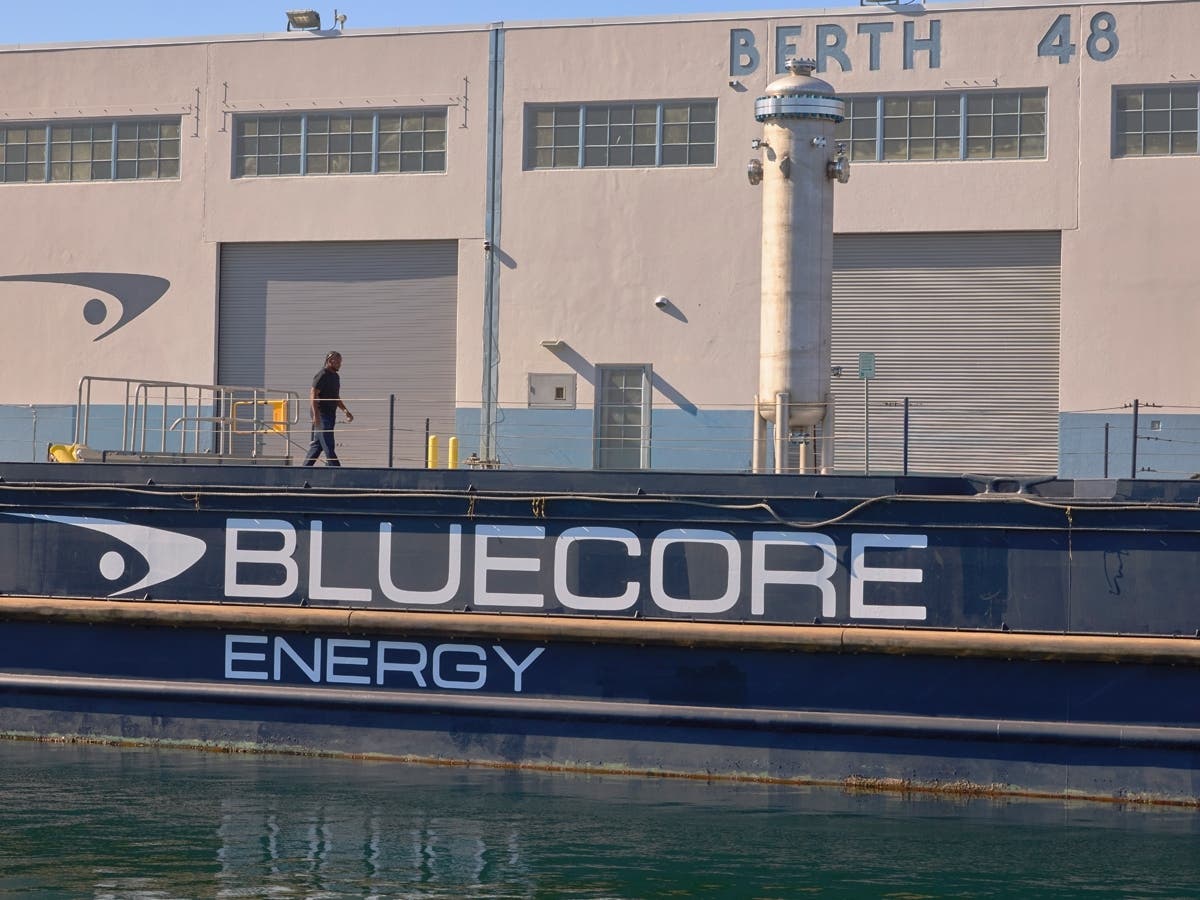
Bluecore Energy has raised $50 million in an oversubscribed seed round to build floating nuclear reactors for ports, coastal areas, and AI data centers. TechMoran reports the Southern California startup, founded by Kofi Asante, plans to deploy compact 10-megawatt reactors on barges anchored offshore, connected to land via subsea cables. The company is currently testing a non-fueled reactor module at the Port of Long Beach and pursuing regulatory approval from the U.S. Nuclear Regulatory Commission and Coast Guard.
Patch notes the funding round closed in just eight weeks and included backing from Silverton Partners, Ripple co-founder Chris Larsen, Kevin Hart's Hartbeat Ventures, and investors tied to Tesla, Uber, Amazon and Google. Most capital will fund engineering, testing and licensing work. Commercial deployment remains several years away, pending safety approvals and maritime classification reviews.
Why Ports Need Floating Nuclear Power
Ports face constant electricity demand from cargo handling, refrigeration and shore power—and that demand keeps growing. Building new grid connections can take years of construction and permitting. A 10-megawatt floating reactor moored offshore eliminates that wait. FinSMES explains Bluecore's design uses ocean water for cooling and can sit miles from port, linked by underwater cable, much like offshore oil rigs operate today.
The Port of Long Beach is Bluecore's first priority customer because it has publicly backed small modular reactors and needs reliable, continuous power. A floating system requires no costly land acquisition or grid upgrades—just a mooring point and cable connection offshore.
Naval Reactors Have Run Safely for 70 Years
Asante drew a direct comparison to the U.S. Navy's portable nuclear systems, which have operated for roughly seven decades without accident. TheCondia reports Bluecore is scaling down that proven technology and speeding deployment timelines. The company's approach borrows from decades of maritime nuclear experience, reducing engineering risk on safety-critical systems.
Both the Nuclear Regulatory Commission and Coast Guard have coordinated oversight frameworks for civilian floating reactors. TechMoran notes federal regulators have confirmed existing licensing rules can apply to maritime nuclear plants, streamlining the approval path.
Testing and Licensing Will Take Years
Bluecore is currently testing a non-fueled, electrically heated reactor module at Long Beach to validate sensors, monitoring and control systems. This phase de-risks engineering and proves the technology works before fuel loads begin. Patch reports the company secured a barge and is working through maritime classification requirements in parallel.
Commercial operation requires coordinated approval from both nuclear and maritime regulators. Bluecore must demonstrate a licensed, fueled system meets all safety standards. The company still needs engineering validation, fuel licensing, and final coast guard certification—a path that typically takes several years, not months.
Larger Plans Beyond Ports
Bluecore's roadmap extends beyond early port deployments. FinSMES notes the company plans to scale by adding multiple reactor units as demand grows and eventually supply power to cargo ships themselves. This would transform maritime logistics by eliminating onboard fuel and emissions while providing continuous power at sea.
Data centers and remote communities represent other high-demand markets where a self-contained, transportable reactor offers clear advantages over waiting years for fixed infrastructure. The $50 million seed round funds the engineering and regulatory groundwork needed to prove this model works—before scaling production.
Sentiment
Mostly PositiveNEGATIVENEUTRALPOSITIVE
Publishers
17
Articles
16
Reach
33
A
AnonymousAuthor


