Solar-Powered AI
Sunrun Launches AI Compute Pilot in 1.1 Million Homes, Tapping Solar for Edge Computing Revenue
Anonymous
Key Points
1
Sunrun appears undervalued based on a P/E of 5.73x, well below the five-year median of 13.95x, with a GF Score of 70/100 indicating potential long-term upside.
2
Insider activity shows about $2.3 million worth of Sunrun shares sold in the last three months, with no purchases reported.
3
Sunrun argues a structural edge over hyperscalers by leveraging a distributed footprint of more than 1.1 million existing customers, creating an addressable deployment base that is hard for large cloud players to replicate quickly.
4
Sunrun is positioned as America's largest on-site provider of home battery storage, solar, and home-to-grid power plants as it expands its distributed AI compute pilot.
5
The expansion frames the venture as the creation of a new distributed edge computing category, emphasizing high-margin revenue opportunities by moving compute closer to energy sources.
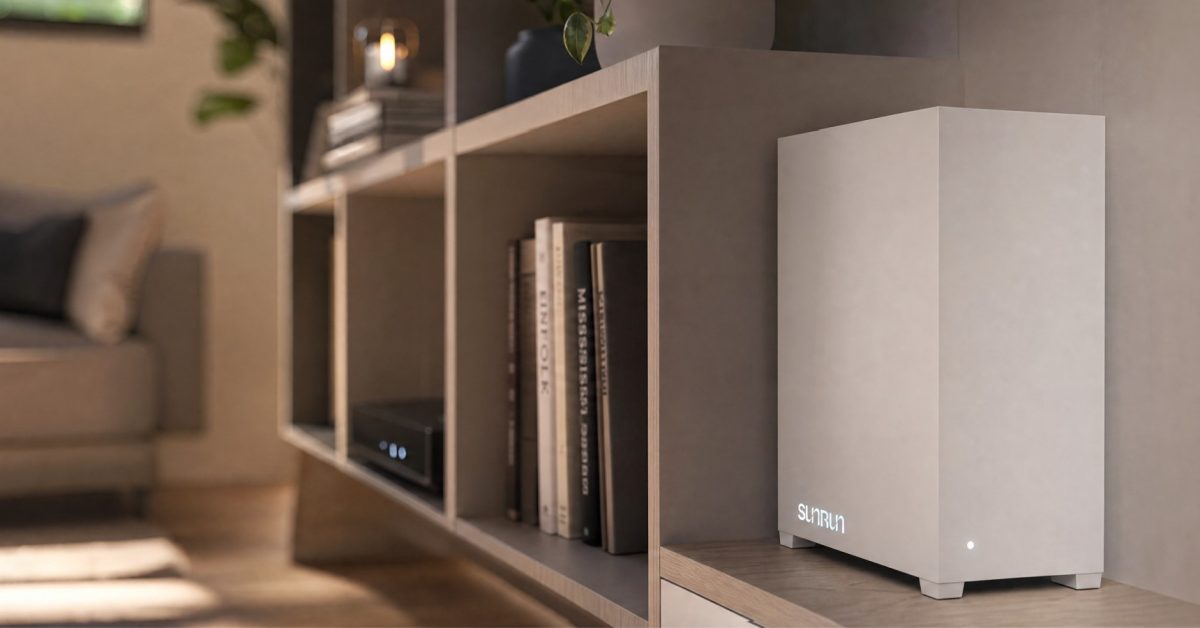
Sunrun wants to turn roughly 1.1 million American homes into a distributed AI data center. The residential solar company has launched a pilot program that installs AI compute nodes inside homes already equipped with Sunrun solar panels and battery storage, according to Electrek. Homeowners get paid to host the devices.
The move puts Sunrun — already America's largest home battery storage provider — at the crossroads of clean energy and artificial intelligence. The company plans to sell AI inference capacity to enterprise buyers, creating a potential new revenue stream from its existing network of home energy assets, according to Yahoo Finance.
How the Home AI Compute Network Actually Works
Sunrun installs small compute nodes inside customer homes. The nodes run on power from rooftop solar panels and home batteries already in place. During certain grid outages, the nodes keep running — a key selling point that traditional data centers cannot match, according to Yahoo Finance.
Enterprise customers buy AI inference capacity from the network. Inference means running an AI model to get answers — think chatbots or image recognition — as opposed to training a model from scratch. Because compute sits close to energy sources, Sunrun argues buyers get faster processing at lower cost than going through a big cloud provider.
Why AI Inference Demand Makes This Bet Attractive Now
AI inference demand is growing about 35% every year. McKinsey predicts inference will overtake model training as the dominant AI workload by 2030, according to Yahoo Finance. That shift means companies need far more compute power spread across many locations — exactly what Sunrun's home network could provide.
Sunrun completed a proof of concept before announcing the broader pilot. The company frames this as a brand-new category: distributed edge computing. Edge computing means processing data near where it is used, rather than shipping it to a faraway data center. Sunrun says that model unlocks high-margin revenue it cannot get from solar alone.
Sunrun's 1.1 Million Customer Base Is Its Structural Advantage
Sunrun argues big cloud players like Amazon or Microsoft cannot copy this model quickly. Building a distributed footprint of 1.1 million homes takes years. Sunrun already has it. That existing customer base is the core competitive edge the company is betting on, according to Electrek.
The company is also America's largest on-site provider of home battery storage and home-to-grid power. Its existing grid services expertise — managing power flows between homes and the utility grid — gives it the operational know-how to run a distributed compute network at scale, according to Yahoo Finance.
Stock Looks Cheap but Insiders Are Selling
Sunrun's stock trades at a price-to-earnings ratio of 5.73 times. That is well below its five-year median of 13.95 times, suggesting the market has not yet priced in the AI compute opportunity, according to Yahoo Finance. The company holds a GF Score of 70 out of 100, signaling potential long-term upside.
Still, insiders sold about $2.3 million worth of Sunrun shares in the last three months. No insider purchases were reported in the same period. That gap between a cheap valuation and insider selling is a signal investors will want to watch as the pilot scales up.
Sentiment
Mostly PositiveNEGATIVENEUTRALPOSITIVE
Publishers
11
Articles
31
Reach
42
A
AnonymousAuthor


