Miraculous Skydiving Survival Story
Experienced Skydiver Survives 10,000-Foot Fall After Mid-Air Collision and Tree Landing
Anonymous
Key Points
1
The tracking jump began at about 12,000 feet, with participants diving horizontally to build speed; Wiffen was reportedly struck in the head by another jumper’s leg before losing consciousness.
2
A fellow skydiver tried to reach Wiffen during her descent but could not grab her and had to deploy his own parachute at about 3,000 feet above the ground.
3
Wiffen said the landing area also contained power lines and that rescuers had to push through brambles to reach her; those who saw her fall initially assumed they were going to find a dead person.
4
Describing how narrowly she survived, Wiffen said: “If I hadn't hit the tree I would have hit the ground and would have been soup. Most people don’t survive skydiving accidents like that.”
5
A separate fatal incident occurred at Langar Airfield on July 5, when a 22-year-old skydiver died, according to Nottinghamshire Live’s report.
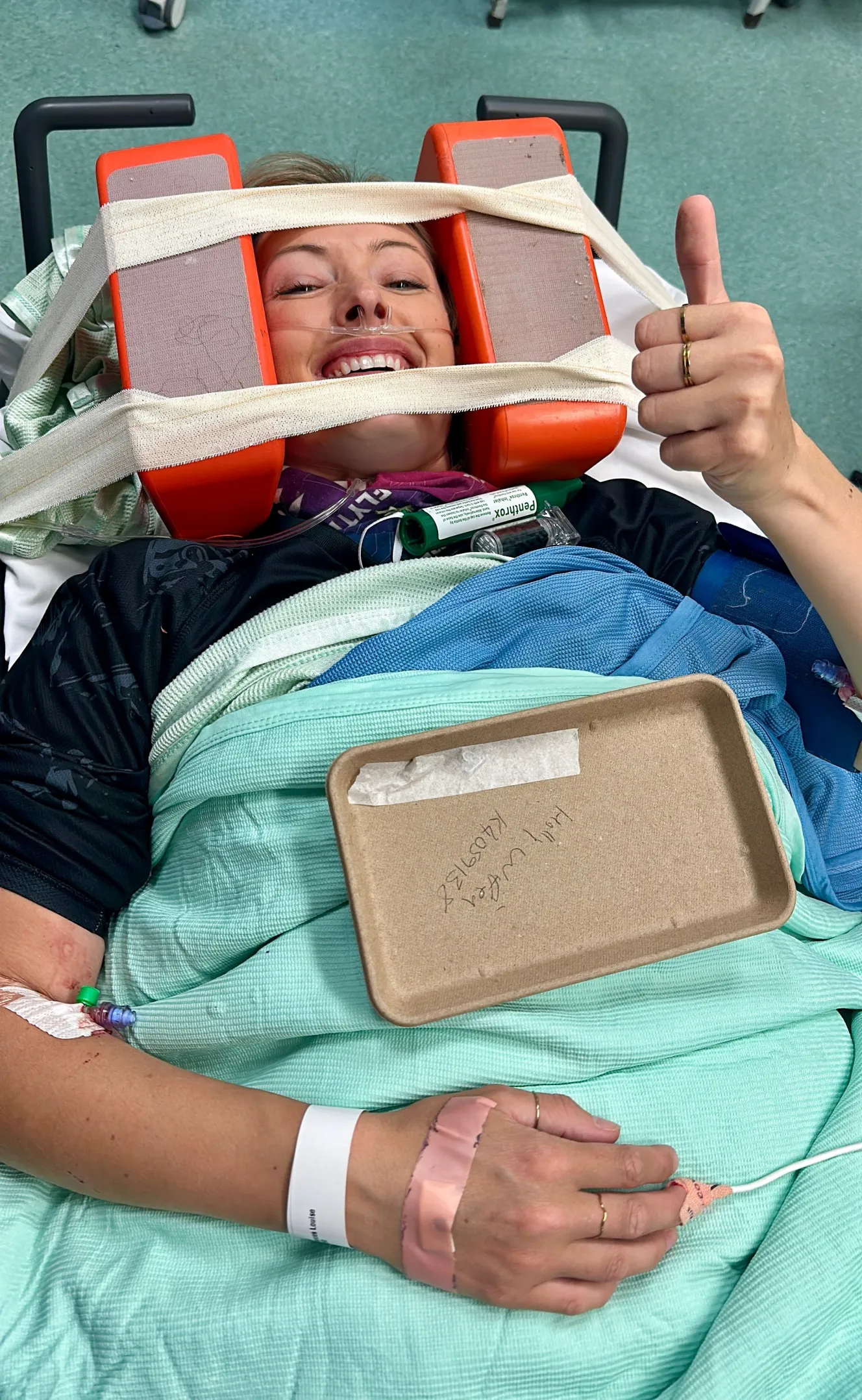
Devon skydiver Holly Wiffen, 35, survived a catastrophic 10,000-foot fall after being struck unconscious by another jumper during a tracking dive at Langar airfield in Nottinghamshire on August 7. Yahoo News reported that Wiffen regained consciousness only after landing in a conifer tree, suffering a broken leg, fractured vertebrae, and severe bruising. Her parachutes deployed in a dangerous configuration that accelerated her descent, yet the tree likely saved her life.
Wiffen, an experienced skydiver with 425 jumps, said rescuers initially expected to find a fatality. "If I hadn't hit the tree I would have hit the ground and would have been soup," she told The Australian. "Most people don't survive skydiving accidents like that." The landing area also contained power lines, and rescuers had to push through brambles to reach her after she fell unconscious from the mid-air collision.
Collision Knocks Skydiver Unconscious at 12,000 Feet
The tracking jump began at approximately 12,000 feet, with participants diving horizontally to build speed. Head Topics reported that another jumper's leg struck Wiffen in the head, causing her to lose consciousness instantly. She plummeted helpless through the sky with no ability to deploy her main parachute.
A fellow skydiver attempted a desperate rescue during the fall, trying to reach Wiffen and stabilize her. However, he was unable to grab her. The skydiver had to deploy his own parachute at approximately 3,000 feet above the ground to save himself.
Parachute Configuration Accelerated Her Dangerous Descent
Wiffen's main and reserve parachutes deployed in what experts call a "downplane" configuration—a rare malfunction that actually speeds up descent instead of slowing it. The Chronicle described this as a "horrifying" sequence that compounded the danger of her already unconscious fall. The configuration meant she plummeted faster than a normal descent, hitting the conifer tree at high speed.
Tree Breaks Fall and Softens Impact on Hard Ground
The conifer tree proved to be the critical difference between life and death. Its branches absorbed the force of Wiffen's impact, preventing her from hitting the exposed ground below. The landing area was surrounded by hazards including power lines and dense brambles that made rescue difficult.
Wiffen is now fundraising for physiotherapy and living expenses while she recovers from her injuries. As a self-employed dental therapist, she cannot work during her rehabilitation. Her survival marked a rare outcome—most people involved in similar skydiving accidents do not survive.
Sentiment
Mostly NegativeNEGATIVENEUTRALPOSITIVE
Publishers
12
Articles
9
Reach
21
A
AnonymousAuthor


