Skydiver's Optimistic Recovery
Seriously Injured Skydiver Anthony Pietrucci Remains Optimistic After Near-Fatal Solo Jump
Anonymous
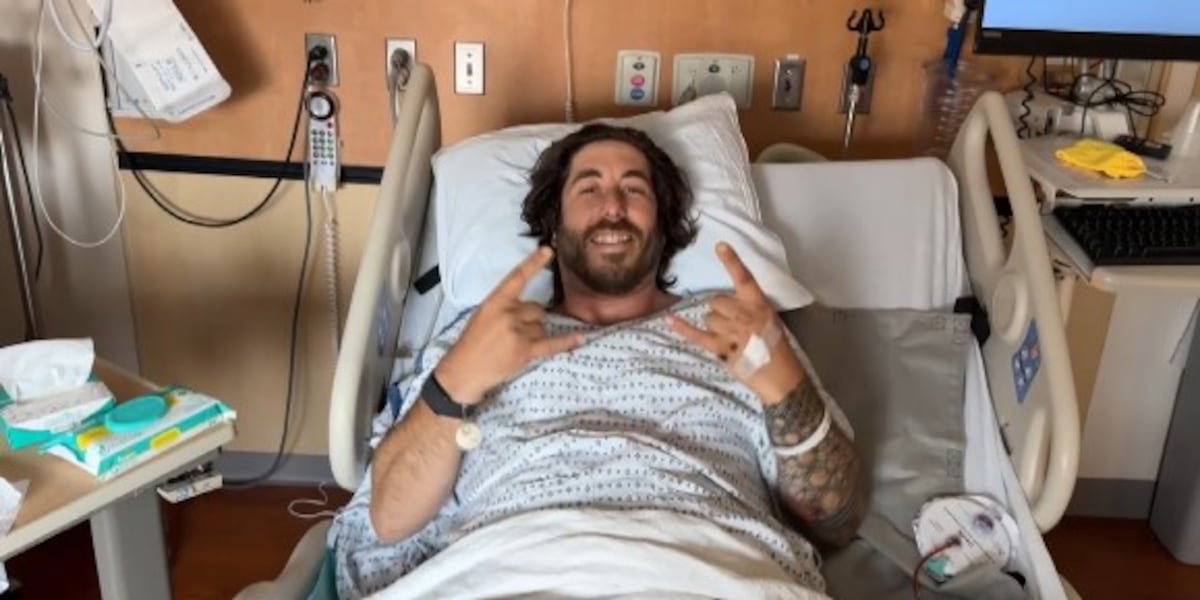
Anthony Pietrucci Jr., a 36-year-old experienced skydiver, survived a near-fatal fall during a solo jump at Skydive Coastal Carolinas in Southport, North Carolina on July 5, 2026. He plummeted between 40 and 100 feet at an estimated 70 mph, suffering a shattered spine, a broken pelvis, severe internal bleeding, and fractured vertebrae. Despite the catastrophic injuries, Pietrucci is reportedly in "high spirits" and fighting to recover WEAU.
His sister, Hillary Hall, said she feared the worst when she first heard the news. "My mind went to the worst-case scenario," she said. "I immediately thought maybe he was dead or paralyzed." Pietrucci was rushed by helicopter to Novant Health New Hanover Regional Medical Center in Wilmington, where surgeons gave him 7 units of blood, 7 units of plasma, and 1 unit of platelets to keep him alive WLFI.
A High-Speed Landing Maneuver Goes Catastrophically Wrong
Pietrucci was not doing a routine jump. He was executing a high-performance landing called "swooping." Swooping means making sharp, low turns to build horizontal speed just before landing. It is one of the most dangerous moves in skydiving. Pietrucci had nearly 800 jumps over six years of experience, making him a skilled athlete — not a beginner WTOC.
Dropzone owner Brian Strong, who has 30 years of experience, watched the descent from the ground. He called 9-1-1 before Pietrucci even hit the ground. Strong believes Pietrucci made a "low turn" — starting the swooping maneuver too close to the ground, with no time to recover. Fellow jumper Conner Strong was only 20 to 30 feet above him and rushed to stabilize his neck immediately after impact KLTV.
Two Theories Clash Over What Caused the Crash
Not everyone agrees on what went wrong. Conner Strong and other jumpers believe a sudden thermal gust caused the accident. A thermal gust forms when hot ground air shoots upward fast — sometimes at 60 mph. These gusts are hard to predict. Hillary Hall backed this view, saying, "It wasn't negligence. It wasn't him doing anything wrong or reckless. It was just unexpected" WAVE3.
Brian Strong sees it differently. He points to pilot error — specifically, a low turn started too late. According to the United States Parachute Association, landing-related mistakes are the top cause of accidents among experienced solo jumpers. Intentional low turns account for 40% of skydiving fatalities caused by landing problems. Brian Strong said this type of injury at his facility had only happened once before, roughly nine years ago WAFB.
Extensive Injuries and a Long Road to Recovery
The fall left Pietrucci with a fractured lower back across vertebrae L1 through L5, a shattered pelvis, a left acetabulum fracture, and one broken rib. Doctors also had to repair severe internal bleeding from his iliac arteries. Emergency services arrived eight minutes after impact. Surgeons operated immediately to stabilize his pelvis and stop the bleeding WISTV.
It remains unclear whether Pietrucci will walk again. He is currently in the Intensive Care Unit at Novant Health New Hanover Regional Medical Center. Adding to the difficulty, Pietrucci had no health insurance at the time. He works as a parachute packer, tandem jump assistant, and bartender — all jobs without employer benefits. His family is also dealing with his mother's recovery from a severe traumatic brain injury WLBT.
Community Rallies With Over $100,000 in Crowdfunding
Two days after the accident, Hillary Hall launched a GoFundMe campaign. The initial goal was $35,000 to cover immediate ICU costs. As projected medical bills climbed into the hundreds of thousands, the target was raised to $100,000. The skydiving community and supporters surpassed that goal within days of the campaign going live FOX10TV.
Hall says her brother's attitude has been a source of strength for the whole family. "He feels like such a beacon, like this ray of light," she said. "He's definitely going to live." Despite everything, Pietrucci remains optimistic — a spirit that has moved both his close community and strangers following his story online KALB.
Sentiment
NeutralNEGATIVENEUTRALPOSITIVE
Publishers
25
Articles
24
Reach
25
A
AnonymousAuthor


