Germany's Tomahawk Deal
Germany Secures US Tomahawk Missile Approval, Closing Strategic Defense Gap Amid NATO Unity Efforts
Anonymous
Key Points
1
The sale includes or is tied to the Typhon MRC launcher system and the 2nd Multi-Domain Task Force based in Wiesbaden, indicating broader US-Germany collaboration on long-range strike capabilities beyond Tomahawks.
2
German officials had to acknowledge stockpile constraints as a factor in earlier uncertainty, with reports that US missile stockpiles were depleted amid conflicts in Iran and Ukraine, affecting expectations for deployment.
3
There are divergent reports on Tomahawk range, with one source citing up to 2,500 kilometers while another commonly cited figure is just over 1,600 kilometers, highlighting inconsistency in reported specifications.
4
Trump had publicly signaled plans to withdraw about 5,000 US troops from Germany, a development that contributed to tensions and uncertainty surrounding the deployment of Tomahawk missiles on German soil.
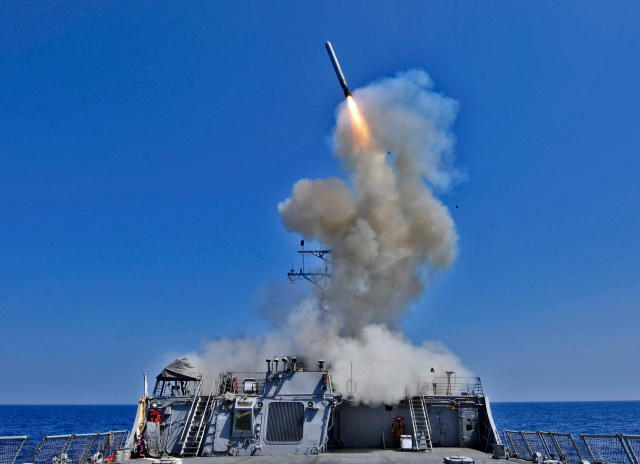
The United States has approved Germany's purchase of Tomahawk cruise missiles, a landmark deal announced by Chancellor Friedrich Merz at the NATO summit in Ankara. Merz called the agreement a step toward closing "an important strategic gap" in Germany's defenses, according to Bloomberg Law and Novinite.
The deal ends months of uncertainty over whether Washington would allow the sale. It signals stronger U.S.-German defense cooperation, even as tensions between Berlin and Washington have simmered over troop levels and other issues.
Merz Seals Tomahawk Deal at NATO Summit in Ankara
Chancellor Merz announced the agreement on the sidelines of the NATO summit in Ankara, Turkey. Germany will buy the long-range, subsonic Tomahawk cruise missiles and station them on German soil. Yahoo News reported that Merz described the deal as closing a key gap in European defense. The announcement came as NATO leaders gathered to discuss collective security commitments.
The Tomahawk is a cruise missile capable of striking targets at distances reported between roughly 1,600 and 2,500 kilometers, depending on the variant. Novinite and Bloomberg Law both cited the missile's extended range as central to its strategic value for Germany, giving Berlin a long-range strike option it previously lacked.
Depleted US Stockpiles Had Stalled the Deal for Months
The sale did not come easily. Earlier reports indicated the U.S. had depleted its Tomahawk stockpiles amid conflicts in Ukraine and Iran. That shortage created real uncertainty about whether Germany could get the missiles at all. German officials had to acknowledge those constraints publicly as they pushed for the deal.
Bloomberg Law reported that Germany and the U.S. had previously planned the deployment but hit obstacles along the way. The formal approval marks the resolution of those delays. It is not yet clear how quickly missiles will be delivered or deployed on German territory.
Typhon Launchers and US Task Force Deepen Strike Partnership
The deal goes beyond Tomahawks alone. It is tied to the Typhon Mid-Range Capability launcher system — a ground-based platform that fires Tomahawk and SM-6 missiles. The 2nd Multi-Domain Task Force, based in Wiesbaden, Germany, is also linked to the arrangement. Together, these elements point to a broader U.S.-German collaboration on long-range strike power.
The Typhon system gives ground forces the ability to hit targets hundreds of kilometers away. Stationing it in Germany puts NATO's eastern flank within closer reach of Western firepower. The setup strengthens what military planners call "deterrence" — making an attack less likely by raising the cost for any aggressor.
Merz Vows European Systems Even as US Ties Remain Strained
Merz was careful to frame the Tomahawk purchase as a bridge, not a permanent fix. He stressed that Berlin remains committed to developing European-made long-range missile systems alongside the new U.S. capability. That pledge reflects broader European anxiety about relying too heavily on American hardware and political goodwill.
Those concerns are not abstract. President Trump had publicly signaled plans to withdraw around 5,000 U.S. troops from Germany, adding tension to the bilateral relationship. UK Yahoo News reported that Merz confirmed the Ankara agreement despite that backdrop, framing it as proof that Western unity still holds even under strain.
Sentiment
Mostly PositiveNEGATIVENEUTRALPOSITIVE
Publishers
43
Articles
251
Reach
294
A
AnonymousAuthor


