Permits Surge Signals Construction Rebound
Canada Building Permits Rebound 18.5% in June, Signaling Renewed Construction Momentum
Key Points
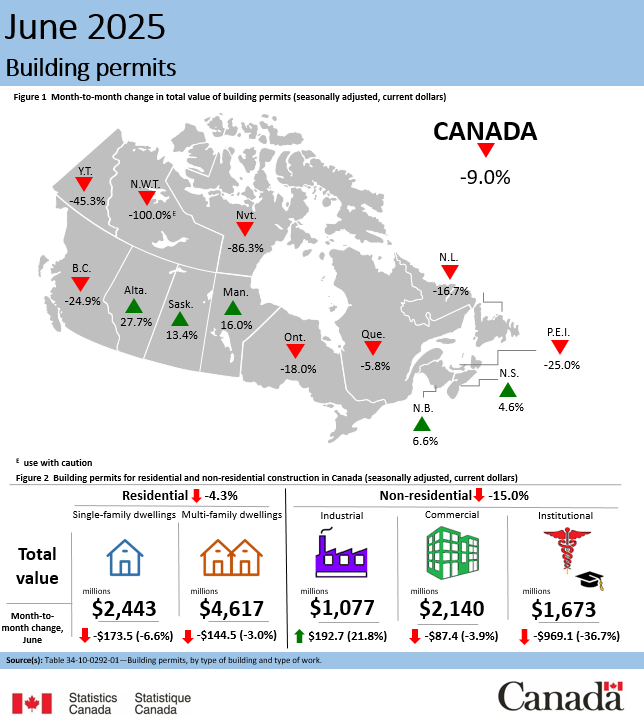
June building permits rose 18.5% to C$14.89 billion, with non-residential permits up by about C$1.8 billion to C$6.8 billion and residential permits up by roughly C$480 million to C$8.11 billion; on a constant-dollar basis, the MoM gain was 18.0% and the year-over-year figure stood around 18.6%, while the 12-month measure showed roughly a 22% year-over-year rise.
Residential strength was led by multi-family dwelling activity, with Ontario and British Columbia contributing significantly to the uptick in housing permits.
Non-residential gains were driven by institutional projects within Ontario's market, underscoring a trend toward more non-residential construction in the province.
Permits remain a leading indicator of activity but do not guarantee starts; analysts note that actual construction will hinge on hiring, labor availability, and ongoing supply-chain conditions.
Canada's construction sector roared back in June, with building permits jumping 18.5% to C$14.89 billion — a gain of C$2.3 billion from May, according to Market Screener. The surge more than reversed declines from the previous two months and blew past economists' expectations.
On a year-over-year basis, total permits climbed roughly 22%, signaling that demand for both housing and commercial space remains strong despite higher borrowing costs, Manitoba Cooperator reported.
Hospitals and Institutions Drive Non-Residential Surge
Non-residential permits led the charge, climbing to C$6.8 billion — up about C$1.8 billion from May. The gain was driven largely by institutional projects, especially hospitals and medical facilities in Ontario, according to Market Screener UK. A new medical facility in the Toronto area was among the notable developments pushing the numbers higher.
Institutional construction is a big category. It includes schools, hospitals, and government buildings. When this segment surges, it usually means long-planned public projects are finally breaking ground. Ontario's institutional boom reflects years of deferred spending now moving into the permit stage.
Ontario and BC Fuel Residential Permit Rebound
Residential permits rose to C$8.11 billion, up roughly C$480 million from May. Ontario and British Columbia were the biggest contributors, The Western Producer reported. Multi-family housing — think condos and apartment buildings — drove most of the residential gains, not single-family homes.
Multi-family activity is a key signal. It shows developers are still betting on urban demand. Even with interest rates elevated, builders in Canada's two largest provinces kept pulling permits. That suggests confidence that future buyers and renters will be there when projects finish.
Permits Are a Promise, Not a Guarantee of Shovels in Ground
A building permit is a leading indicator. It shows intent, not action. Analysts caution that turning permits into actual construction starts depends on several factors — labor availability, material supply chains, and financing conditions, according to Market Screener AU.
Canada's construction sector has faced tight labor markets and supply-chain bottlenecks in recent years. If those pressures ease, the June permit spike could translate into a meaningful boost to GDP. If they don't, some of these projects may sit on paper longer than expected.
June Rebound Points to Broader Uptrend in Canadian Construction
The 18.6% year-over-year gain on a constant-dollar basis shows this is more than a one-month bounce. Manitoba Cooperator noted the June figure offset declines in both April and May, restoring the upward trend that defined late 2024 and early 2025. Total permits on a 12-month rolling basis are up around 22% year over year.
That kind of sustained growth in permit values points to rising demand for both housing and commercial space across Canada. With Ontario leading on both fronts, the country's most populous province is shaping up as the engine of the current construction cycle — at least on paper.
Sentiment
Mostly PositivePublishers
11
Articles
9
Reach
20


