Geopolitical & Rate Pressures
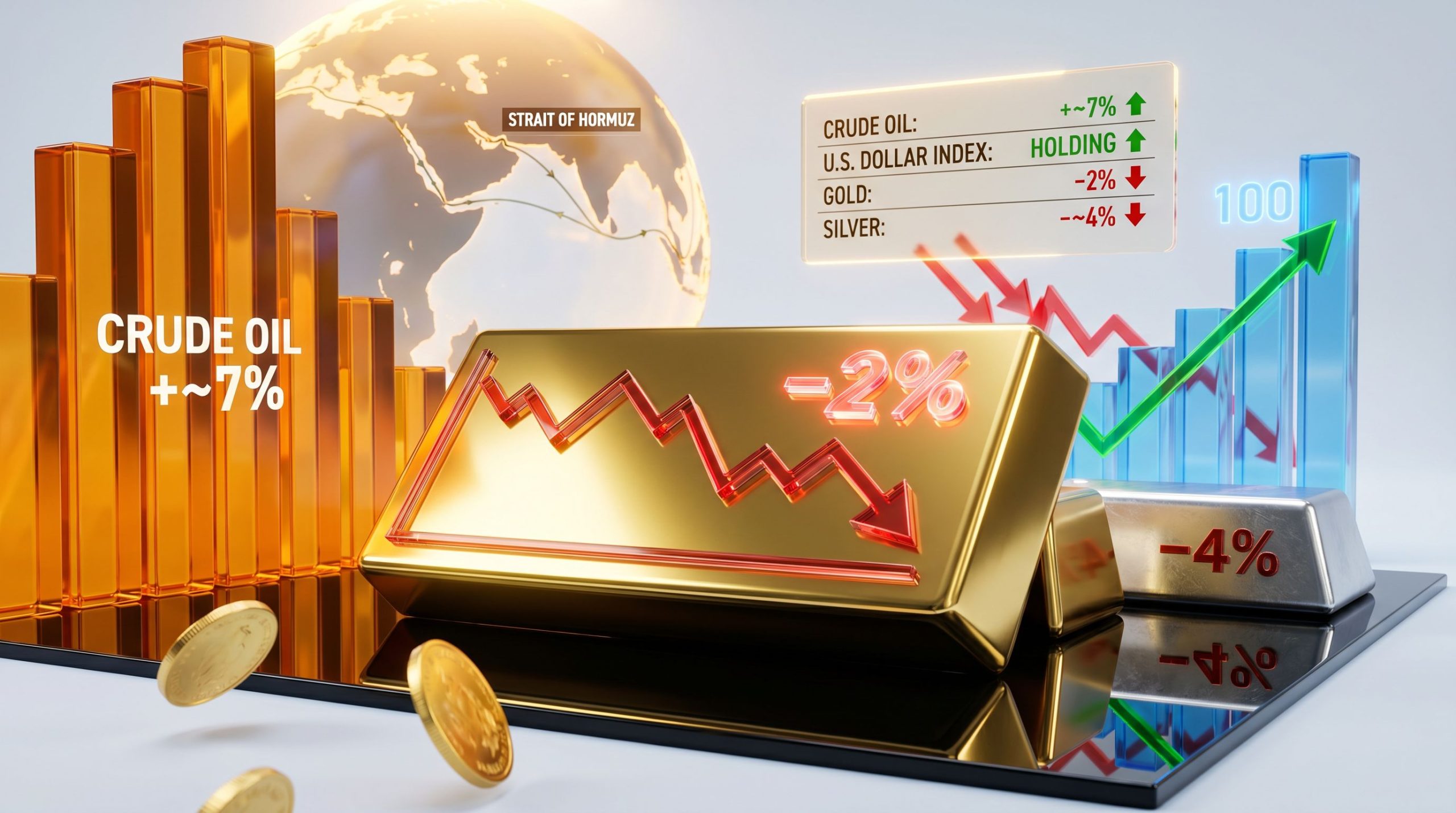
US-Iran Tensions and Fed Rate Hike Bets Push Gold Prices Lower Amid Market Volatility
Anonymous
Key Points
1
Indian MCX gold futures (August 5 contract) opened at Rs 1,45,200 per 10 grams and traded around Rs 1,45,000, with an intraday low of Rs 1,44,750 and a high of Rs 1,45,356, while silver futures slid to about Rs 2,29,401 per kg.
2
In international markets, COMEX gold traded around $4,139 per ounce and COMEX silver near $61 per ounce as fresh U.S. strikes on Iran supported oil and the dollar.
3
Markets priced in a higher likelihood of a September Federal Reserve rate hike, with CME FedWatch putting the probability above 63% (up from about 57% the previous day).
4
Oil prices jumped and Treasury yields rose, with the dollar strengthening, contributing to pressure on gold even as Middle East tensions support the inflation-hedge narrative.
5
The strikes were accompanied by Washington's revocation of a licence permitting Iranian oil exports, with reports of three oil tankers hit in the Strait of Hormuz, underscoring supply-security concerns.
Gold dropped to a two-month low of $4,100.53 per ounce on Tuesday after the United States launched fresh airstrikes on Iran, according to Crypto Briefing. The 1.36% decline defied the usual logic that war pushes gold higher — instead, traders fled to the dollar and oil markets surged.
President Donald Trump declared that an interim deal with Iran was "over," sending shockwaves through commodity markets. Spot gold steadied around $4,125 per ounce as traders braced for more volatility, with Kitco reporting that oil-price fears and inflation bets were pulling markets in opposite directions.
US Strikes Iran, Breaks Interim Deal
Trump announced an end to the interim agreement with Iran on Tuesday, escalating a conflict that had already rattled global markets. Head Topics reported that U.S. airstrikes hit an Iranian military site near the Strait of Hormuz. Three oil tankers were reportedly struck in the strait, raising alarm about energy supply routes.
Washington also revoked a licence that had allowed Iranian oil exports to continue. That move tightened global supply fears instantly. Oil prices jumped on the news, and the dollar strengthened — two forces that typically push gold down, not up.
Gold Drops Even as Middle East Burns
The gold selloff surprised many investors. Gold is usually seen as a safe haven — a hedge against war and chaos. But Discovery Alert explained that when oil prices surge, inflation fears rise too. That pushes traders to bet on higher interest rates, which hurts gold because gold pays no interest.
COMEX gold traded around $4,139 per ounce, while COMEX silver hovered near $61 per ounce, according to QNA. In India, MCX gold futures opened at Rs 1,45,200 per 10 grams and dipped to a low of Rs 1,44,750. Silver futures fell to about Rs 2,29,401 per kg.
Fed Rate Bets Jump as Inflation Fears Rise
Markets are now pricing in a higher chance that the Federal Reserve will raise interest rates in September. CME FedWatch data showed that probability climbing above 63%, up from about 57% just the day before. Higher rates make gold less attractive because investors can earn returns elsewhere.
Treasury yields rose alongside the dollar on Tuesday. Both moves put extra pressure on gold. Traders are now watching the Fed's June meeting minutes closely for clues on the rate path, according to Kitco. Those minutes could either calm markets or add to the selloff.
Oil Surge Steals the Safe-Haven Spotlight
With three tankers reportedly hit near the Strait of Hormuz, oil markets moved sharply higher. The strait is one of the world's most critical shipping lanes. About 20% of global oil passes through it. Any disruption there sends energy prices climbing fast.
Discovery Alert noted that the oil spike redirected money flows away from gold. Energy stocks and oil futures attracted the crisis trade instead. The inflation-hedge argument for gold did not disappear — but it lost ground to rate-hike fears on Tuesday. Markets will likely stay on edge until clearer signals emerge from Washington and the Fed.
Sentiment
Mostly NegativeNEGATIVENEUTRALPOSITIVE
Publishers
16
Articles
26
Reach
42
A
AnonymousAuthor


