UK Targets Russia's Shadow Fleet
UK Intercepts Russian Shadow Fleet Tanker Smyrtos in English Channel, Disrupting War Funding
Anonymous
Key Points
1
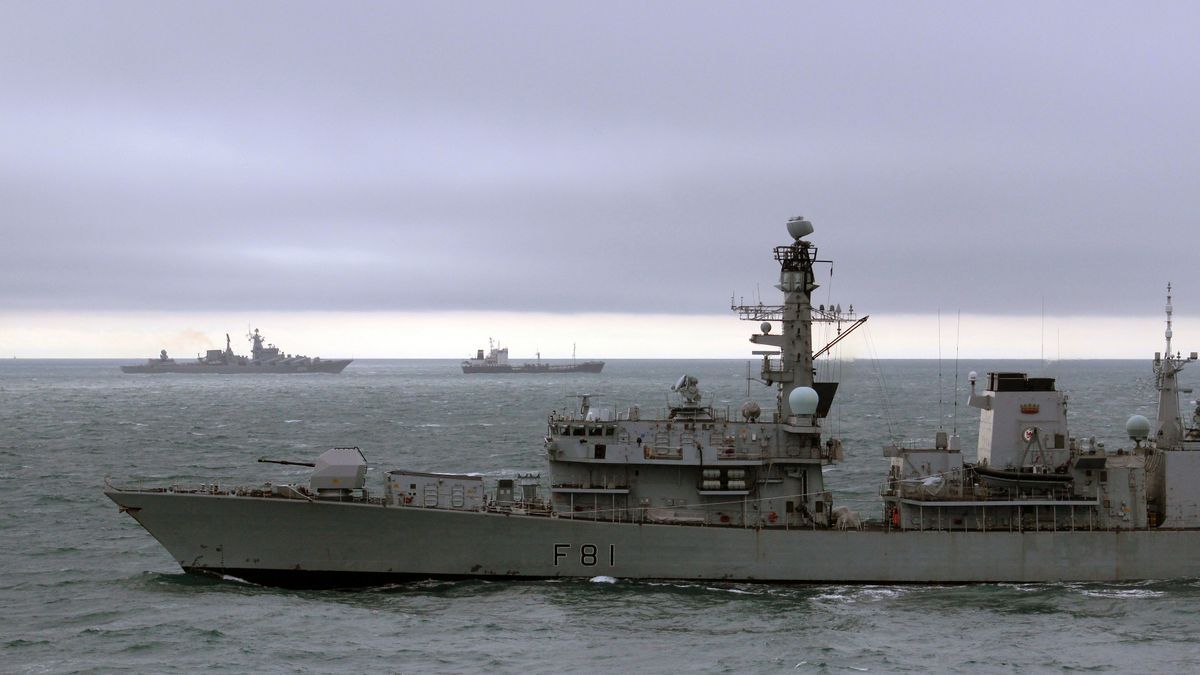
The UK operation used a specific mix of aircraft and Royal Navy vessels: Maritime Air Group helicopters including Chinooks, Merlin Mk4 and Wildcat, alongside an RAF P-8 maritime patrol aircraft, and the ships HMS Sutherland and HMS Ledbury.
2
The government said the Prime Minister had previously agreed in March that British armed forces and law-enforcement officers could board shadow fleet vessels “in accordance with international law.”
3
Starmer framed the decision as an instruction given earlier that day to halt a tanker trying to transit the English Channel, telling the public: “This successful operation delivers yet another blow to Russia and reminds those fueling Putin's war in Ukraine that we will not let them hide,” according to his post on X.
4
The UK’s announcement added that the enforcement action in its territorial waters was conducted “in accordance with domestic and international law,” and that SMYRTOS would be provisionally moved to an anchorage off the south coast for monitoring.
Royal Marine Commandos stormed a Russian oil tanker in the English Channel on June 14, in the UK's first-ever operation of its kind. The six-hour raid on the Smyrtos — a 17-year-old Aframax crude tanker flagged to Cameroon — marks a sharp shift from passive monitoring to active interdiction of Russia's so-called "shadow fleet." The Guardian reported that specially trained National Crime Agency officers joined the boarding party, supported by Chinook and Merlin helicopters, an RAF P-8 patrol aircraft, and the warships HMS Sutherland and HMS Ledbury.
Prime Minister Keir Starmer said he personally directed the operation that morning. "This successful operation delivers yet another blow to Russia and reminds those fueling Putin's war in Ukraine that we will not let them hide," he posted on X, according to Reuters. The Smyrtos is now being held at an anchorage off England's south coast for safety and environmental checks.
From Empty Pledges to a Dramatic Boarding
Starmer first authorized UK forces to board sanctioned shadow fleet vessels back in March 2026. But the policy quickly looked hollow. In April, two sanctioned tankers — the Universal and the Enigma — sailed through the English Channel without being stopped. The Telegraph reported the UK held back due to legal concerns over international maritime law, drawing sharp criticism at home.
The June 14 operation was made possible after Attorney General Richard Hermer provided the legal green light. He clarified that UK forces could board sanctioned vessels inside territorial waters under specific domestic and international legal grounds, The Independent reported. Defence Secretary Dan Jarvis called the boarding a direct blow to Russia's war chest. "Russia relies on its shadow fleet to fund their conflict," he said, according to ITV News.
What the Shadow Fleet Is and Why It Matters
The "shadow fleet" is a loose network of aging tankers — often 15 years or older — designed to move Russian oil while dodging Western sanctions. They use flags of convenience, such as Cameroon or Panama, and frequently switch off their AIS tracking transponders. The Smyrtos fits the profile exactly: built in 2009, registered to a Seychelles company, and managed from Singapore, according to Maritime Optima.
The scale of the problem is large. Between March and June 2026 alone, 184 UK-sanctioned vessels made 238 journeys through UK waters, according to Global Banking & Finance Review. Just three previously flagged tankers — the Nikolay Zuyev, NS Asia, and Zaliv Aniva — collectively carried over $5 billion in Russian oil since 2022, parliamentary records show.
Europe Tightens the Net on Russian Oil Routes
The Smyrtos boarding did not come in isolation. On June 1, the French Navy — supported by the UK — boarded and redirected the tanker Tagor in the Atlantic, according to ITV News. Analysts say the two operations together signal a new phase of European maritime enforcement, moving away from years of passive watching.
Louis Wierenga, a lecturer at the Baltic Defence College, told TVP World that the move "shows muscle" the Kremlin respects. Experts predict Russia will now reroute oil tankers around Ireland and through the Atlantic, adding time and cost to each shipment — raising what analysts call the "financial friction" of Moscow's war trade.
What Comes Next: Spills, Retaliation, and Market Ripples
The Smyrtos will stay anchored off the south coast while the Maritime and Coastguard Agency runs safety checks. Shadow fleet vessels often lack standard Western insurance, making oil spills a real risk. That safety concern is also part of the UK's legal justification for the detention, The Guardian noted.
Russia has previously called such boardings "illegal piracy," and observers are watching for retaliation — possibly harassment of British ships in the Baltic or Black Seas, according to Al Jazeera. On the energy markets, removing Aframax tankers from circulation could tighten oil supply and push up prices globally, analysts warned.
Sentiment
Mostly NegativeNEGATIVENEUTRALPOSITIVE
Publishers
176
Articles
796
Reach
972
Topics
A
AnonymousAuthor


