Mail-Ballot Rules Blocked
Federal Judge Blocks New USPS Mail-Ballot Regulations Ahead of Midterm Elections
Anonymous
Key Points
1
Judge Carl J. Nichols, who issued the injunction, was appointed by President Donald Trump; the Boston case was before Judge Indira Talwani, an appointee of former President Barack Obama.
2
Nichols had declined to issue an injunction in May because he considered the lawsuit premature. After the Postal Service formally issued its rule, challengers refiled their cases, leading to the new injunction.
3
The Supreme Court’s August 24, 6–3 decision lifted injunctions against several related provisions, allowing the Department of Homeland Security to compile a federal citizenship database, permitting the Justice Department to prioritize prosecutions of state officials who issue ballots to ineligible voters, and allowing USPS to continue its rulemaking.
4
North Carolina became the first state to mail general-election ballots in the 2026 cycle, and the envelopes were prepared under state rules because the courts had blocked the federal USPS requirements. The First Circuit’s ruling was described as the third court decision in less than three weeks to halt the administration’s effort.
5
Nichols said the challengers had shown that, without an injunction, there was an increased risk that a significant number of otherwise valid absentee or mail ballots would not be counted, adding that “the public has a strong interest in ensuring that doesn’t happen.”
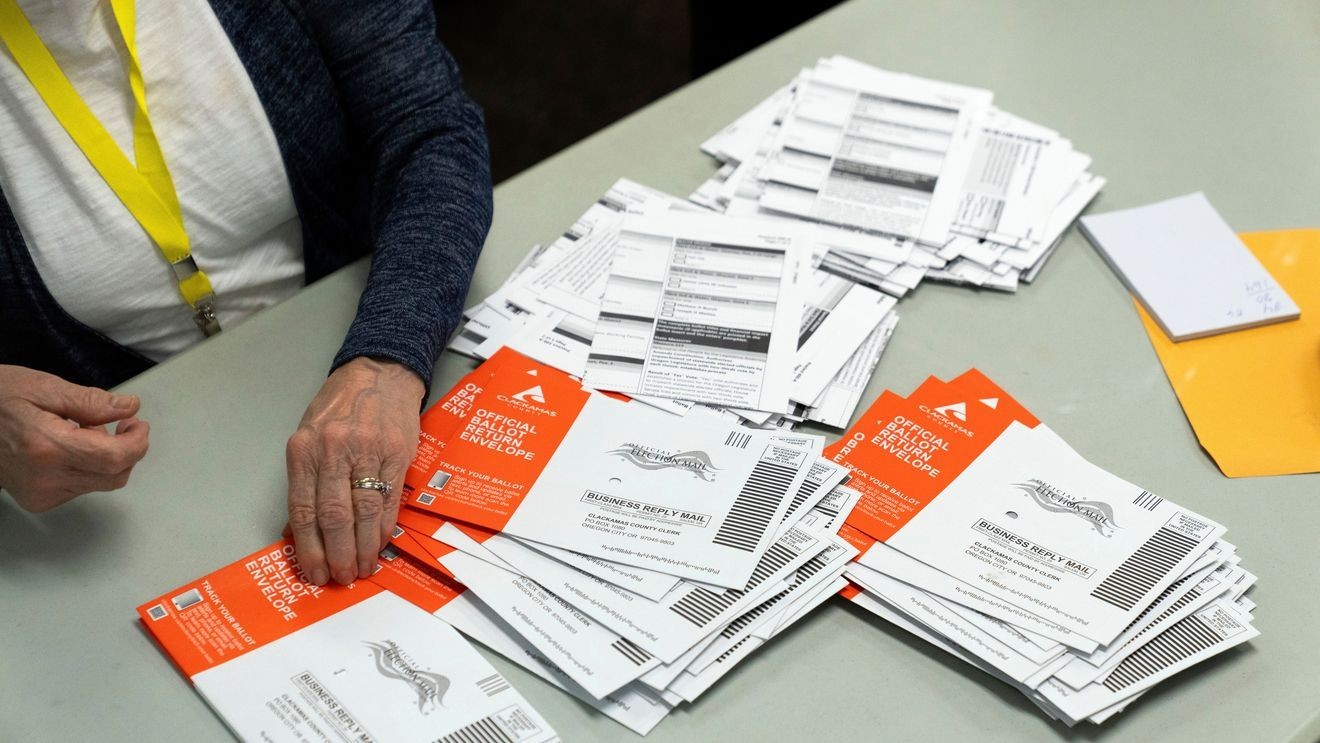
A federal judge blocked the Trump administration's new mail-ballot rules for the U.S. Postal Service, ruling the agency likely overstepped its legal authority. Courthouse News reported that the decision prevents USPS from requiring ballot-envelope design approval and a federal voter database, warning that these changes could stop valid ballots from being counted before November's midterm elections.
The ruling is the second court victory for voting-rights challengers in less than three weeks. MyFox 28 noted that even though the Supreme Court is weighing the administration's appeal, judges keep blocking the policy, creating significant legal uncertainty about mail voting nationwide.
What the New Rules Would Require
The Trump administration ordered USPS to demand approval of ballot-envelope designs before election officials could use them. The rules also forced states to submit detailed voter and barcode information through a new federal portal. News 3 LV explained that these requirements would apply immediately across all states, creating logistical chaos just weeks before the election.
Election officials across the country warned that implementing these rules so close to November would be impossible. They said states couldn't meet federal deadlines while maintaining their own ballot-printing schedules and voter verification processes.
Judge Nichols Cites Risk to Valid Ballots
U.S. District Judge Carl J. Nichols, a Trump appointee, issued the injunction after reconsidering his May position. He wrote that challengers proved an increased risk that "a significant number of otherwise valid absentee or mail ballots would not be counted." WSET reported that Nichols emphasized the public has a strong interest in making sure this doesn't happen.
Nichols had originally rejected blocking the rules as premature. But after USPS formally issued the regulation in summer, voting-rights groups refiled their lawsuit. This time, the judge agreed the threat was real enough to stop implementation.
Supreme Court's August Decision Left Door Open
In August, the Supreme Court ruled 6-3 to lift injunctions against related Trump voting policies. The decision allowed the Department of Homeland Security to build a federal citizenship database and let the Justice Department prioritize prosecuting state officials who issue ballots to ineligible voters. KUTV reported that USPS was also allowed to continue its rulemaking process.
But the high court hasn't yet ruled on whether the USPS rules themselves are legal. Lower courts keep blocking them while the administration asks the Supreme Court to intervene again. If the justices eventually reverse these court decisions, mail voting could change dramatically just before the election.
A Pattern of Court Blocks Across the Country
This is now the third federal court in three weeks to halt the administration's mail-ballot overhaul. North Carolina became the first state to mail general-election ballots in 2026, and their envelopes were designed under state rules—not federal ones—because courts had already blocked USPS requirements. The consistent legal defeats suggest judges have serious doubts about the policy's legitimacy.
Sentiment
Mostly NegativeNEGATIVENEUTRALPOSITIVE
Publishers
180
Articles
1.6K
Reach
1.8K
A
AnonymousAuthor


