Lucky Cliff Resource Correction
Myriad Uranium Issues Technical Correction Regarding Lucky Cliff Drilling Historical Resource Estimates
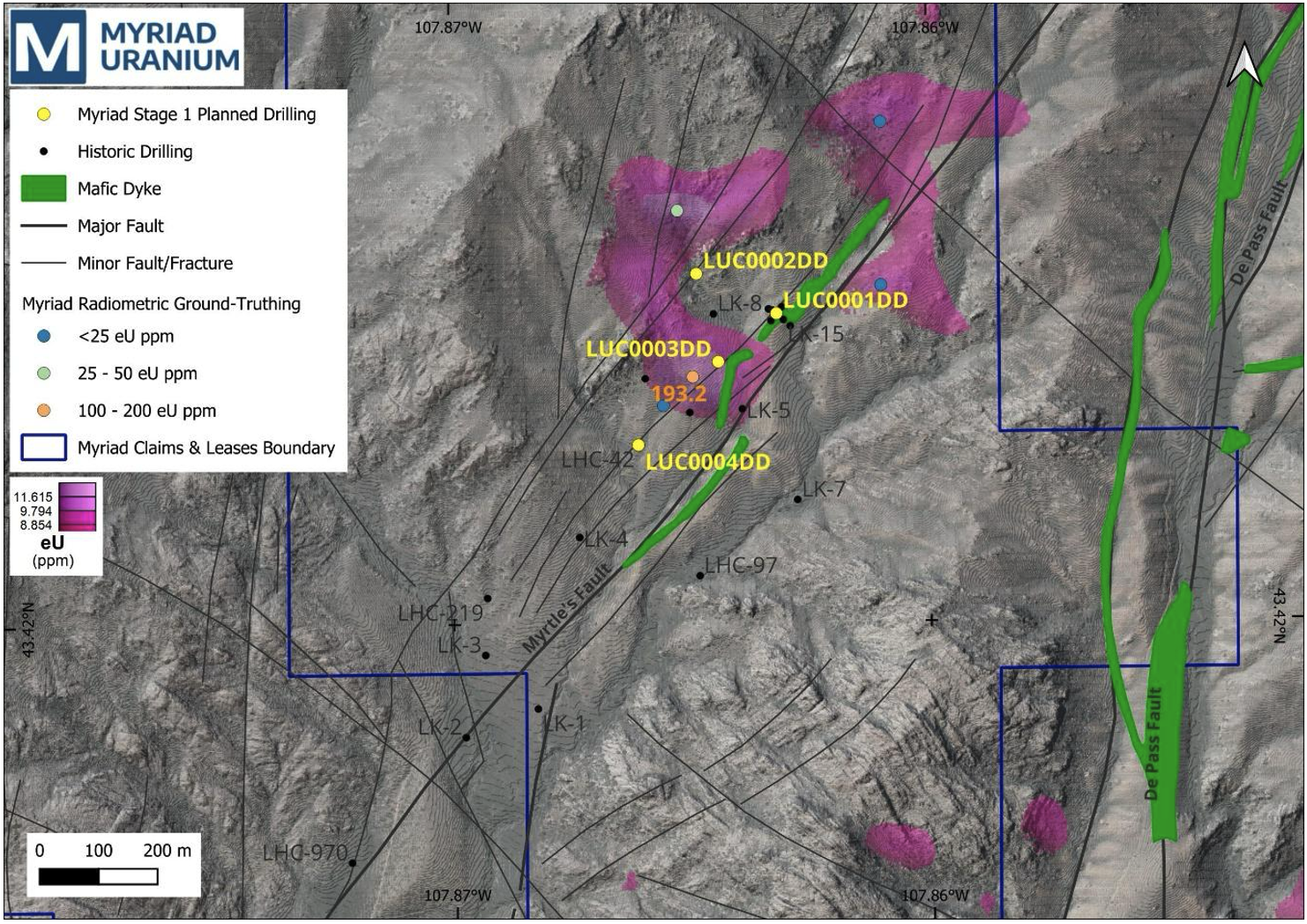
Myriad Uranium Corp. (CSE: M) (OTCQB: MYRUF) (FSE: C3Q) has corrected a major error in its historical resource estimates for the Copper Mountain Project in Wyoming, according to Mitchell Advocate. The company initially reported 26.63 million pounds of eU₃O₈ contained in 44.1 million tonnes at 171 ppm, but the correct figures are 26.63 million pounds in 48.95 million tonnes at 269 ppm eU₃O₈. The historical estimate came from internal Rocky Mountain Energy Company reports and does not represent current mineral resources or reserves.
A Significant Error in Historical Data
The correction affects how investors understand Myriad's uranium deposit. The original press release incorrectly stated that the historical estimate used a 100-ppm cut-off grade of 171 ppm. In reality, the deposit contains material at 269 ppm—a substantially higher grade concentration. This difference matters because higher-grade uranium deposits are more valuable and require less processing to extract the ore.
Myriad emphasized that these figures are historical estimates only, according to Northern News. They are not classified as current mineral resources or mineral reserves by the company. The estimates originated from internal reports compiled decades ago, before modern exploration standards were applied.
Background on the Copper Mountain Project
Myriad holds 100% ownership of the Copper Mountain Project, located in Wyoming's uranium-rich region. PR Record Gazette reported that the company has invested approximately C$125 million in developing this property historically. The deposit represents one of Myriad's key assets as the uranium market gains renewed attention from energy markets and investors.
The Lucky Cliff drilling program that prompted this announcement aims to generate new radiometric data from the property. This drilling campaign is meant to move beyond historical estimates and create current, validated resource estimates that meet modern industry standards.
Why Historical Estimates Differ From Current Standards
Historical uranium resource estimates often contain significant uncertainties. Chatham Daily News notes that older estimates relied on less precise drilling and sampling methods than today's technology allows. Companies must now drill new holes and conduct fresh assays to validate or revise historical data according to current Canadian and international mineral resource classification standards.
The difference between 171 ppm and 269 ppm grade also highlights how exploration in the same area can yield new insights. Modern drilling may hit richer zones or reveal that average grades are actually higher than previously thought. This makes the new radiometric results from Lucky Cliff critically important for Myriad's future exploration planning.
Market Context for Uranium Exploration
Uranium exploration has gained momentum as global energy demand increases and countries pursue nuclear power expansion. Hanna Herald reported that junior uranium companies like Myriad are accelerating drilling programs to define and expand mineral resources. Correcting historical data and generating new results is a standard step toward moving a project toward potential development.
For Myriad investors, the correction underscores the importance of validating old estimates. The Whig noted that the company's multi-listing on Canadian, U.S., and European exchanges means results are scrutinized by institutional investors worldwide. Accurate resource estimates are essential credibility markers for junior explorers seeking financing and partnerships.
Sentiment
NeutralPublishers
10
Articles
10
Reach
10


