Freedom to Change Your Mind
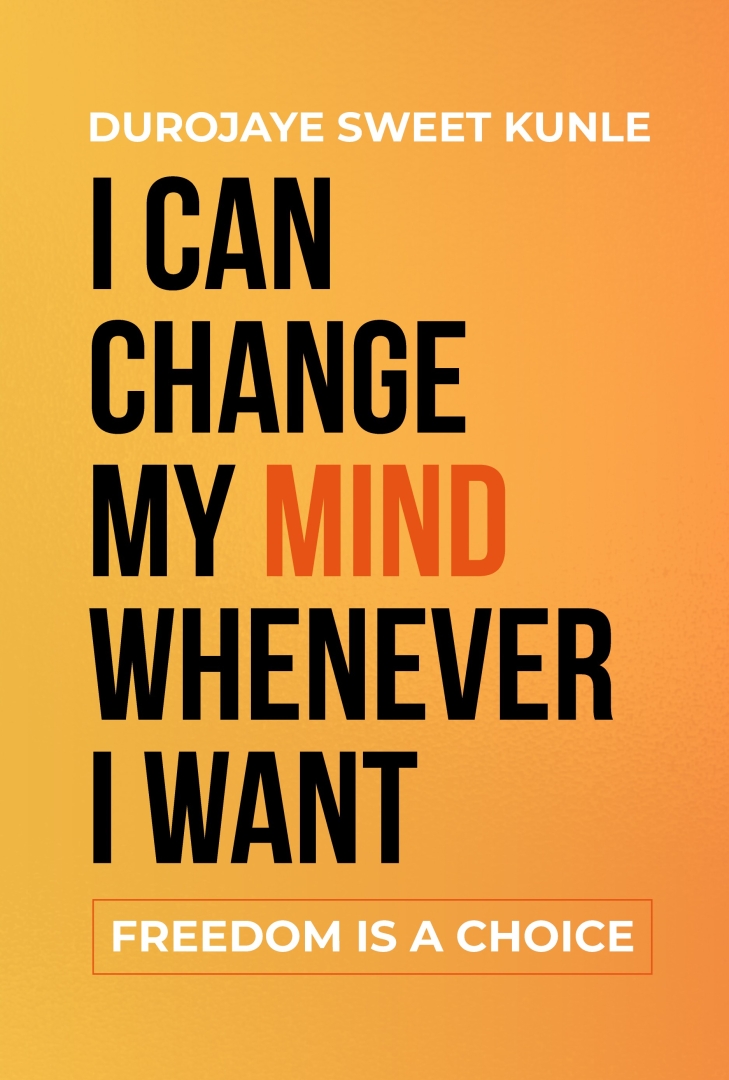
Australian Coach Kunle Reframes Indecision as Courage in New Book 'I Can Change My Mind'
Anonymous
Key Points
1
The book includes ten chapters rooted in Kunle's real-life experiences, with a notable anecdote of walking into a billionaire’s office with no certainty but a willingness to show up.
2
Kunle's tone is described as straightforward and warm, deliberately not trying to impress readers and avoiding pressure or jargon while sharing lessons learned from his own mistakes.
3
The book is presented as a conversation rather than a formulaic self-help manual, offering insights as a candid exchange with someone who has been through similar challenges.
Australian mindset coach Durojaye Kunle has released a new book that challenges one of self-help's oldest rules: stick to your plan. The book, titled "I Can Change My Mind Whenever I Want: Freedom is a Choice," argues that changing course is not weakness — it is courage, according to Financial Content.
The book is aimed at people questioning their careers, relationships, or direction in life. Kunle's central message is simple: you are allowed to start over, and you should feel good about it.
Reframing Indecision as an Act of Courage
Most self-help books push readers to commit and stay the course. Kunle flips that idea. He says many people chase a version of success that was never theirs to begin with. His book gives readers permission to measure themselves by their own standards — not someone else's, according to Financial Content.
The book spans ten chapters, each drawn from Kunle's real life. One standout moment: he describes walking into a billionaire's office with no guarantee of success — just a willingness to show up. That story sets the tone for the whole book. Uncertainty is not a problem to solve. It is a place to begin.
A Conversation, Not a Formula, Drives the Book
Kunle deliberately avoids the typical self-help format. There are no step-by-step systems or buzzword-heavy frameworks. Instead, Financial Content reports the book reads like a frank chat with someone who has made mistakes and learned from them — warm, direct, and pressure-free.
Kunle's tone is described as straightforward and honest. He does not try to impress. He shares what went wrong in his own life and what he figured out along the way. That approach is what separates this book from more polished, formulaic titles on the market.
Kunle Joins a Growing Wave of Authenticity-First Authors
The book is being positioned alongside well-known voices like Brené Brown, Mark Manson, and James Clear. But Kunle brings something distinct: an Australian perspective and a story that is entirely his own. His work is not borrowed from Western self-help templates, according to Financial Content.
The target reader is anyone at a crossroads — changing jobs, leaving a relationship, or simply questioning what they want. Kunle's core argument is that choosing differently is not failure. It is freedom. As he frames it, "freedom is a choice" — and so is the decision to finally make it.
When a Job or Relationship No Longer Fits, Walk Away
A key theme running through the book is recognizing when something has run its course. Kunle writes about jobs and relationships that no longer fit — and the pressure people feel to stay anyway. That pressure, he says, comes from outside. The choice to leave comes from within, Financial Content reports.
By normalizing the decision to walk away, Kunle aims to reduce the shame readers often attach to changing their minds. The goal is not just to give readers permission. It is to help them feel good about using it.
Sentiment
Mostly NegativeNEGATIVENEUTRALPOSITIVE
Publishers
12
Articles
3
Reach
15
A
AnonymousAuthor