Strategic Power for Digital Growth
Baker Hughes, Kodiak Partner to Power U.S. Data Center Expansion with 1.8 GW Distributed Generation
Anonymous
Key Points
1
The agreement signals Kodiak Gas Services' strategic shift beyond contract compression into distributed power and energy infrastructure services, broadening its business model to include on-site, flexible generation capabilities.
2
Kodiak President and CEO Mickey McKee stressed that access to Baker Hughes’ technology, training and support will strengthen the company’s ability to deliver dependable power solutions while supporting its long-term energy infrastructure strategy.
3
Baker Hughes Chairman and CEO Lorenzo Simonelli framed the deal as addressing growing demand for flexible power generation, driven by rapid expansion of digital infrastructure and data centers.
4
The agreement includes a rolling framework that is designed to align equipment deliveries with evolving data center demand and project timelines, with deployments planned for behind-the-meter installations in key U.S. markets.
Baker Hughes and Kodiak Gas Services have signed a multi-year deal to deploy gas turbines that could deliver up to 1.8 gigawatts of power to U.S. data centers, according to MarketScreener. The first phase targets roughly 1 GW of capacity by 2030, with room to grow as demand rises.
The deal marks a notable shift for Kodiak, a company best known for contract compression services. It is now moving into on-site power generation — a fast-growing market fueled by the explosion of AI and data center construction across the United States, Energy Digital reported.
What the Deal Actually Delivers on the Ground
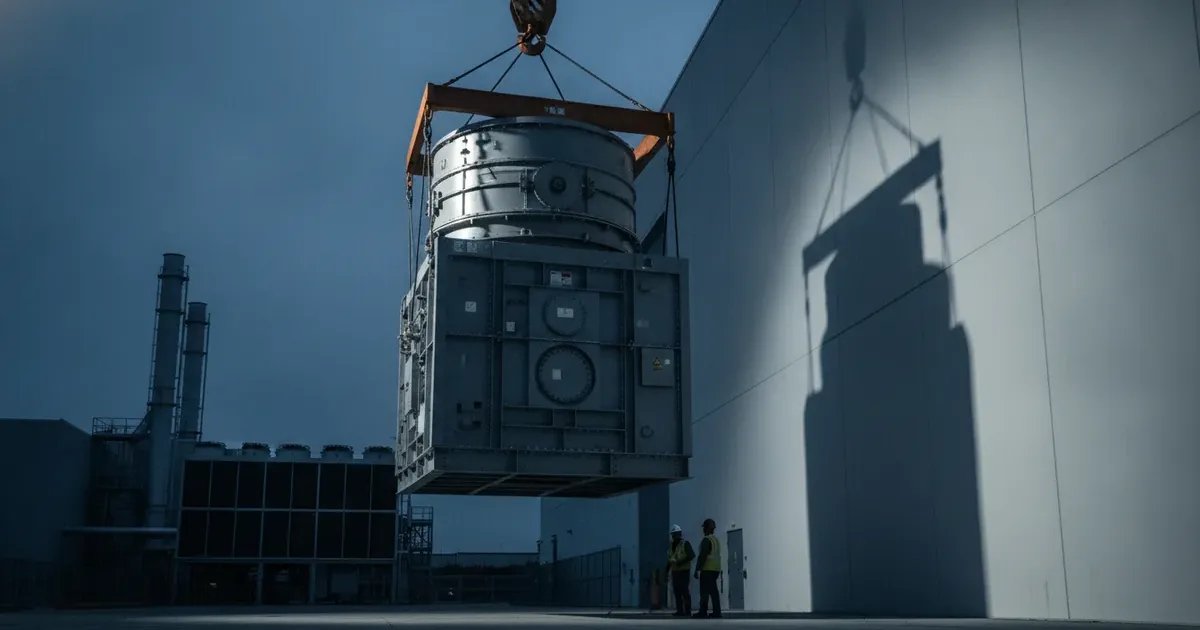
The agreement covers NovaLT16 and Frame 5 gas turbines paired with BRUSH Power Generation generators, according to MarketScreener. These systems will be installed behind the meter — meaning power is generated directly at or near a customer's site, bypassing the broader electric grid entirely.
The rolling framework is designed to match equipment deliveries to shifting data center timelines. Beyond hardware, the pact includes technical training, spare parts support, and a potential long-term services agreement to keep installed equipment running, Compressor Tech 2 reported.
Kodiak Bets Big on Behind-the-Meter Power
Kodiak President and CEO Mickey McKee said access to Baker Hughes' technology and support will strengthen the company's ability to deliver "dependable power solutions" while backing its long-term energy infrastructure strategy. The move signals a deliberate push beyond Kodiak's traditional compression roots into distributed generation.
Behind-the-meter generation is gaining traction because U.S. grid networks are under serious strain. Data centers need huge, reliable blocks of power — fast. Building on-site generation avoids long waits for grid connection approvals, which can stretch for years in high-demand regions.
Baker Hughes Sees AI Boom Driving Turbine Demand
Baker Hughes Chairman and CEO Lorenzo Simonelli framed the deal as a direct response to soaring demand for flexible power. He pointed to "rapid expansion of digital infrastructure and data centers" as the core driver. Gas turbines can be deployed faster than large utility-scale projects, making them attractive for data center developers who cannot wait.
The 1.8 GW ceiling is not guaranteed — it depends on how fast Kodiak wins new data center contracts. But even the base target of 1 GW by 2030 is a significant commitment, according to MarketScreener. For context, 1 GW is enough to power roughly 750,000 average U.S. homes.
A Broader Industry Shift Toward On-Site Gas Power
Kodiak and Baker Hughes are not alone in this bet. Across the energy sector, companies are racing to offer modular, gas-fired power to data center operators who need gigawatts of capacity now. Grid interconnection queues in some U.S. states stretch five to ten years — making behind-the-meter gas a practical short-term fix.
The deal also deepens commercial ties between the two companies through closer technical collaboration. That kind of long-term partnership — covering equipment, training, and service — is increasingly common as data center operators demand end-to-end power reliability, Energy Digital noted.
Sentiment
Mostly PositiveNEGATIVENEUTRALPOSITIVE
Publishers
14
Articles
55
Reach
69
A
AnonymousAuthor


