Morocco Secures Borders
Moroccan Forces Thwart Mass Migration Attempts to Ceuta, Melilla, Arresting Inciters
Key Points
In Fnideq, Moroccan security forces intercepted 111 clandestine migration candidates in the early hours, including 109 migrants from Sub-Saharan Africa and 2 Moroccan nationals.
Cyber-vigilance operations led to the arrest of 61 suspects accused of promoting calls for mass border crossings via social media, with ongoing monitoring to identify and arrest others involved in incitement.
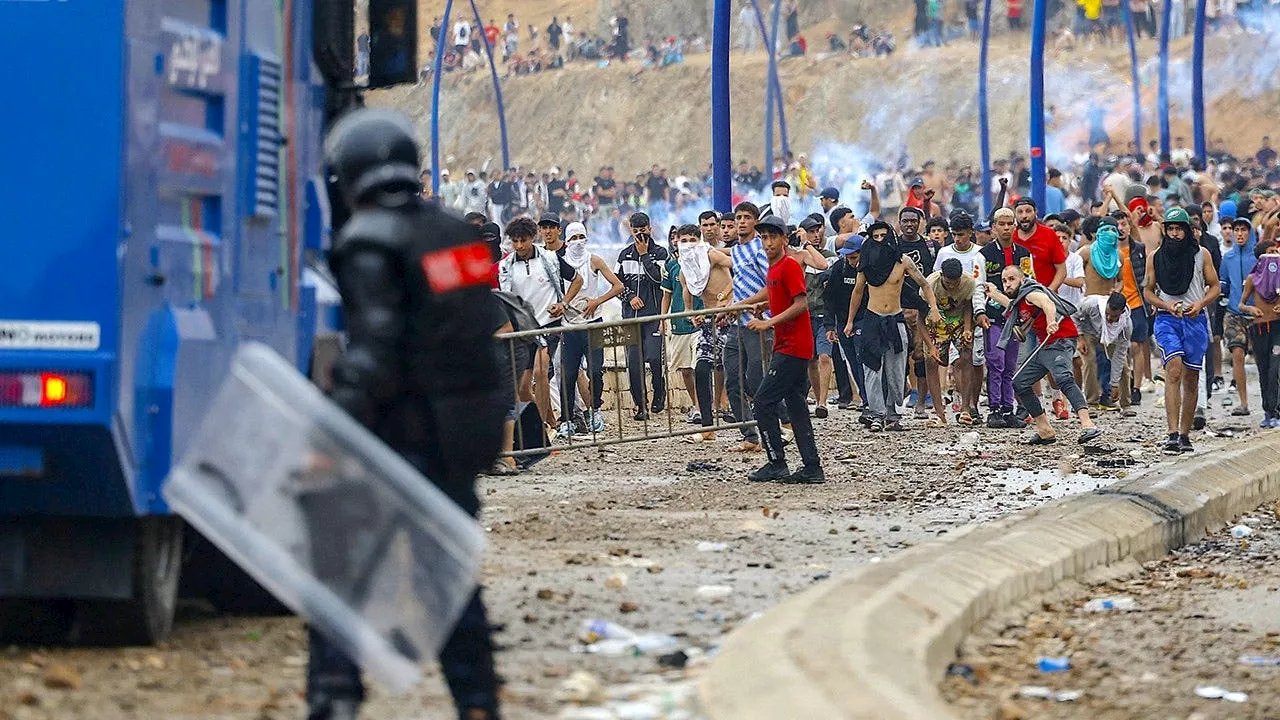
Around 300 irregular migrants, mostly from Sub-Saharan Africa, were prevented from approaching Ceuta; Moroccan forces employed drones, mobile intervention vehicles, and water trucks, as Spanish authorities reinforced security around El Tarajal with deployments at the breakwater, nearby bridge, and opposite hill.
Migrants were reported hiding in the Castillejos mountainous area near Fnideq, with thousands of Moroccan officers deployed; the context references the July 30–31 crisis, which saw large-scale crossings and numerous deaths (about 80,000 crossings reported; around 82 deaths on the Spanish side and roughly 141 total deaths).
Morocco claimed it halted an attempt by hundreds of migrants to reach Ceuta and noted reports of inducements, including offers up to 5,000 euros and a year's rent to encourage crossings.
Moroccan security forces blocked hundreds of migrants from crossing into Spain's enclave of Ceuta, intercepting 111 people near the border town of Fnideq in a single overnight operation, according to Albeu. Of those caught, 109 were from sub-Saharan Africa and 2 were Moroccan nationals.
The crackdown comes as both Morocco and Spain sharply raised security following fresh calls on social media for a mass border rush — echoing a deadly crisis just weeks earlier, Kota Radio reported.
Drones and Water Trucks Hold Back 300 Migrants
Around 300 migrants, most from sub-Saharan Africa, gathered in the mountainous terrain near Castillejos, close to Fnideq, Albeu reported. They were trying to use the rugged landscape as cover before making a run for the border fence.
Moroccan forces responded with a heavy deployment. They used drones, mobile intervention vehicles, and water trucks to push migrants back, according to Russpain. Thousands of officers were on the ground. None of the 300 made it through.
Spain Locks Down El Tarajal Crossing After Social Media Calls
On the Spanish side, authorities rushed reinforcements to the El Tarajal border crossing in Ceuta. Officers were deployed at the breakwater, a nearby bridge, and on a hill overlooking the crossing, Head Topics reported. The moves came directly in response to online posts calling for a repeat crossing.
Spanish and Moroccan officials coordinated closely throughout the operation. Security at Ceuta and Melilla was described as normal despite the heightened threat, with both sides saying they were monitoring the situation around the clock, according to Fox Bangor.
61 Arrested for Stoking Mass Crossings Online
Morocco did not just act at the border. A cyber-vigilance operation led to the arrest of 61 suspects accused of posting content online to encourage illegal crossings, Russpain reported. Authorities said they were still hunting for others involved in the online campaign.
Officials also flagged reports of cash offers being used to recruit migrants for the crossing attempt. Some recruits were reportedly promised up to 5,000 euros and a full year of paid rent to make the journey, according to Albeu.
Shadow of July's Deadly Crisis Looms Over Border
The current standoff follows a catastrophic border event on July 30–31. During that crisis, around 80,000 crossing attempts were reported at Ceuta. Roughly 82 people died on the Spanish side alone, with total deaths estimated at around 141, according to Kota Radio.
That tragedy has made both governments acutely sensitive to any signs of a repeat. The speed of the joint response this time — drones, mass arrests, cyber surveillance — shows how seriously authorities are treating even online threats of a new rush, Fox Bangor noted.
Sentiment
Mostly NegativePublishers
14
Articles
14
Reach
28


