Samsung's AI Smart Glasses
Samsung and Google Unveil Galaxy Glasses Featuring Gemini AI for Smart Wearable Experience
Anonymous
Key Points
1
The Galaxy Glasses are display-free, smartphone-tethered wearables powered by Qualcomm's Snapdragon AR1 Gen 1 with a Hexagon NPU for on-device AI, meaning they function as a companion device rather than a standalone phone replacement.
2
Privacy features include a camera-recording LED and software that disables the camera if the LED is covered or obstructed, addressing concerns about always-on cameras.
3
Two additional frame designs were previewed for the Galaxy Glasses at I/O (Gentle Monster boxy black frames and Warby Parker rounded red-brown frames), with more designs planned for the fall launch.
4
The rollout is unfolding amid broader privacy/regulatory debates, highlighted by New York state's July 2026 ban on recording-capable eyewear in courthouses and the lack of published Gemini-use policies.
5
Photos and captured text may flow into Samsung's ecosystem, with photos appearing in a dedicated app and copied text/images transferable to Samsung Notes, illustrating deeper integration with Samsung software.
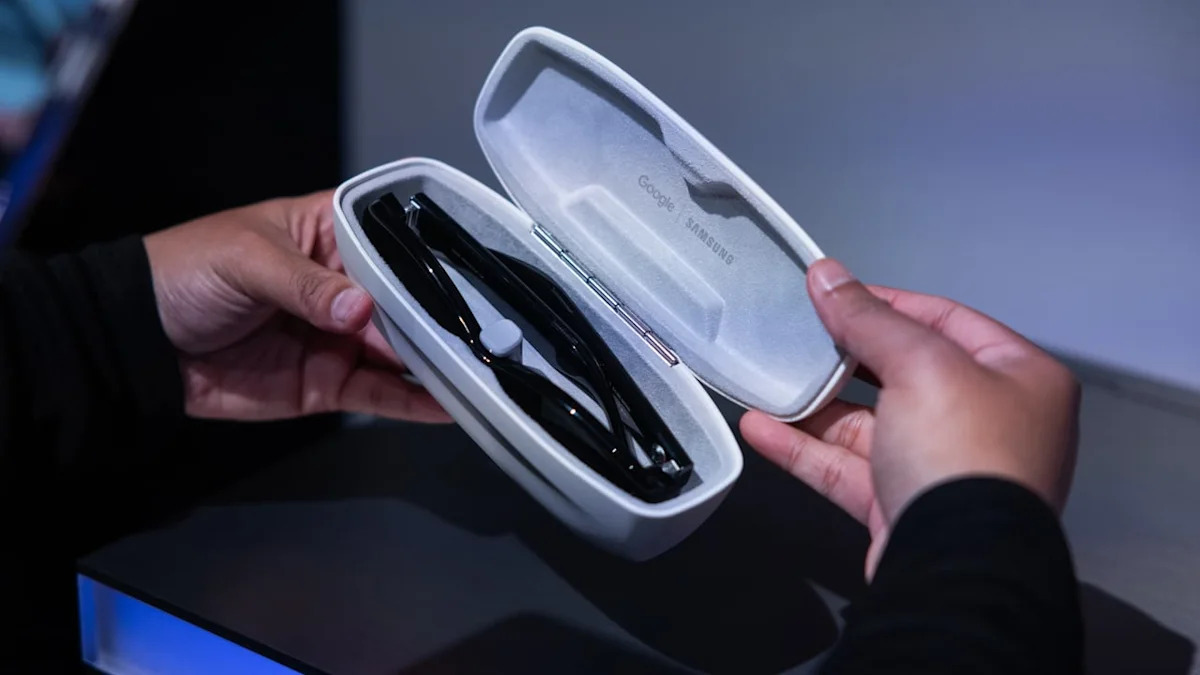
Samsung officially entered the smart eyewear market at its 2026 Galaxy Unpacked event in London, unveiling the Galaxy Glasses — a display-free, AI-powered wearable built with Google and designed alongside eyewear brands Gentle Monster and Warby Parker. eWeek and Yahoo Tech report the glasses run on Google's Android XR platform with Gemini AI baked in, priced at around $379 and set to launch this fall.
Unlike Meta's Ray-Bans or Apple's Vision Pro, the Galaxy Glasses have no screen at all. They rely entirely on voice commands, gestures, and a connected Galaxy smartphone to work — making Gemini AI the central interface for everything from reading messages to translating conversations in real time.
What Galaxy Glasses Can Actually Do for You
The glasses pack a 12MP Sony camera, open-ear directional speakers, and microphones into a frame weighing about 50 grams. Yahoo Tech reports the battery lasts up to nine hours per charge, and the included case can top them up seven more times — enough for most full days of use.
Gemini AI handles the heavy lifting. It can summarize long messages, read information aloud, and translate live conversations. Photos flow into a dedicated gallery app. Copied text and images can go straight into Samsung Notes. Control happens mainly through voice and hand gestures tied to a Galaxy Watch 9 — no tapping a frame, no staring at a display.
Qualcomm Chip Keeps AI Fast Without Draining the Battery
Inside the glasses sits a Qualcomm Snapdragon AR1 Gen 1 chip with a built-in Hexagon NPU. NPU stands for neural processing unit — a small, efficient chip designed specifically to run AI tasks. This lets the glasses handle basic AI work on-device without constantly sending data to the cloud, which also saves battery life.
Still, the Galaxy Glasses are not a standalone device. They need a connected Galaxy phone to function fully. Samsung designed them this way on purpose, keeping the glasses light and simple while the phone does the heavier computing work.
Two New Frame Designs Previewed Before Fall Launch
Samsung showed off two additional frame designs at Google I/O alongside the main reveal. Road to VR reports one is a boxy black design from Gentle Monster and the other is a rounded red-brown frame from Warby Parker. More styles are planned for the fall launch window, giving buyers real fashion choices — not just one generic tech look.
Daily Guardian notes that Samsung's decision to partner with established eyewear brands is deliberate. The goal is to make the glasses look like something you'd actually want to wear, not a gadget strapped to your face. Multiple colors and frame shapes are expected when the glasses hit shelves.
Built-In Camera Sparks Real Privacy Concerns
Any glasses with an always-ready camera draw scrutiny, and Galaxy Glasses are no exception. Samsung added a recording LED light that turns on when the camera is active. Software also disables the camera if the LED is blocked or covered — a direct response to fears about secret recording in public spaces. Crypto Briefing confirmed these features were highlighted at the unveiling.
The timing is tricky. New York state passed a law banning recording-capable eyewear in courthouses, effective July 20, 2026 — just weeks before the Galaxy Glasses are expected to launch. Samsung has also not published a clear policy on how Gemini handles footage it captures, a gap that privacy advocates are already pointing to as a problem.
Sentiment
Mostly PositiveNEGATIVENEUTRALPOSITIVE
Publishers
27
Articles
10
Reach
37
A
AnonymousAuthor


