Free Speech vs. Government Action
Federal Lawsuit Alleges DHS, ICE Violated Writer's Free Speech After Email
Anonymous
Key Points
1
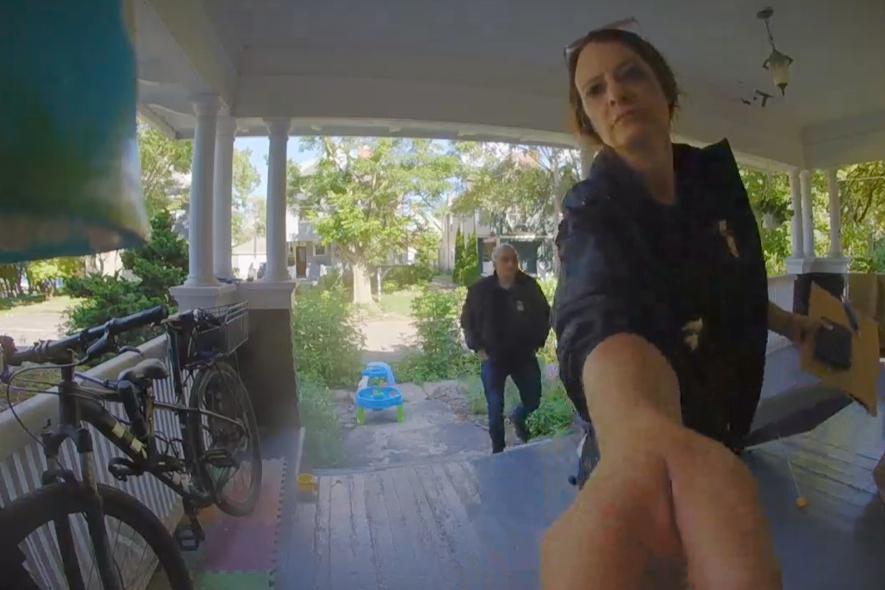
On June 23, two federal agents visited Streever's Rochester home and delivered a written Warning Notice stating he may be in violation of federal law for his January email.
2
The January email to Lyons was a three-paragraph message with the subject line 'What’s next,' in which Streever compared Lyons to Reinhard Heydrich, called him a 'monstrous human being,' and warned that he would 'never know peace.'
3
The email’s timing is tied to the Minneapolis anti-ICE demonstration, where an ICE officer fatally shot Renee Nicole Good and another officer, Alex Pretti, two days before Streever sent the email, a detail cited in the lawsuit context.
4
FIRE’s attorney Adam Steinbaugh characterized the action as intimidation of political speech, saying, 'That shouldn't mean that the federal agents are going to knock on your door and give you a written warning about your speech.'
5
The case is part of a broader pattern in which multiple upstate New York residents were issued warnings in June after criticizing ICE, signaling a wider enforcement approach rather than an isolated incident.
A Rochester, New York writer is suing the federal government after ICE agents showed up at his home over a three-paragraph email. David Streever filed a federal lawsuit against the Department of Homeland Security, saying agents violated his First Amendment rights by visiting him and delivering a written warning over a message he sent criticizing a top ICE official, according to LAIST.
Streever sent the email in January to former ICE acting director Todd Lyons. He compared Lyons to a Nazi official, called him a 'monstrous human being,' and warned he would 'never know peace.' On June 23, two federal agents came to his Rochester home and handed him a written Warning Notice saying he may have broken federal law, BTimes Online reported.
The Email That Triggered a Federal Visit
Streever wrote the email two days after a deadly anti-ICE protest in Minneapolis. At that demonstration, an ICE officer fatally shot Renee Nicole Good and wounded another officer, Alex Pretti. The timing is noted in the lawsuit as context for Streever's political anger, according to LAIST.
The email's subject line read 'What's next.' In it, Streever compared Lyons to Reinhard Heydrich, a senior Nazi official. He called Lyons a 'monstrous human being' and said Lyons would 'never know peace.' Streever says it was political outrage — not a threat — and that it is fully protected speech under the First Amendment.
Agents Tracked Streever to a New York City Hotel
Federal agents did not stop at the Rochester visit. Agents also sought Streever at a hotel in New York City, tracking his travel, according to Journal Advocate. His lawyers say that kind of monitoring goes far beyond any legitimate law enforcement purpose.
Streever is represented by the Foundation for Individual Rights and Expression, known as FIRE. FIRE attorney Adam Steinbaugh was blunt about what happened. 'That shouldn't mean that the federal agents are going to knock on your door and give you a written warning about your speech,' Steinbaugh said, according to BTimes Online.
DHS Says It Was Investigating Real Threats
DHS and ICE defend their actions. Officials say agents were investigating credible threats made toward federal employees. An office linked to the case said claims of suppressing free speech are false. The agencies argue they have a duty to keep officials safe, Newscord reported.
FIRE argues the government crossed a clear line. Sending agents to someone's home with a written legal warning — over a political email — is intimidation, not safety work, the group says. The lawsuit asks a court to rule that Streever's email was protected speech and that the government's response was unconstitutional.
Rochester Case Is Part of a Wider Pattern in New York
Streever's case is not isolated. Multiple upstate New York residents received similar Warning Notices in June after criticizing ICE, according to LAIST. That pattern suggests a coordinated enforcement approach, not a one-off response to a single email.
The cases raise a sharp legal question: where does the line fall between political speech and a threat? Courts have long protected harsh, angry criticism of public officials. FIRE says the government's approach risks silencing everyday Americans who speak out against federal policy, Trentonian reported.
Sentiment
Mostly NegativeNEGATIVENEUTRALPOSITIVE
Publishers
12
Articles
48
Reach
60
A
AnonymousAuthor


