Maine Senate Shake-Up
Graham Platner withdraws from Maine Senate race after allegation; Democrats to name new nominee.
Anonymous
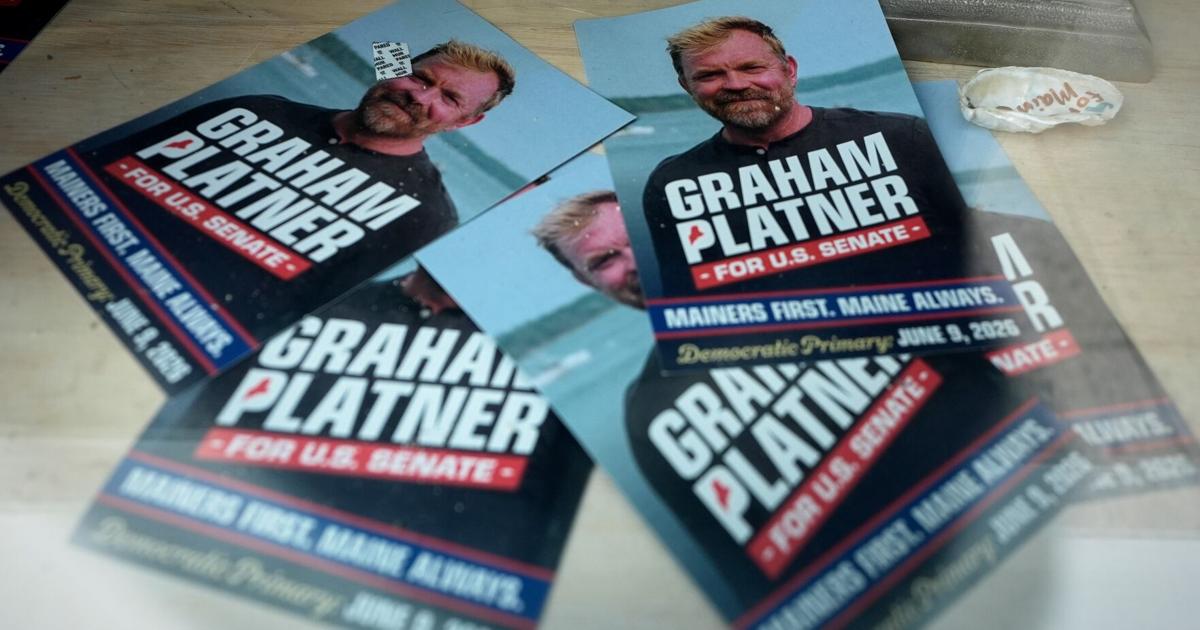
Graham Platner has formally withdrawn from Maine's U.S. Senate race, submitting his signed paperwork to the Secretary of State's office on July 10, 2026 — just days after a detailed sexual assault allegation ended his campaign AP. The Maine Democratic Party will hold a nominating convention on July 25 in Bangor to pick his replacement, with 601 delegates casting votes to choose who will face Republican Senator Susan Collins in November.
Platner won the June 9 primary with 72% of the vote and briefly led Collins in polls — one New York Times/Siena survey put him ahead 49% to 47% AP. His exit now forces Democrats to rebuild their Senate campaign from scratch with under four months until Election Day.
Sexual Assault Allegation Collapsed His Campaign in Days
On July 6, Politico published an account from Jenny Racicot, a 41-year-old Maine resident and Platner's ex-girlfriend. She said Platner entered her home while heavily intoxicated in late 2021 and raped her. "I remember the specific moment where I thought to myself, 'This is no longer my choice,'" Racicot told Politico. Platner denied the allegation immediately.
Within hours of the report, top Democrats pulled their endorsements. Senate Democratic Leader Chuck Schumer and the DSCC warned that they would "not invest in the Maine Senate race if Platner remains on the ballot" AP. Senator Bernie Sanders, an early Platner backer, recommended he step aside. Representative Ro Khanna said the allegations were "very serious and credible" and withdrew his support.
Three Democrats Are Already Racing for the Open Nomination
Three candidates quickly stepped forward after Platner's July 8 announcement that he was suspending operations AP. Former Maine Senate President Troy Jackson — a fifth-generation union logger backed by Bernie Sanders' group Our Revolution — was first. He said simply: "I'm in. And we're going to defeat Susan Collins." Secretary of State Shenna Bellows, a former ACLU director, declared next, saying "I'm not stopping now."
Dr. Nirav Shah, the former director of Maine's CDC who gained a national profile during the COVID-19 pandemic, formally declared his candidacy on July 10 AP. Early flash polling by Z to A Research tested all three against Collins. Every matchup — Shah 47% to Collins 46%, Bellows 47% to 47%, Jackson 47% to Collins 48% — fell within the poll's ±3.1% margin of error, making the race a statistical toss-up.
Convention Rules: 601 Delegates, 16 Counties, One Month to Decide
The July 25 convention will be the first of its scale in Maine Democratic Party history AP. Of the 601 total delegates, 101 are members of the Democratic State Committee. The remaining 500 are split among Maine's 16 counties based on 2024 primary turnout. County chairs must hold emergency local caucuses between July 11 and July 20 to elect those delegates.
To qualify for the ballot, candidates must collect between 500 and 1,000 signatures from registered Maine Democrats. The signatures must include at least 50 from no fewer than eight of Maine's 16 counties. Delegates will be unpledged, and voting will continue in successive rounds until one candidate wins a simple majority AP. The party must submit the winner's name to the Secretary of State by July 27.
Democrats Face a Money Gap and a Vetting Problem
Platner raised $4 million in the first quarter of 2026 alone AP. But under federal election law, those funds cannot easily be transferred to a new candidate. Whoever wins the July 25 convention starts their war chest essentially at zero — with less than four months until the November election against a five-term incumbent.
Analysts say Platner's collapse exposed a deeper flaw in how modern parties vet candidates. Writing in The Washington Post, commentators noted it "highlights the hollowness of America's political parties" — because parties no longer control who gets on the ballot, a populist candidate with, as analysts described it, "a battalion of skeletons" won the nomination on anti-establishment energy alone AP. Susan Collins, the only Republican senator from a state Kamala Harris won in 2024, remains the top Democratic Senate target nationally.
Sentiment
NeutralNEGATIVENEUTRALPOSITIVE
Publishers
32
Articles
31
Reach
32
A
AnonymousAuthor


