Canada's Flexrotor Purchase
Airbus and Voyageur Secure Canada's First Flexrotor UAS Order, Advancing ISR Capabilities
Anonymous
Key Points
1
The U030 Flexrotor has demonstrated operation in GPS-denied environments, underscoring its resilience in high-threat or contested settings.
2
Voyageur’s sale marks a strategic expansion into the UAS domain for Canada, with the company positioned to provide in-service support and integrate the platform into its ISR capabilities.
3
The U030 Flexrotor is classified as a Group 2 tactical VTOL UAS designed for long-endurance ISR, capable of multi-mission operations from both land and maritime environments.
4
Executive quotes emphasize the deal’s strategic importance: Cory Cousineau called it 'a significant advancement in Voyageur's ISR strategy and an important first for the Canadian market,' while Dwayne Charette highlighted Airbus’ commitment to delivering next-generation capabilities in the region.
5
Beyond military use, Airbus and Voyageur highlight civilian and defense applications, including border and land security surveillance, environmental monitoring, search and rescue, maritime operations, and Arctic operations.
Airbus Helicopters and Voyageur Aviation have signed Canada's first purchase order for the U030 Flexrotor drone, a deal announced at the Farnborough International Airshow. The agreement makes Voyageur, a North Bay, Ontario-based company, the Canadian launch customer for the system, according to Canadian Defence Review.
The deal builds on a memorandum of understanding signed in May 2026 at CANSEC, Canada's major defence trade show. It marks a clear push by Airbus to grow its next-generation drone business in Canada, according to Newswire.
What the U030 Flexrotor Can Actually Do
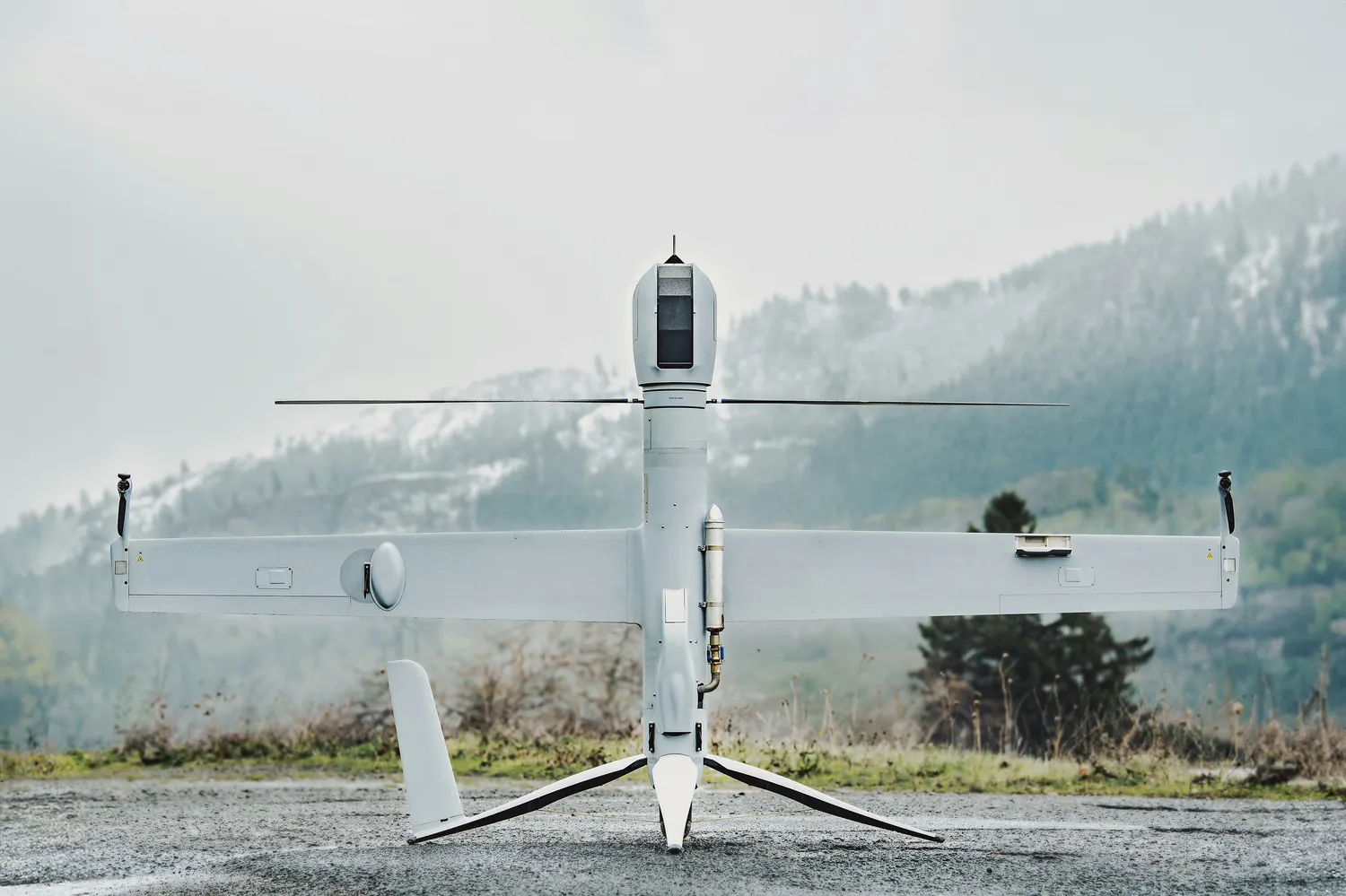
The U030 Flexrotor is a 25 kg drone that can take off and land vertically. It fits inside a 3.7 by 3.7 metre space, making it usable from ships or small land sites. It can fly for more than 12 hours without stopping, according to SUAS News.
The system is classified as a Group 2 tactical UAS — a military term for mid-size drones built for long missions. It can work without GPS signals, which matters in areas where enemies try to jam navigation systems. That makes it useful in contested or high-threat zones, according to Aerospace Global News.
Voyageur Eyes Arctic Missions and Border Surveillance
Voyageur and Airbus say the drone suits a wide range of jobs. These include Arctic monitoring, wildfire surveillance, border security, search and rescue, and infrastructure inspection. Canada's vast northern territory makes long-endurance drones especially valuable, according to My North Bay Now.
Cory Cousineau of Voyageur called the deal "a significant advancement in Voyageur's ISR strategy and an important first for the Canadian market." ISR stands for intelligence, surveillance, and reconnaissance — the core task of spy and monitoring drones. Voyageur plans to provide in-service support for the platform inside Canada, according to Canadian Defence Review.
Airbus Bets on Canada as a UAS Growth Market
Dwayne Charette of Airbus said the company is committed to "delivering next-generation capabilities" to Canada. The Farnborough signing follows months of groundwork after the May 2026 CANSEC agreement. Airbus sees the deal as a gateway to wider Canadian defence and civilian contracts, according to SUAS News.
Beyond defence, Airbus and Voyageur highlight commercial uses such as environmental monitoring, maritime operations, and wildfire response. The platform's ability to launch and recover autonomously — with no pilot needed on-site — lowers the cost and complexity of running long missions, according to Aerospace Global News.
Sentiment
Mostly PositiveNEGATIVENEUTRALPOSITIVE
Publishers
10
Articles
15
Reach
25
A
AnonymousAuthor