Canada Tariffs Escalate Trade War
Canada Imposes Retaliatory Tariffs on U.S. Goods as Trade Tensions Escalate
Anonymous
Key Points
1
Canada said the retaliatory tariffs would not apply to U.S. goods already in transit to Canada when the measures took effect.
2
The tariff dispute has prompted some Canadian retailers to highlight “Made in Canada” products, while Japanese brewer Sapporo reportedly shifted some production from Canada to the United States.
3
Trump separately threatened to block Canadian aircraft manufacturer Bombardier from selling planes in the United States, adding pressure beyond the announced tariff measures.
4
Carney urged the Trump administration to “start being serious” about negotiations, while Trump countered that the United States does not need Canada and that “they need us.”
5
In the hockey-cartoon post, Trump also complained that Canada’s currency imbalance with the United States was “unacceptable,” without explaining what specific imbalance he meant.
Canada fired back Tuesday with retaliatory tariffs ranging from 15% to 50% on more than 700 U.S. products worth about $27.6 billion, starting at 12:01 a.m. Eastern. Politico reported the measures target dairy, steel, aluminum, appliances, agricultural equipment, pulp and paper, electronics, cheese, honey and foil — a direct response to Washington's 50% duties after trade negotiations collapsed. The tariff war has already increased costs and uncertainty for businesses and consumers on both sides of the border.
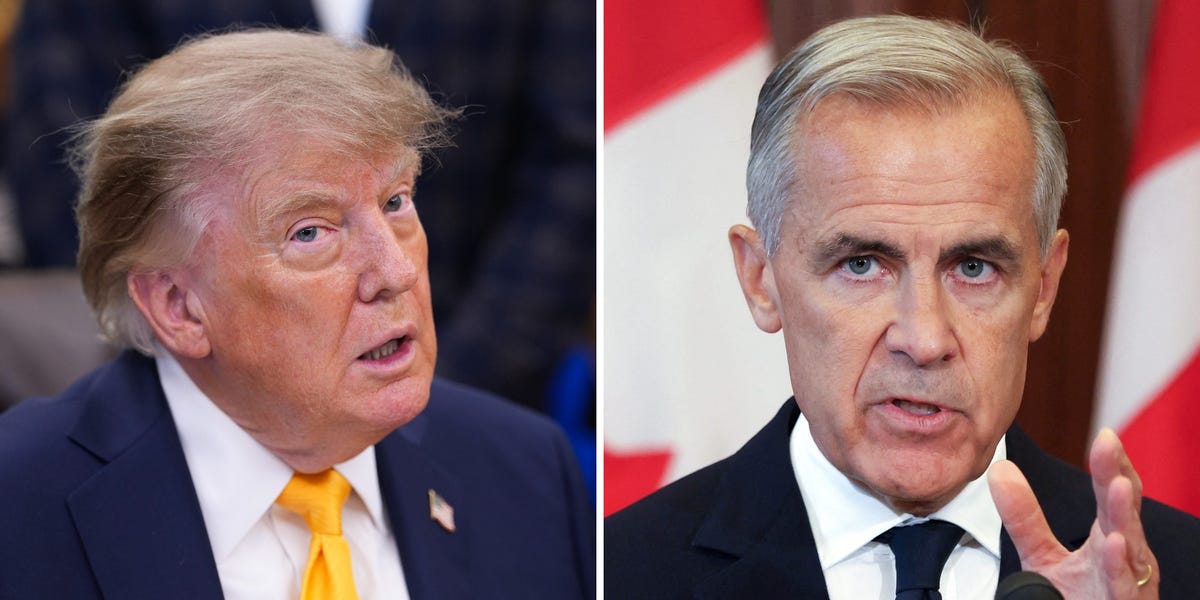
The dispute has turned personal as well as economic. Sportskeeda reported that President Donald Trump mocked Prime Minister Mark Carney with a hockey cartoon on Truth Social, calling him "governor" and reviving his suggestion that Canada become the 51st U.S. state. Carney urged the Trump administration to "start being serious" about negotiations, while Trump countered that the United States does not need Canada and that "they need us."
Why Canada Targeted Industrial Goods Alongside Food
Canada's tariff list mixes highly visible consumer products with industrial inputs to maximize pressure on U.S. exporters. Steel, aluminum, pulp, paper, and agricultural equipment affect supply chains and production costs across multiple industries. The Epoch Times noted the tariffs hit approximately $20 billion in goods — enough to disrupt major sectors rather than pinch individual products. This approach gives Canada broader negotiating leverage than narrower measures would provide.
Who Really Pays for These Tariffs
Importers initially pay the tariff to Canadian customs, but costs flow downstream to retailers, manufacturers, consumers, and U.S. exporters through higher prices and reduced profit margins. Because the tariffs cover consumer goods like cheese and honey alongside industrial inputs like steel, the pain spreads widely rather than concentrating in one sector. Renegotiated contracts and production delays will likely follow, extending the disruption beyond grocery store shelves into factories and construction sites.
Trump Escalates With Threats Beyond Tariffs
The tariff battle is not the only economic pressure point. San.com reported that Trump separately threatened to block Canadian aircraft manufacturer Bombardier from selling planes in the United States. Goods already in transit to Canada when the tariffs took effect will be exempt, but ongoing U.S. exports face immediate higher costs. Trump also complained in his hockey cartoon that Canada's currency imbalance was "unacceptable," though he did not specify which imbalance he meant.
Nationalism and Symbols Make Compromise Harder
Trump's public taunts and hockey cartoons have transformed a technical tariff dispute into a sovereignty and nationalism issue. CTV News noted that such rhetoric raises the political cost of compromise, because Canadian leaders must now prove they are defending national autonomy — including Quebec's French-language protections. An AI-generated video dramatizing the exchange circulated online, further amplifying the conflict's symbolic weight. When leaders trade insults on social media, business-focused negotiations become much harder to restart.
Sentiment
Mostly NegativeNEGATIVENEUTRALPOSITIVE
Publishers
20
Articles
32
Reach
52
A
AnonymousAuthor


