Lego builds, inspiring spirit.
Mingo Graham, Paralyzed After Crash, Builds Lego Masterpieces Using Finger, Thumb, And Mouth For Peace.
Anonymous
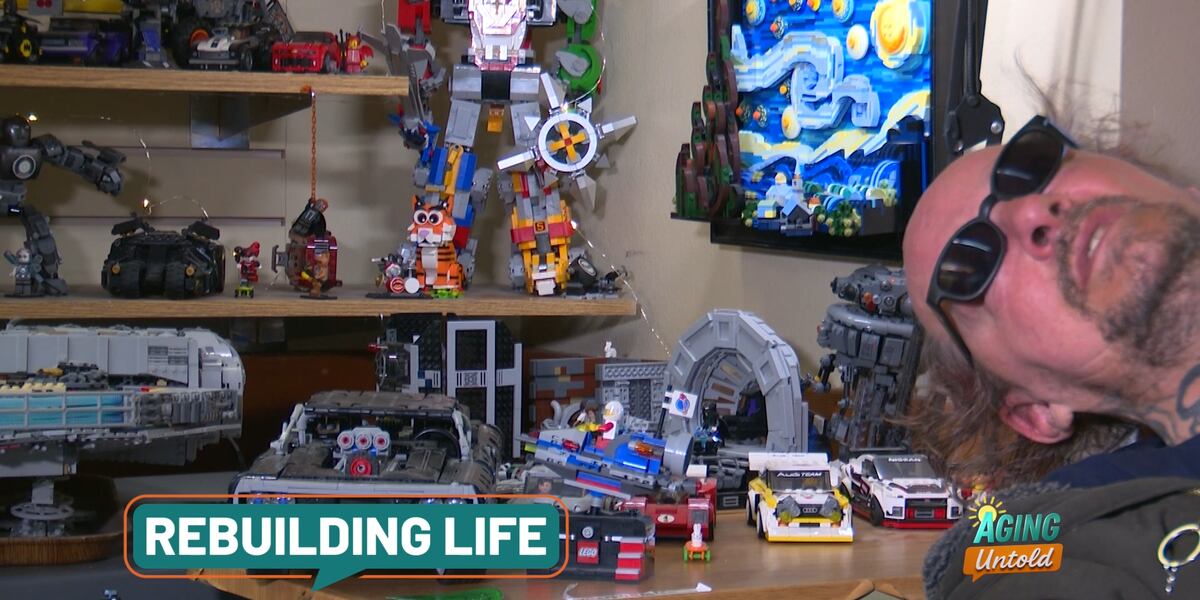
Ten years after a motorcycle crash left him paralyzed, Mingo Graham is building elaborate Lego sets — using just one finger, a thumb, and his mouth. WILX reports that Graham has turned the hobby into a source of motivation and peace, stunning those around him with his upbeat attitude.
Graham began building Lego sets during his eight months of recovery at a rehabilitation home in Anchorage, Alaska. What started as a way to pass time has become a defining part of his life — and a testament to what determination looks like.
A Crash That Changed Everything About Daily Life
The motorcycle crash happened a decade ago and left Graham with severe paralysis. He lost the use of most of his body. What remained was limited — one working finger, a partial thumb, and full use of his mouth. Most people might set aside a hobby like Lego building. Graham did the opposite.
He spent eight months at a rehabilitation home in Anchorage, Alaska, without leaving. During that stretch, Lego sets gave him something to focus on. The challenge of snapping tiny bricks together with such limited movement became a daily goal, according to WIS TV.
How He Actually Builds Brick by Brick
Graham uses his one working finger and partial thumb to grip and position pieces. He also uses his mouth to hold or guide bricks when his hands cannot manage. The process is slow and precise. A set that might take most people a few hours can take Graham much longer.
Despite the difficulty, he completes full builds — not simple starter sets, but detailed Lego masterpieces. 1011now reports that the builds give him a genuine sense of peace and serve as a daily source of motivation to keep going.
His Positivity Catches People Off Guard
Graham says his attitude often surprises the people he meets. Most expect someone in his situation to feel defeated. Instead, he brings energy and optimism. He has spoken openly about how the Lego hobby plays a direct role in keeping his mindset strong, according to WNEM.
WALB reports that Graham's story has resonated widely, with many people struck by the contrast between the limitations he faces and the complexity of what he creates. His builds stand as physical proof that purpose and creativity do not require a fully working body.
Lego as Therapy, Not Just a Hobby
For Graham, Lego building is more than fun. It functions as a form of mental and emotional therapy. Completing a build gives him a clear goal and a concrete result — two things that can be hard to find during long stretches of life with paralysis.
WSAW notes that Graham's story highlights how creative hobbies can serve as powerful tools for people recovering from or living with serious injuries. His ten-year journey from crash survivor to Lego builder shows that adaptation, done with enough drive, can look like art.
Sentiment
NeutralNEGATIVENEUTRALPOSITIVE
Publishers
16
Articles
15
Reach
16
A
AnonymousAuthor


