KOSPI Foreign Sell-Off
KOSPI declines as foreign investors dump shares ahead of Samsung earnings, signaling distribution phase risk.
Anonymous
Key Points
1
Foreign investors have sold for 11 straight sessions, totaling over 157 trillion won ($100 billion) in net outflows since the year began, underscoring persistent exit pressure ahead of Samsung Electronics’ earnings.
2
Analysts say the Kospi may be entering a distribution phase, with a potential move toward the 100-day moving average around 6,968 won as foreign selling continues and retail leverage could amplify moves.
3
Intraday, the Kospi briefly slipped below the 8,000 level, trading around 8,071.31 at 11:05 a.m., signaling continued pressure even as some retail buying occurred.
4
The KOSDAQ index extended losses, falling about 3.7% to the mid-830s (around 836), reflecting broad weakness in tech-related smaller caps.
5
Retail investors were net buyers while foreigners and institutions were net sellers on July 6, with retail net buying around 1.05 trillion won and foreign/institutional net selling around 380.5 billion won and 757.1 billion won, respectively.
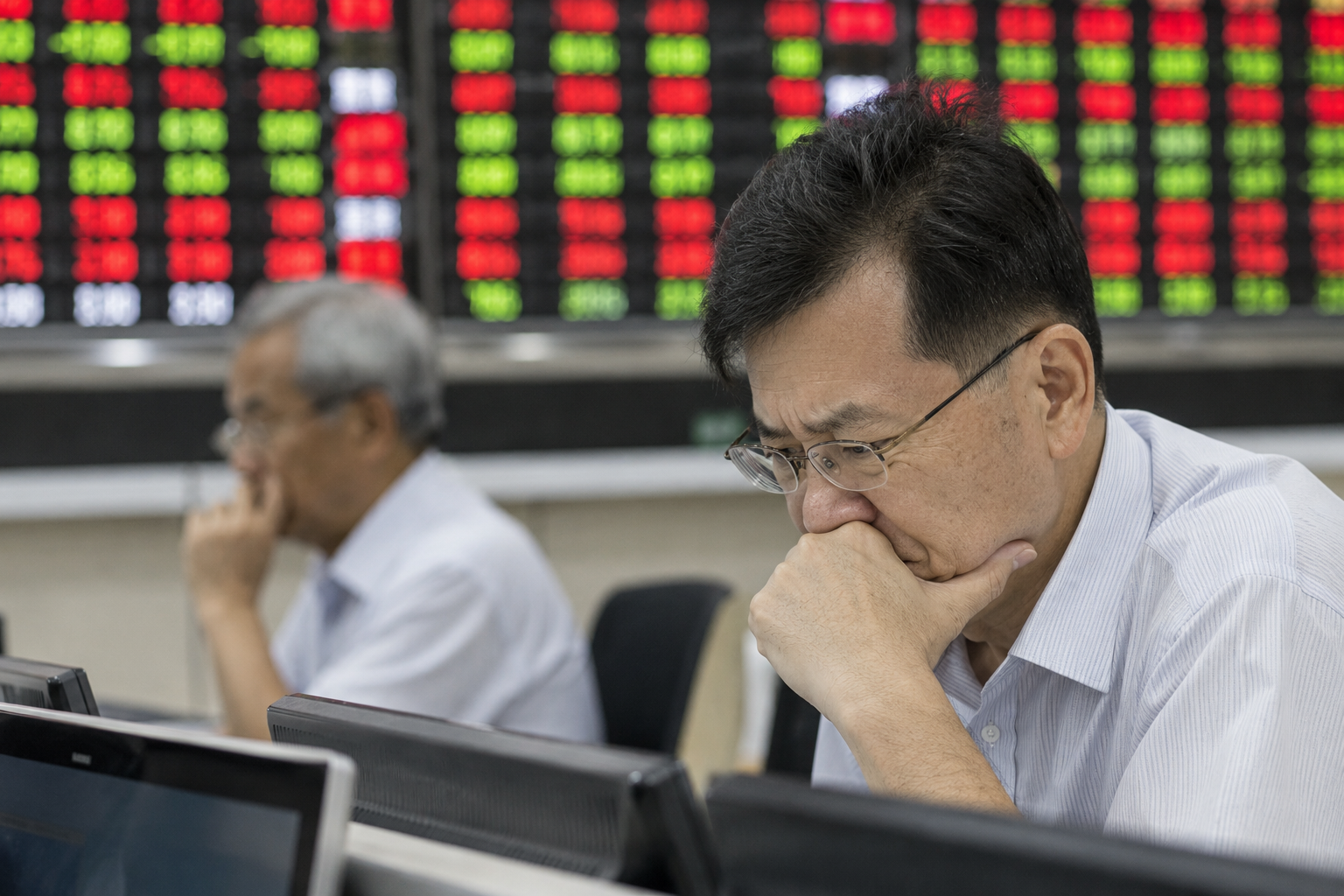
South Korea's Kospi fell under pressure on July 6 as foreign investors dumped shares for the 11th straight session ahead of Samsung Electronics' preliminary earnings report. Invezz reported the index slid more than 1.5%, briefly dipping below the 8,000 mark before recovering slightly to trade around 8,071 by late morning.
Foreign and institutional sellers have now pulled over 157 trillion won — roughly $100 billion — out of South Korean stocks since the start of the year. Retail investors stepped in as buyers, but their net purchases of 1.05 trillion won were not enough to offset the selling wave.
Foreign Sellers Drive Kospi Toward Danger Zones
Foreigners sold a net 380.5 billion won worth of shares on July 6. Institutions added another 757.1 billion won in net selling, according to Bloomingbit. That one-two punch kept the Kospi pinned down even as retail buyers tried to prop up the market.
Analysts now warn the Kospi may be entering what traders call a "distribution phase." That is when big investors quietly offload shares before prices drop sharply. Invezz noted the index could slide toward its 100-day moving average, which sits near 6,968 — a drop of roughly 13% from current levels.
Samsung and SK Hynix Split as Memory Sector Wobbles
Samsung Electronics edged up modestly in early trading on July 6, even as investors braced for its preliminary earnings release. But SK Hynix told a different story, tumbling sharply and dragging the broader index lower. The two chipmakers together carry enormous weight on the Kospi, making their moves felt across the entire market.
The memory chip sector is the heart of South Korea's stock market. When foreign investors fear weak guidance on chip prices, they sell first and ask questions later. Invezz warned that if earnings guidance for memory chips softens, the selloff could deepen and pull the Kospi toward its key moving averages.
KOSDAQ Drops 3.7% as Small-Cap Tech Takes a Hit
While the Kospi held above 8,000 by late morning, the KOSDAQ index — home to smaller tech companies — was hit much harder. It fell about 3.7%, dropping to around 836. That is a steep single-day move and signals that the selling was not limited to large-cap names.
Major chipmakers listed on the KOSDAQ saw broad declines. The weakness spread across tech-related sectors, showing that market nerves went beyond just Samsung and SK Hynix. Smaller firms with less trading volume tend to fall faster when big investors exit, and July 6 was no exception.
Retail Buyers Cannot Stop the Bleeding Alone
Retail investors bought a net 1.05 trillion won in shares on July 6, according to Bloomingbit. That sounds like a lot. But foreigners and institutions sold a combined 1.14 trillion won. The retail bid was almost entirely wiped out by institutional and foreign exit pressure.
Analysts flagged another risk: retail leverage. When individual investors borrow money to buy stocks and the market keeps falling, they are forced to sell quickly to cover their loans. Invezz warned that this dynamic could amplify any further downturn, turning a moderate selloff into a sharper drop if foreign outflows accelerate.
Sentiment
Mostly NegativeNEGATIVENEUTRALPOSITIVE
Publishers
13
Articles
3
Reach
16
A
AnonymousAuthor


