Hezbollah Disarmament Talks
Aoun Presses Trump for Israel's Lebanon Withdrawal Amidst Fragile Hezbollah Disarmament Framework
Anonymous
Key Points
1
Rome-brokered talks between Lebanon and the U.S. ended without a timetable for implementing the trilateral security framework, underscoring the fragility of the agreement.
2
Lebanon’s assertion that Hezbollah was not involved in the U.S.-sponsored framework highlights the political hurdles to any disarmament deal and the risk of broader regional pushback.
3
Lebanese military deployment in Zawtar al-Gharbiya (Nabatieh) proceeded in coordination with the Military Coordination Group, with Israeli forces reportedly firing near advancing troops, illustrating on-the-ground friction during the pilot-zone phase.
4
Israel began a partial withdrawal by transferring control of three villages to the Lebanese army in line with the Yellow Line framework; Prime Minister Trump urged Aoun to meet Netanyahu, but Aoun conditioned any meeting on broader withdrawal.
5
U.S.-Lebanon discussions extended to modernization and equipment for the Lebanese Armed Forces, including potential surveillance tech and faster defense procurement, with talk of anti-corruption reforms and potential implications for regional energy markets and risk premiums.
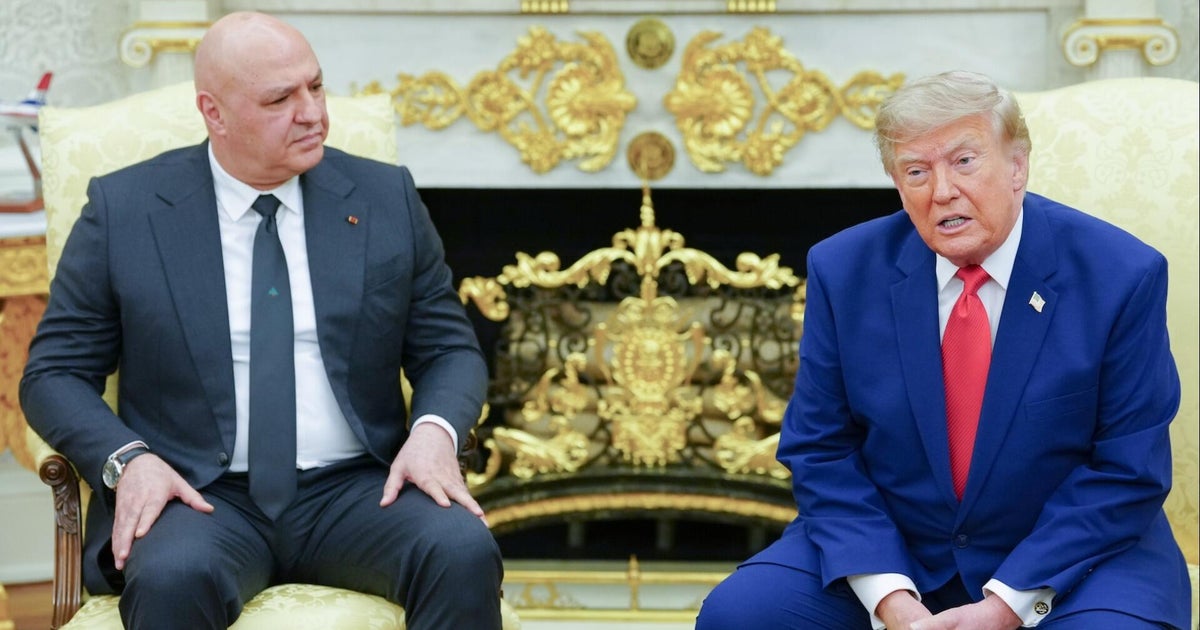
Lebanese President Joseph Aoun met with U.S. President Donald Trump at the White House on Tuesday, pressing Washington to push Israel to fully withdraw from southern Lebanon. USA Today reported that Trump used the meeting to warn Iran, saying the U.S. will strike Iranian nuclear sites if Iran tries to reconstitute its nuclear program.
The visit comes as a fragile ceasefire framework — brokered with U.S. involvement — tries to hold. The deal aims to get Hezbollah disarmed and the Lebanese army deployed in the south. But no timetable has been set, and tensions on the ground remain high, according to CBS News.
Aoun Pushes Trump for Full Israeli Pullback
Israel has started a partial withdrawal, handing control of three villages to the Lebanese army near the so-called Yellow Line — the boundary Israeli forces must ultimately leave. But Aoun wants more. He told Trump that a broader Israeli withdrawal is needed before Lebanon can move forward with deeper security cooperation, according to CBS News.
Trump urged Aoun to meet Israeli Prime Minister Benjamin Netanyahu directly. Aoun pushed back, conditioning any such meeting on a wider Israeli pullout. The exchange showed how far apart the two sides remain, even as U.S. officials push for a durable regional deal, USA Today reported.
Hezbollah Disarmament Remains the Hardest Step
The core of the U.S.-backed framework is getting Hezbollah to give up its weapons. Lebanon insists Hezbollah was not part of the U.S.-sponsored talks. That matters because Hezbollah controls much of the south and will not disarm easily. Analysts warn that disarmament is a political project — not just a military one — and could take years.
Stalled talks over Iran's nuclear program add another layer of risk. If a U.S.-Iran deal collapses, Hezbollah — which is backed by Tehran — may have less reason to cooperate. Washington sees Hezbollah's disarmament and a lasting ceasefire as essential for stability across the region, CBS News reported.
Lebanese Army Deploys South Amid Live Friction
Lebanese troops moved into Zawtar al-Gharbiya in the Nabatieh area as part of a pilot-zone deployment. The advance was coordinated through the Military Coordination Group, a trilateral body that includes U.S. and Israeli liaisons. But Israeli forces reportedly fired near the advancing Lebanese troops, showing how tense the handover process remains on the ground.
The pilot-zone phase is meant to prove that the Lebanese army can hold territory without Hezbollah. If it works, it could speed up a broader Israeli pull-back. If it fails, the whole framework could unravel before it gets started.
U.S. Offers Military Aid and Modernization Support
Beyond the ceasefire talks, Aoun asked Trump for more U.S. military help. Discussions covered new equipment for the Lebanese Armed Forces, including potential surveillance technology and faster defense procurement. Aoun also wants reconstruction funding to help rebuild after months of Israeli strikes that devastated parts of southern Lebanon and Beirut's suburbs.
Washington tied future aid to anti-corruption reforms inside Lebanon. The U.S. sees a stronger, better-equipped Lebanese army as the key to keeping Hezbollah from refilling the power vacuum in the south. CBS News noted that Trump spoke at length during the joint press conference about the Iran threat, framing Lebanon's security as part of a wider regional picture.
Sentiment
Mostly NegativeNEGATIVENEUTRALPOSITIVE
Publishers
48
Articles
148
Reach
196
A
AnonymousAuthor


