Diplomatic Retaliation
Russia Orders German Consulates and Cultural Centers to Close Amid Rising Tensions
Anonymous
Trending on XRussia-Ukraine War: Drone Strike on Kyiv SBU Headquarters
Key Points
1
Germany has provided more than $50 billion in civilian aid and nearly $67 billion in military assistance to Ukraine, according to its Foreign Ministry.
2
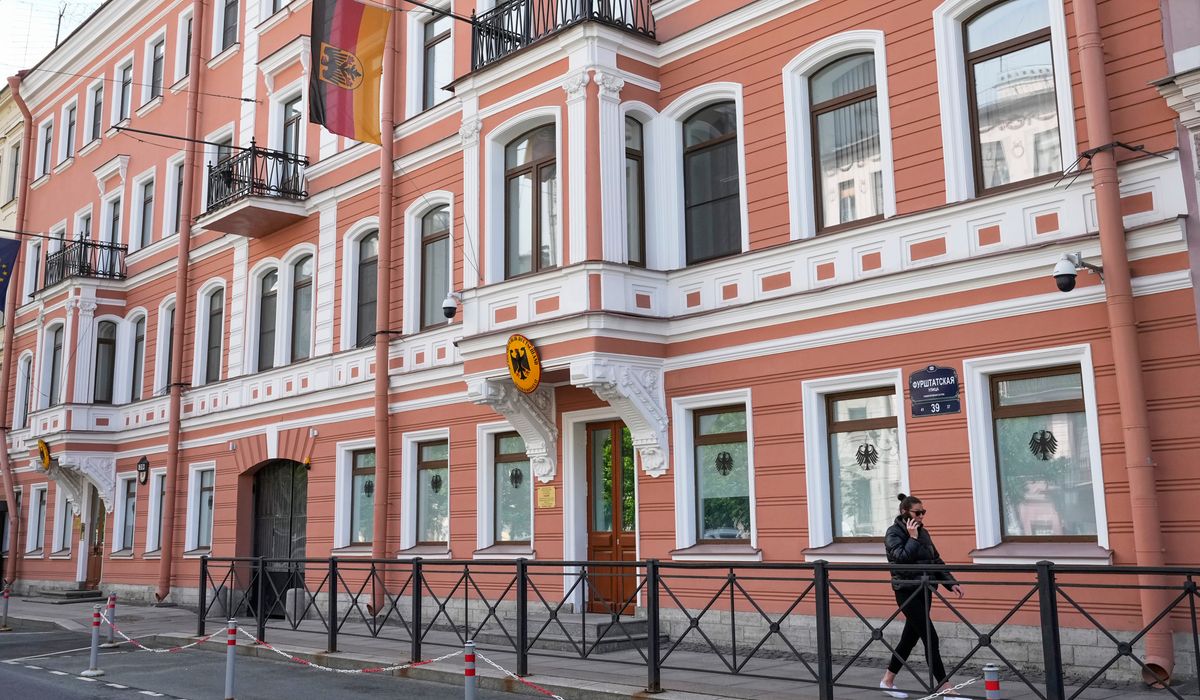
The Russian Foreign Ministry said it formally notified Germany’s head of mission in Moscow and withdrew its consent for the German Consulate General in St. Petersburg to operate.
3
Germany also announced tighter border controls for Russian citizens alongside its decision to close the Russian consulate in Bonn and terminate the agreement governing the Russia House cultural center in Berlin.
4
Sergey Lavrov compared the closures of Russia’s Bonn consulate and Berlin cultural center with events preceding World War II, saying the measures suggested that Germany wanted war again.
Russia ordered Germany's consulate in St. Petersburg to close by September 18 and demanded its staff leave the country Washington Times. The move came after Germany shut down Russia's consulate in Bonn and a Russian cultural center in Berlin, citing an alleged Russian involvement in an attempted drone attack near a Ukrainian aircraft at Leipzig/Halle Airport on August 4 Al Jazeera. Russia denied the charges and called the accusations fabricated, with Foreign Minister Sergey Lavrov warning that such measures could mark the start of a real war Washington Times.
Germany Closes Russian Diplomatic and Cultural Outposts
Germany shut down Russia's consulate in Bonn and terminated operations of Russia House, Berlin's main cultural center Al Jazeera. Berlin also tightened border controls for Russian citizens in response to the suspected drone attack near the Ukrainian aircraft Caspian Post. The moves marked a major escalation in diplomatic tensions between the two nations as Germany continued supporting Ukraine with massive aid packages.
Germany's support for Ukraine has grown substantially. According to its Foreign Ministry, Berlin provided more than $50 billion in civilian aid and nearly $67 billion in military assistance to Ukraine Al Jazeera. Russia views this support as hostile and used it to justify its retaliation against German diplomatic operations.
Moscow Orders Closure of Germany's St. Petersburg Consulate
Russia's Foreign Ministry formally revoked consent for the German Consulate General in St. Petersburg to operate Caspian Post. All German staff must leave Russia by September 18, making the closure effective immediately Washington Times. The Russian Foreign Ministry announced the closure as retaliation for what it called Germany's "unfriendly actions" toward Moscow.
Germany also ordered closure of all Russian Goethe-Institut cultural centers operating in Russia. Foreign staff at these cultural institutions were told to leave by September 13 CBS 17. The dual closures of consulates and cultural centers signal that Germany and Russia are replacing practical diplomatic engagement with controlled disengagement.
Putin Denies Drone Attack Involvement, Warns of War
Russia rejected Germany's claims about the Leipzig airport drone incident, with President Vladimir Putin suggesting that evidence may have been planted Washington Times. Foreign Minister Sergey Lavrov went further, comparing Germany's consulate closures to events that preceded World War II Washington Times. Lavrov warned that the accusations could mark the beginning of an actual war between the nations.
Lavrov's rhetoric reflects Moscow's deepening frustration with Germany's alignment toward Ukraine and NATO. Russia views hybrid warfare accusations as a pretext to justify anti-Russian measures Crypto Briefing. The diplomatic freeze has eliminated remaining channels for crisis communication and cultural exchange between the two countries.
Sentiment
Mostly NegativeNEGATIVENEUTRALPOSITIVE
Publishers
38
Articles
290
Reach
328
A
AnonymousAuthor


