Steam Machine Failures
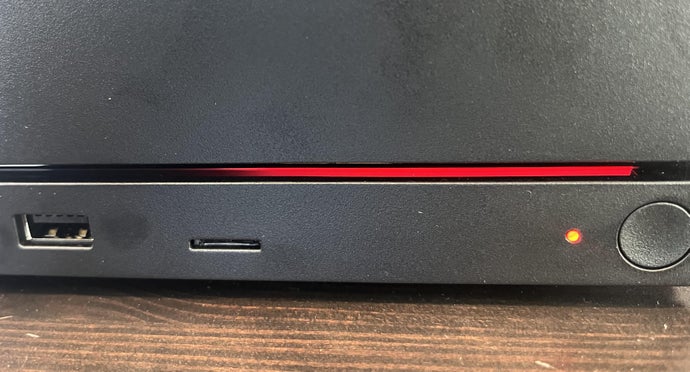
New Steam Machine units suffer 'red line of death' from critical GPU failures after updates
Key Points
The first widely reported failure case involved an early Steam Machine owner who bricked after a firmware update, after only a brief No Man's Sky session (roughly five minutes); Reddit user me_hill described the incident, and Digital Foundry highlighted that the LED pattern—a solid red line on the right half—corresponds to a GPU failure.
Valve's LED fault-code guide indicates the right-half red line is a GPU failure, but the front LED can display multiple fault patterns that map to issues such as overheating, no RAM, no SSD, or failed memory training, providing a broader troubleshooting language.
Launch pricing discussions noted the Steam Machine carried a price tag above $1,000—significantly higher than Valve had originally wanted to charge, a point of contention in early reception and analysis.
Industry commentary at launch included a remark from Shuhei Yoshida, the former PlayStation executive, who asked 'Am I going back to PS4 days?' in reference to the Steam Machine's early performance and market positioning.
Valve's new Steam Machine has run into a serious hardware problem just days after launch. Some early owners are reporting a failure now called the 'red line of death' — a solid red light across the right half of the device's front LED bar that signals a GPU, or graphics chip, has died, according to Games Radar and Eurogamer.
The comparison to the Xbox 360's infamous 'Red Ring of Death' has already taken hold online. For affected users, the situation is grim: the GPU is soldered directly onto the board and cannot be swapped out. That means a bricked unit may be beyond repair at home.
One Owner's Steam Machine Died After a Firmware Update
Reddit user me_hill was among the first to report the failure. Their Steam Machine worked briefly — running No Man's Sky for just a few minutes — before a firmware update killed it entirely. The device stopped producing any video output and displayed the red right-half LED pattern, according to Eurogamer.
Insider Gaming reported a slightly longer window before failure — around 20 minutes of use. Either way, the result was the same: a dead console with no obvious fix. Advice from the community has been simple — contact Valve directly for a replacement rather than attempting any DIY repair.
Valve's Own LED Guide Confirms GPU Fault Code
Valve published a fault-code guide that maps each LED pattern to a specific hardware problem. The solid red right-half pattern points directly to GPU failure. Other patterns in the same guide cover different issues — overheating, missing RAM, no SSD detected, or failed memory training — giving the front bar a full troubleshooting language, according to Games Radar.
The fact that Valve built this system into the hardware suggests the company anticipated that faults would need to be diagnosed. It also means the GPU failure code is official, not speculation. Digital Foundry highlighted that the LED pattern on me_hill's unit matched the GPU failure definition exactly.
Price Tag Above $1,000 Makes Failures Sting Harder
The Steam Machine launched at a price significantly above $1,000 — higher than Valve had originally intended to charge, according to Video Games Chronicle. That premium price point makes any early hardware failure feel especially painful for buyers who pre-ordered and waited months.
Former PlayStation executive Shuhei Yoshida added to the noise around launch, asking 'Am I going back to PS4 days?' — a pointed remark about the Steam Machine's early performance and market positioning. The red line incidents are arriving at the worst possible time for a device already facing questions about its value.
How Common Is the Failure and What Can Owners Do?
The issue appears uncommon so far — iXBT Games called it the first reported case — but it is drawing wide attention because of how severe the outcome is. A GPU failure on a device with a soldered chip is effectively a total loss for the hardware itself.
Valve's support team appears to be the only real path forward for affected owners. Replacements, rather than repairs, seem to be the expected outcome. Whether this is an isolated production defect or a sign of a wider reliability problem in the limited production run remains to be seen.
Sentiment
Mostly NegativePublishers
31
Articles
9
Reach
40


