DIY Steam Machine Display
Valve Open-Sources Inkterface E-Ink Faceplate for Steam Machines, Enabling DIY Builds
Key Points
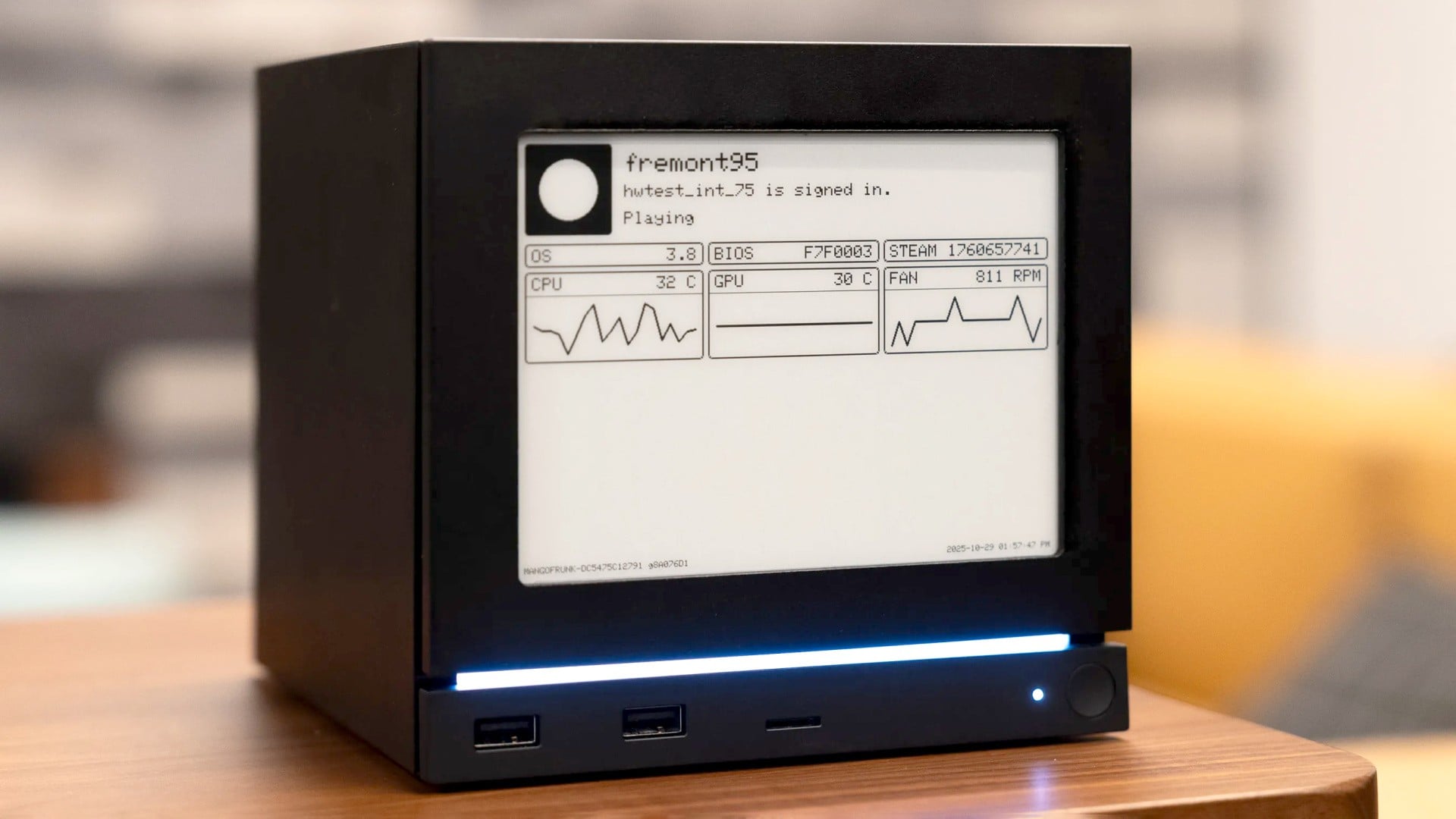
Inkterface can display live hardware statistics like CPU and GPU temperatures (and test progression) on the e-ink faceplate, as demonstrated in Valve's build video.
The BOM lists specific parts: Adafruit ESP32 Feather board, an eInk Breakout Friend, a 5.83-inch e-ink panel, plus M2.5 screws and magnets for mounting.
Valve plans an official Steam companion app for Inkterface in the future, but for now users can run an AppImage and pair it via Bluetooth to display stats and custom images.
Outside developers are already eyeing the project; Jsaux teased 'Ink & Pixel' versions and other brands are expected to offer prebuilt or variant faceplates.
Valve’s move marks a shift from a potential internal prototype to an open-source DIY project, providing the community with full files and instructions.
Valve has open-sourced the Inkterface, an e-ink faceplate for its Steam Machine, giving anyone the files to build one at home. The release includes CAD files, firmware, a full bill of materials, and step-by-step assembly guides, all posted to Valve's SteamOS GitLab under a free MIT license, according to Steam Deck HQ.
The move turns what was once an internal prototype into a fully open DIY project. The Shortcut reports the faceplate can show real-time system stats — like CPU and GPU temperatures — right on the front of the machine. Valve also posted a build video walking users through every step.
What the Inkterface Does and How It Works
The Inkterface is a 5.83-inch e-ink screen that snaps onto the front of the Steam Machine. It displays live data like CPU temperature, GPU temperature, and test progress. E-ink screens use almost no power and stay readable in bright light, making them a sharp choice for a always-on status panel.
Builders pair the faceplate to their machine via Bluetooth. Right now, users run an AppImage — a self-contained Linux app — to push stats and custom images to the display. VideoCardz notes that Valve plans an official Steam companion app in the future, but has not said exactly when it will arrive.
Exact Parts You Need to Build One
Valve's bill of materials is specific. You need an Adafruit ESP32 Feather board, an eInk Breakout Friend module, and a 5.83-inch e-ink panel. Small M2.5 screws and magnets handle the mounting. The faceplate shell itself can be 3D printed using the CAD files Valve released, according to Games Radar.
The ESP32 is a low-cost microcontroller chip widely used in DIY electronics. Using it keeps the build affordable. Valve's choice of off-the-shelf Adafruit parts means most hobbyists can order everything online without hunting for rare components.
Third-Party Brands Already Eyeing Prebuilt Versions
The open-source release has already sparked interest from outside companies. Accessory maker Jsaux teased a product it calls 'Ink & Pixel,' a prebuilt Inkterface variant aimed at users who don't want to solder or 3D print anything themselves. Games Radar says other brands are expected to follow with their own versions.
That means buyers may soon have a choice: build it yourself for less money, or buy a ready-made unit from a third party. Either way, the e-ink faceplate is likely to become a common Steam Machine add-on by the end of the year.
Valve's Bigger Push for Open Steam Machine Hardware
The Inkterface release fits a clear pattern. Valve has steadily pushed Steam Machine hardware toward user customization. Releasing full files under an MIT license means anyone can modify, sell, or remix the design freely. There are no legal strings attached, Digital Foundry notes.
For DIY enthusiasts, this is a meaningful shift. A faceplate that once existed only as an internal Valve concept is now a community project. With vendors offering prebuilt options and Valve promising a proper Steam app, the Inkterface looks set to go from curiosity to common accessory fast.
Sentiment
Mostly PositivePublishers
10
Articles
2
Reach
12


