Quantum Computing Breakthrough
IBM Connects Modular Cryogenic Systems, Advancing Fault-Tolerant Quantum Computer Development
Key Points
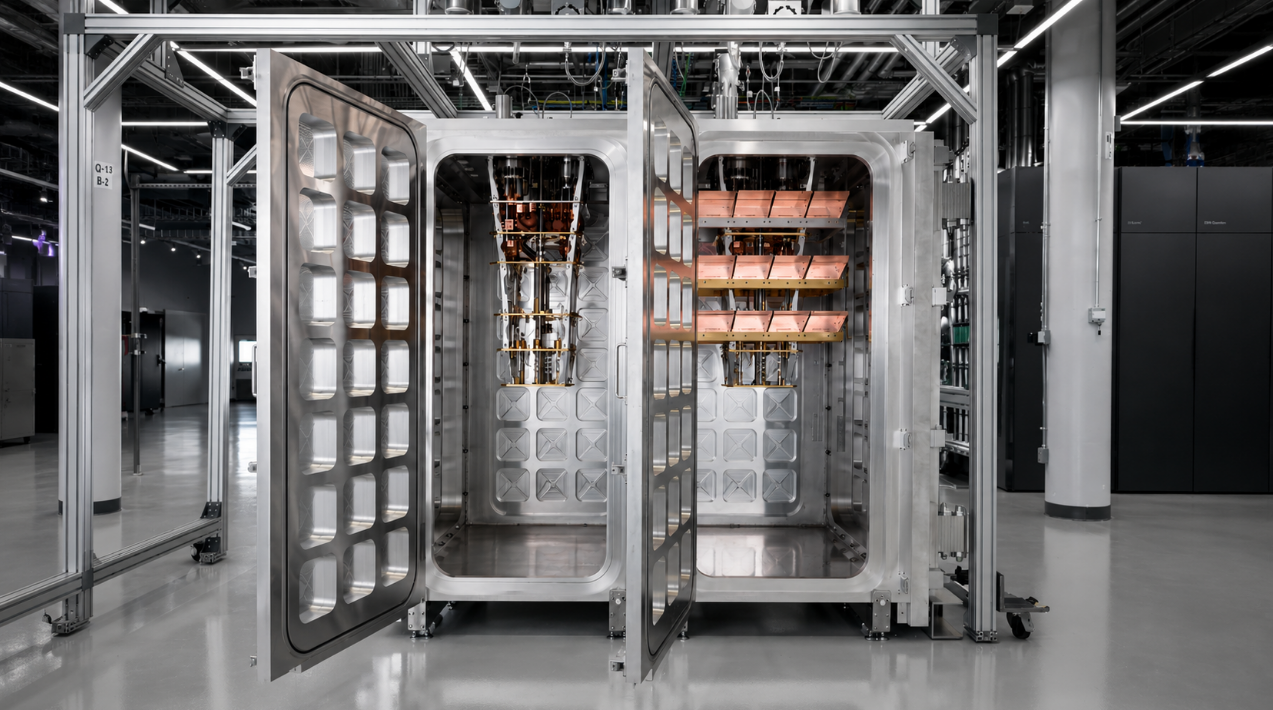
IBM describes three essential components of IBM Quantum System Two’s environment in its new cryogenic architecture, with each part designed to be independently tested and improved.
The combined cryogenic modules can reach below 15 millikelvin, and IBM notes this final temperature is more than 180 times colder than deep space.
Starling is projected to deliver roughly 20,000 times more calculations than today’s existing quantum computers, highlighting a leap toward practical quantum advantage.
IBM envisions Starling hardware capable of running circuits of about 100 million quantum gates on 200 logical qubits by 2029.
IBM has connected and cooled two modular cryogenic units into a single environment, marking a major step toward building the world's first fault-tolerant quantum computer. AIthority reported that the milestone is part of IBM's roadmap to deliver a machine it calls Starling by 2029.
The two linked modules can cool below 15 millikelvin — more than 180 times colder than deep space, according to The Quantum Insider. That extreme cold is required to keep quantum processors stable enough to perform reliable calculations at scale.
How the New Modular Cryogenic Design Actually Works
Each module measures 8 by 8 feet and can reach 4 Kelvin in under five days, Interesting Engineering reported. From there, the system cools further to below 15 millikelvin — cold enough to keep quantum chips from being disrupted by heat.
The vacuum enclosures in the new design offer roughly 12 times more wiring space than older systems. IBM uses L-coupler technology to link processors in a row. That extra wiring room lets engineers connect more chips together inside one shared environment, a key requirement for scaling up.
IBM's 2027 Target: 1,000 Qubits Across Multiple Processors
IBM is not stopping at two modules. The company's roadmap targets a multi-processor quantum computer with at least 1,000 programmable qubits by 2027, according to Yahoo Tech. Performance testing is already expanding using IBM's Quantum Nighthawk processors.
The modular approach lets each part of the system be tested and improved on its own. IBM says it envisions thousands of qubits per module as the technology matures. Linking modules with L-couplers means more processors can be added in a row without rebuilding the whole system.
Starling: A 2029 Machine 20,000 Times More Powerful
IBM's Starling architecture is the end goal. The company describes it as the world's first fault-tolerant quantum computer. Fault-tolerant means the machine can catch and fix its own errors — something today's quantum computers cannot reliably do.
Starling is projected to run circuits of about 100 million quantum gates on 200 logical qubits. IBM says that would make it roughly 20,000 times more capable than today's quantum computers, according to Interesting Engineering. That level of performance could unlock real-world advantages in chemistry, finance, and materials science.
Why Linking Two Fridges Is a Bigger Deal Than It Sounds
Until now, quantum computers lived inside a single large refrigerator. Connecting two separate cooling units into one shared environment is a first, The Quantum Insider noted. It proves the modular concept can actually work in practice, not just in theory.
IBM is coordinating this push across hardware, software, and architecture from its Yorktown Heights facility. The goal is a scalable system — one that grows by adding modules, not by scrapping old hardware. Each new module linked brings the 2029 Starling target one step closer.
Sentiment
Mostly PositivePublishers
19
Articles
41
Reach
60


