Lenovo's FIFA World Cup Tech
Lenovo's Groundbreaking AI and RefCam Technology Hailed as MVP for 2026 FIFA World Cup Decisions and Team Tactics
Anonymous
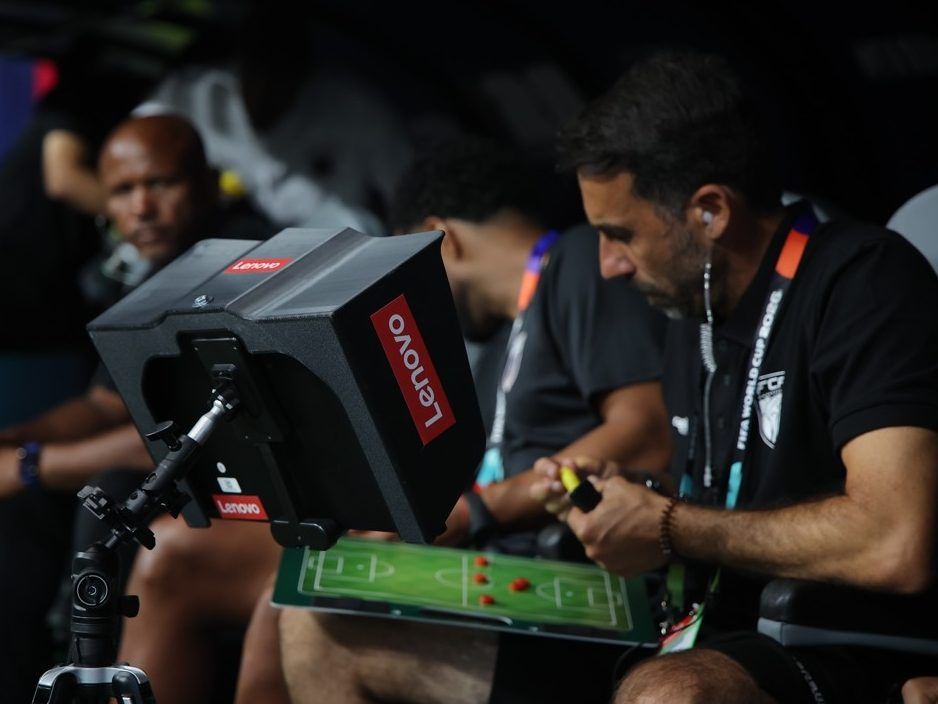
As the 2026 FIFA World Cup enters its Round of 16, with stars like Mbappé, Ronaldo, and Messi in the spotlight, the real game-changer may be happening off the pitch. Ottawa Sun reports that Lenovo, FIFA's Official Technology Partner, is quietly powering the tournament with tools that are reshaping how referees make calls and how teams plan their attacks.
Two technologies are drawing particular attention: an AI platform that feeds tactical data to all 48 competing teams, and a head-mounted referee camera that gives officials — and fans — a first-person view of the action. National Post reports both tools represent a significant leap forward for the sport.
FIFA AI Pro Gives All 48 Teams a Data Edge
Lenovo's FIFA AI Pro platform pulls from millions of data points collected across every match. The tool then delivers tactical insights, performance analysis, and strategic recommendations — all written in plain English. Fort McMurray Today reports that the platform is shared equally across all 48 teams in the tournament, giving every squad access to the same high-level intelligence.
That equal access is a deliberate choice. No team gets a data advantage over another. Coaches can ask the system questions and get clear, readable answers — no data science degree required. The goal is to help teams make smarter decisions faster, whether adjusting tactics at halftime or scouting an upcoming opponent.
RefCam Puts Fans Inside the Referee's Head
The RefCam — officially called Referee View technology — is a small, lightweight video camera worn on the head of the main match official. It captures exactly what the referee sees in real time. London Free Press reports the camera streams a live feed during matches, offering a never-before-seen perspective on the game's most contested moments.
The raw footage isn't perfect. A referee sprinting across a pitch creates a shaky, blurred image. Lenovo fixes that problem using its own proprietary algorithm. The software stabilizes the feed and corrects excessive movement, turning a bumpy head-cam clip into a smooth, broadcast-quality shot. National Post described the result as a clean, usable picture even during the most physical moments of play.
Lenovo's Quiet Role Behind the World Cup Curtain
Lenovo showed off these tools at its new offices in New York City. The company's executive director of North America PC and Smart Device Sales walked press through both platforms. Hanna Herald noted that the event put a spotlight on just how deeply Lenovo's tech is embedded in the tournament's infrastructure.
Unlike jersey sponsors or stadium naming rights, Lenovo's partnership is built around function, not branding. Its tools are running in the background of nearly every match decision and coaching session. Pincher Creek Echo reports that while players get the glory, Lenovo's technology is quietly making the 2026 World Cup the most data-driven in the tournament's history.
What This Means for the Future of Soccer
The 2026 World Cup is the first to feature 48 teams, up from 32. Managing that scale — more matches, more players, more data — made a technology partner like Lenovo essential. Fort Saskatchewan Record reports that the AI tools help FIFA and team staff handle that volume without losing precision or speed.
If the RefCam and FIFA AI Pro prove their value this summer, expect to see similar tools spread to club soccer and other sports. The World Cup has always been a testing ground for new ideas. This year, the biggest experiment isn't happening on the grass — it's happening in the data centers and on the referee's forehead.
Sentiment
NeutralNEGATIVENEUTRALPOSITIVE
Publishers
10
Articles
9
Reach
10
A
AnonymousAuthor


