AI Robotics Partnership
LG and NVIDIA Formalize Partnership to Unveil Next-Gen Humanoid Robot in Q1 2027
Key Points
The next‑generation bipedal humanoid robot will run on NVIDIA’s Jetson Thor computing platform and Isaac Groot robotic foundation, and will incorporate NVIDIA’s Halos safety system; LG Electronics will supply actuation, LG Innotek sensors, and LG Energy Solution batteries, with LG manufacturing the body and major components.
LG CLOi wheeled robots will be deployed this year at LG Electronics’ washing‑machine factory in Tennessee for component transport and work‑assist tasks, with site data collected and trained through LG CNS’s Physical Works robot management platform.
LG has previously unveiled the Nvidia‑based home robot 'Cloid' at CES 2026, underscoring LG’s ongoing integration with Nvidia platforms and its broader robotics push.
The August 13 MOU, signed at Nvidia’s Santa Clara headquarters, formalizes a One LG collaboration across robotics, AI factories and mobility, and establishes a joint task force to drive R&D, field validation and commercialization.
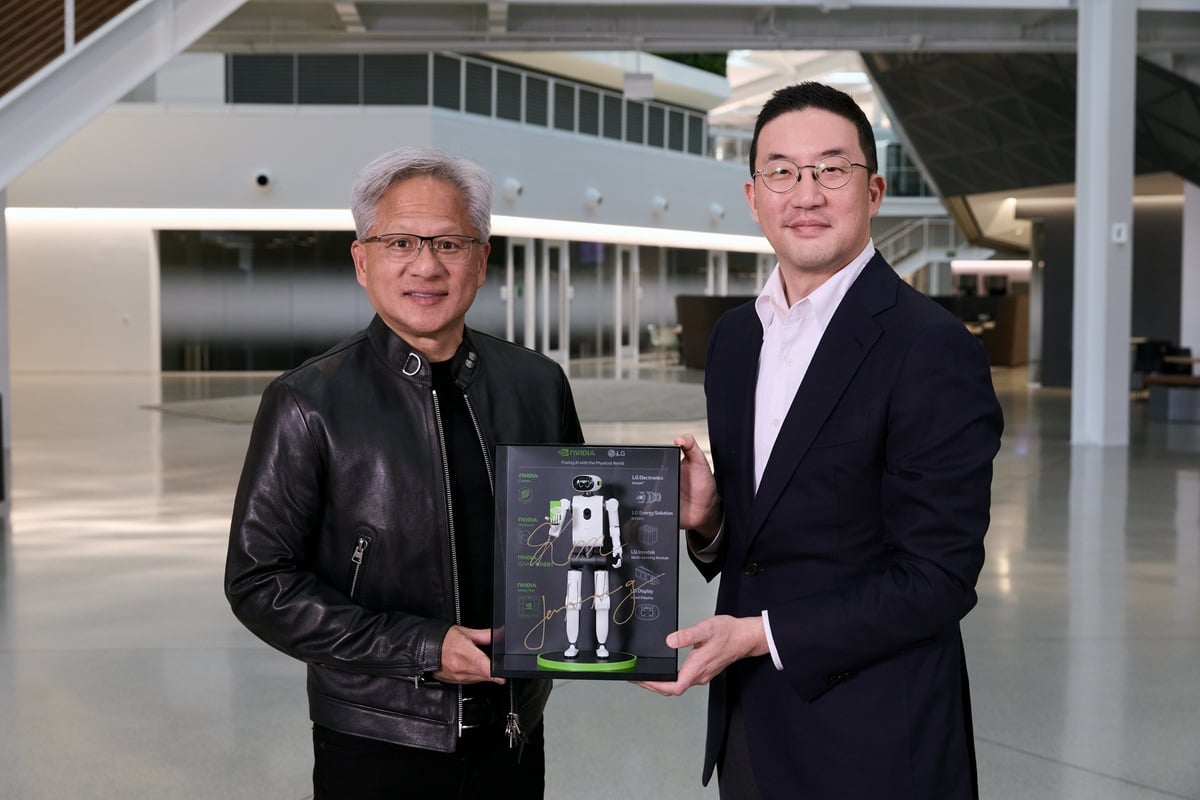
LG Group and NVIDIA have signed a memorandum of understanding to jointly develop a next-generation bipedal humanoid robot, set to debut in the first quarter of 2027, according to Korea JoongAng Daily and Korea Herald. LG Group Chairman Koo Kwang-mo and NVIDIA CEO Jensen Huang signed the deal at NVIDIA's headquarters in Santa Clara.
The robot will run on NVIDIA's Jetson Thor computing platform and Isaac Groot AI foundation. LG will supply the body, actuators, sensors, and batteries. Both companies stressed they want fast, real-world results — not just a prototype sitting on a shelf.
How the Robot Will Be Built and Who Makes What
NVIDIA's side of the robot is essentially the brain. The humanoid will use the Jetson Thor chip for onboard computing and the Isaac Groot platform to learn how to move and interact. NVIDIA's Halos safety system will also be built in, according to Korea Herald.
LG handles the body. LG Electronics will manufacture the frame and major components. LG Innotek will supply sensors. LG Energy Solution will provide the battery pack. The division of labor reflects LG's "One LG" strategy — pulling its different subsidiaries together under one goal, GamesBeat reported.
Wheeled Robots Ship to Tennessee Factory This Year
Before the 2027 humanoid arrives, LG is already putting robots to work. The company plans to deploy its CLOi wheeled robots at its washing-machine factory in Tennessee this year. The robots will carry components and assist workers on the floor, according to GamesBeat.
LG CNS's Physical Works platform will manage the robots on-site and collect real-world data. That data then feeds back into training the AI. The Tennessee factory is essentially a live testing ground before the bigger humanoid push in 2027, Korea JoongAng Daily reported.
LG's CES Robot 'Cloid' Showed This Partnership Coming
The LG-NVIDIA tie-up did not come out of nowhere. LG already showed a home robot called "Cloid" at CES 2026. That robot ran on NVIDIA hardware. It was an early signal that LG was building its robotics line around NVIDIA's AI stack, Korea Herald noted.
Talks between the two companies also took place in Seoul before the formal MOU was signed on August 13 in Santa Clara. The deal now covers three areas: robotics, AI factories, and mobility. A joint task force will drive R&D, field testing, and commercialization, according to MarketScreener.
What Both CEOs Said About Speed and Scale
Jensen Huang and Koo Kwang-mo both pushed for rapid, visible progress. The goal is not slow research — it is fast deployment. The joint task force will push from lab to factory floor as quickly as possible, Korea Herald reported.
LG's broader aim is to set a standard for how AI gets adopted in industrial settings worldwide. By linking its hardware scale with NVIDIA's AI software, LG wants to lead what both companies are calling "Physical AI" — AI that acts in the real world, not just on a screen, according to GamesBeat.
Sentiment
Mostly PositivePublishers
20
Articles
24
Reach
44