Israel-Greece Defense Strengthens
IDF Chief Visits Syria, Meets Greek General as Israel Airstrikes Target Turkish Deployment
Key Points
Israel has maintained a high tempo of incursions into Syria since 2026, with estimates of 50–80 incursions per month; July violations were reported at 187 by the Sijil Center, down about 22% from June.
Eight airstrikes targeted Abu al-Duhur airbase in eastern Idlib, focusing on the runway and storage areas, part of a broader campaign aimed at disrupting facilities tied to potential Turkish deployment.
Israeli assessments framing the strike on the Syrian airbase as aimed at preventing Turkish deployment highlight the broader tension with Turkey shaping operational decisions in Syria.
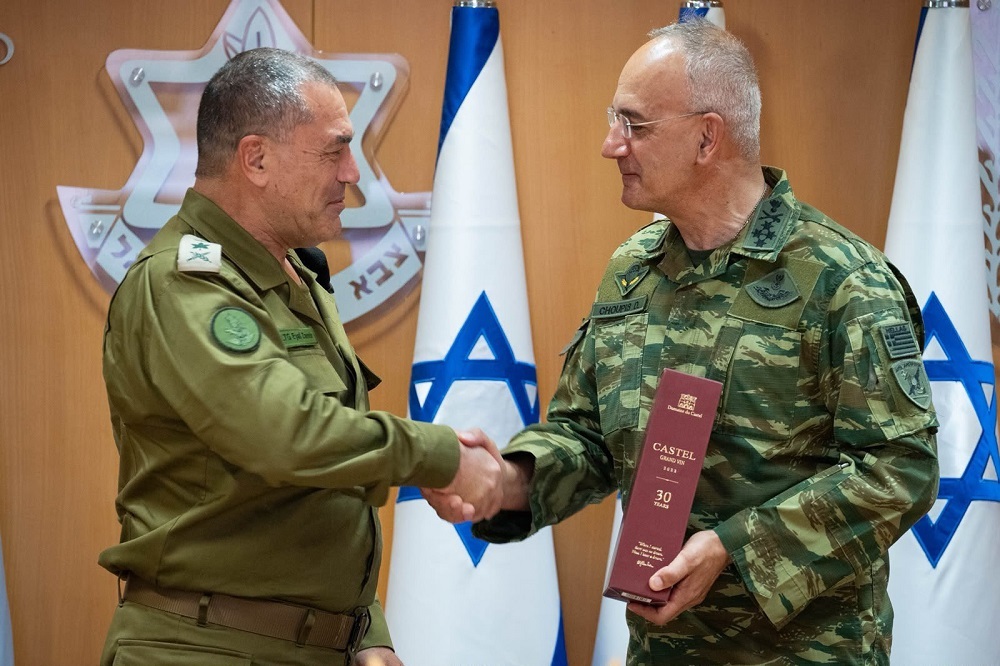
Greece’s Chief of the Hellenic National Defence General Staff, Dimitrios Houpis, visited Israel and met with IDF Chief of Staff Eyal Zamir, accompanied by a GEETHA delegation including Greece’s ambassador Maya Solomou and Israeli defense officials such as Amir Baram and Yair Kulas, underscoring the strategic significance of the Israel–Greece defense relationship.
Israeli Chief of Staff Lt. Gen. Eyal Zamir toured the Israeli-held buffer zone in southern Syria on Wednesday, one day after the IDF struck a Syrian airbase for the first time in months. The visit came as Israel's military tempo in Syria remained intense, with the Sijil Center reporting 187 Israeli incursions into Syrian territory in July alone, according to Times of Israel.
The strikes hit Abu al-Duhur airbase in eastern Idlib, targeting the runway and weapons storage areas across eight separate hits. Israel framed the attack as a move to block potential Turkish military deployment at the site, reflecting growing friction between Jerusalem and Ankara over influence in post-Assad Syria, Times of Israel reported.
Zamir Walks the Buffer Zone a Day After Strikes
Zamir was joined by senior IDF officers during the tour of the buffer zone Israel has held since late 2024. He also met with reservists stationed there. The visit sent a clear signal of Israeli resolve to hold ground in Syria, Times of Israel reported.
Israel has kept up a relentless pace of activity in Syrian territory. Estimates put monthly incursions at between 50 and 80, though the Sijil Center counted 187 violations in July — down about 22% from June. The buffer zone gives Israel a physical foothold beyond the Golan Heights.
Eight Strikes on Abu al-Duhur Aimed at Blocking Turkey
The IDF hit Abu al-Duhur airbase in Idlib with eight strikes, focusing on the runway and storage facilities. Israeli officials said the goal was to keep Turkey from setting up a military foothold there. The base had been used by Russian and Syrian forces before Assad fell.
Turkey has expanded its reach across Syria since Assad's ouster. Israel views Turkish deployment at former regime airbases as a direct threat. The Abu al-Duhur strike is the clearest sign yet that Israel is willing to hit Syrian infrastructure to keep Ankara at bay.
Israel and Greece Deepen Military Ties Amid Turkey Tensions
On the same day as the Syria tour, Zamir sat down with Greek Chief of Defence General Dimitrios Houpis in Israel. The meeting included a delegation from Greece's military headquarters, Greece's ambassador Maya Solomou, and Israeli defense officials Amir Baram and Yair Kulas, according to Hellas Journal.
Both sides called the relationship one of "strategic importance." Greece and Israel have grown closer militarily in recent years, driven in part by shared concern over Turkish ambitions in the region. Times of Israel noted the talks focused on deepening cooperation to address shared regional challenges.
A Crowded Agenda as Regional Pressure Builds on Israel
Zamir's day captured how many fronts Israel is managing at once. In less than 24 hours, he oversaw a rare airstrike in Idlib, walked a contested buffer zone, met troops, and hosted a foreign military chief. The pace reflects how quickly the post-Assad landscape is shifting.
Turkey, Russia, and various armed factions are all competing for influence in Syria. Israel has chosen to act rather than wait. With incursion numbers in the hundreds per month and airstrikes now reaching deep into Idlib, Jerusalem appears set on shaping Syria's future from the outside in, Times of Israel reported.
Sentiment
Mostly NegativePublishers
10
Articles
1
Reach
11


