Crete's Deadly Inferno
Crete Wildfires Claim Two Firefighters Amidst Intense Blazes and Extensive Evacuations Across Island
Anonymous
Key Points
1
Crete's Krya Vrysi front saw a larger-than-reported firefighting push: sources describe 156 firefighters, 33 vehicles and eight specialized ground teams fighting across roughly a 15-kilometre front that split into three outbreaks, with 7–8 Beaufort winds and gusts up to 100 km/h.
2
Sea-based evacuations were significant: 29 people were rescued by sea from the Agios Pavlos area with help from the Greek Navy as the blaze intensified.
3
Critical infrastructure near Sitia was threatened by the Crete fire: a fire near Agia Triada, Lassithi, was only about 500 metres from the PPC power plant at Atherinolakkos, prompting preparedness messages via 112.
4
Paros in the Cyclades saw active containment improvements with ongoing air support: about 66 firefighters on the island were supported by air assets, including two Canadair planes and two firefighting helicopters, and nine residential centers were evacuated.
5
In France, in the Gironde region, investigators said routine brush-clearing near a high-voltage line may have sparked the inferno, as authorities mobilised more than 2,200 firefighters and over 20 aircraft to fight the blaze.
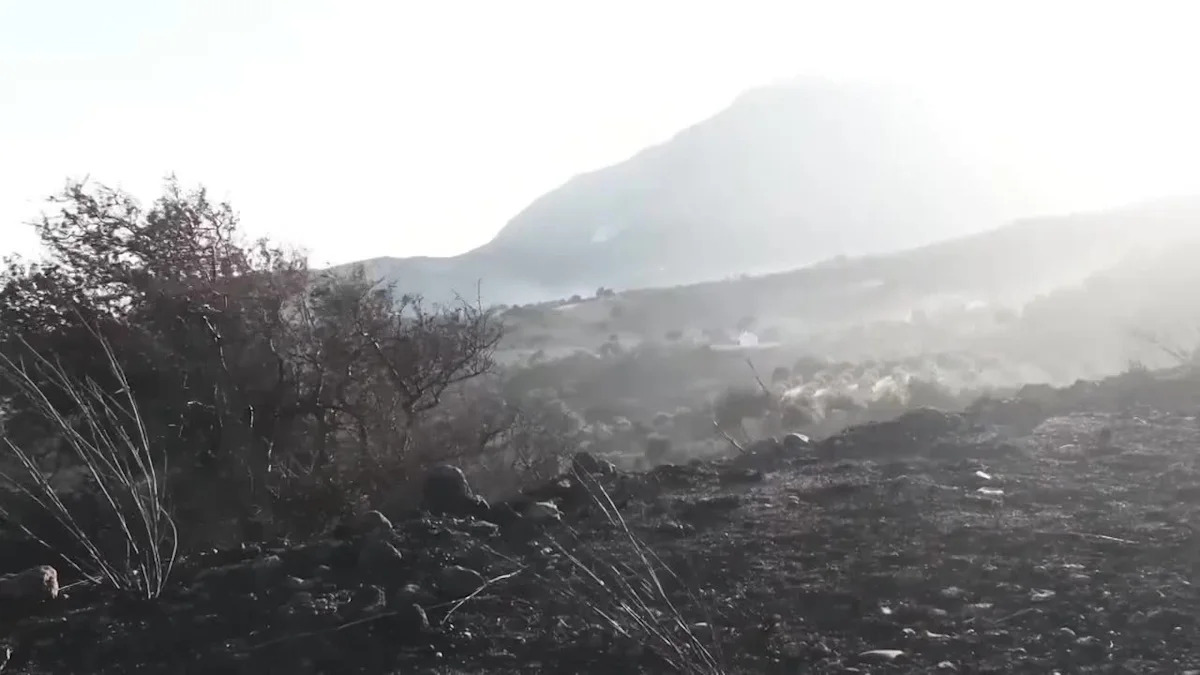
Two firefighters died on Crete after being trapped by fast-moving flames near the village of Nea Krya Vrysi in the Rethymno region, according to AP News. The Greek Fire Service called it an extremely difficult day, with multiple active fronts burning across the island and strong winds of 7–8 Beaufort — with gusts reaching 100 km/h — driving the blaze in unpredictable directions.
The deaths mark a grim escalation in what ABC Australia describes as a worsening wildfire emergency stretching across Europe, from the Atlantic coast to the eastern Mediterranean. Authorities urged residents and visitors to monitor 112 emergency alerts and follow all evacuation orders.
Crete's Firefighters Battling Three Separate Outbreaks
The Krya Vrysi fire split into three separate outbreaks across a roughly 15-kilometre front, according to Greek City Times. Some 156 firefighters, 33 vehicles, and eight specialized ground teams were deployed to fight the blaze. Air support also joined the effort to hold back flames pushed by powerful winds.
The Fire Service described the situation as critical. Thick smoke cut visibility and made aerial operations harder. Several villages in the Rethymno area were evacuated as the fire threatened nearby farmlands and settlements across the southern part of the island.
Sea Rescues and Power Plant Threatened Near Sitia
As the blaze intensified, 29 people were rescued by sea from the Agios Pavlos area with help from the Greek Navy, according to Greek City Times. The sea-based evacuation showed how quickly the fire cut off land escape routes for those in coastal communities.
A separate fire near Agia Triada in the Lassithi region came within 500 metres of the PPC power plant at Atherinolakkos. Authorities sent emergency 112 alerts to nearby residents as a precaution. A threat to the plant could have disrupted electricity supply across a large part of eastern Crete.
Paros Fire Contained as Nine Centers Evacuated
On the island of Paros in the Cyclades, crews made progress against a separate wildfire, according to Yahoo News. About 66 firefighters worked the ground while two Canadair planes and two firefighting helicopters flew water drops overhead. Officials reported improvement in containment across the island.
Despite the progress, nine residential centers were evacuated as a precaution. Crews focused on eliminating hotspots to prevent the fire from reigniting. The Paros situation offered a rare piece of good news against an otherwise grim day for Greek firefighting teams.
Europe's Wildfire Crisis Spreads From Greece to France
Greece's fires are part of a broader European emergency, ABC Australia reported. In France's Gironde region, investigators said routine brush-clearing work near a high-voltage line may have sparked a large inferno. Authorities mobilised more than 2,200 firefighters and over 20 aircraft to fight the blaze amid hot, windy conditions.
Large-scale evacuations were also ordered in the Gironde area. Spain faced similar conditions with active fires spreading under intense heat. The pattern across the continent points to a dangerous fire season driven by dry conditions and strong winds from the Atlantic coast to the eastern Mediterranean.
Sentiment
Mostly NegativeNEGATIVENEUTRALPOSITIVE
Publishers
10
Articles
70
Reach
80
Topics
A
AnonymousAuthor


