Ancient Lima Offering
Peruvian Archaeologists Unveil Skeletal Remains of Ritual Offering at Ancient Lima Pyramid
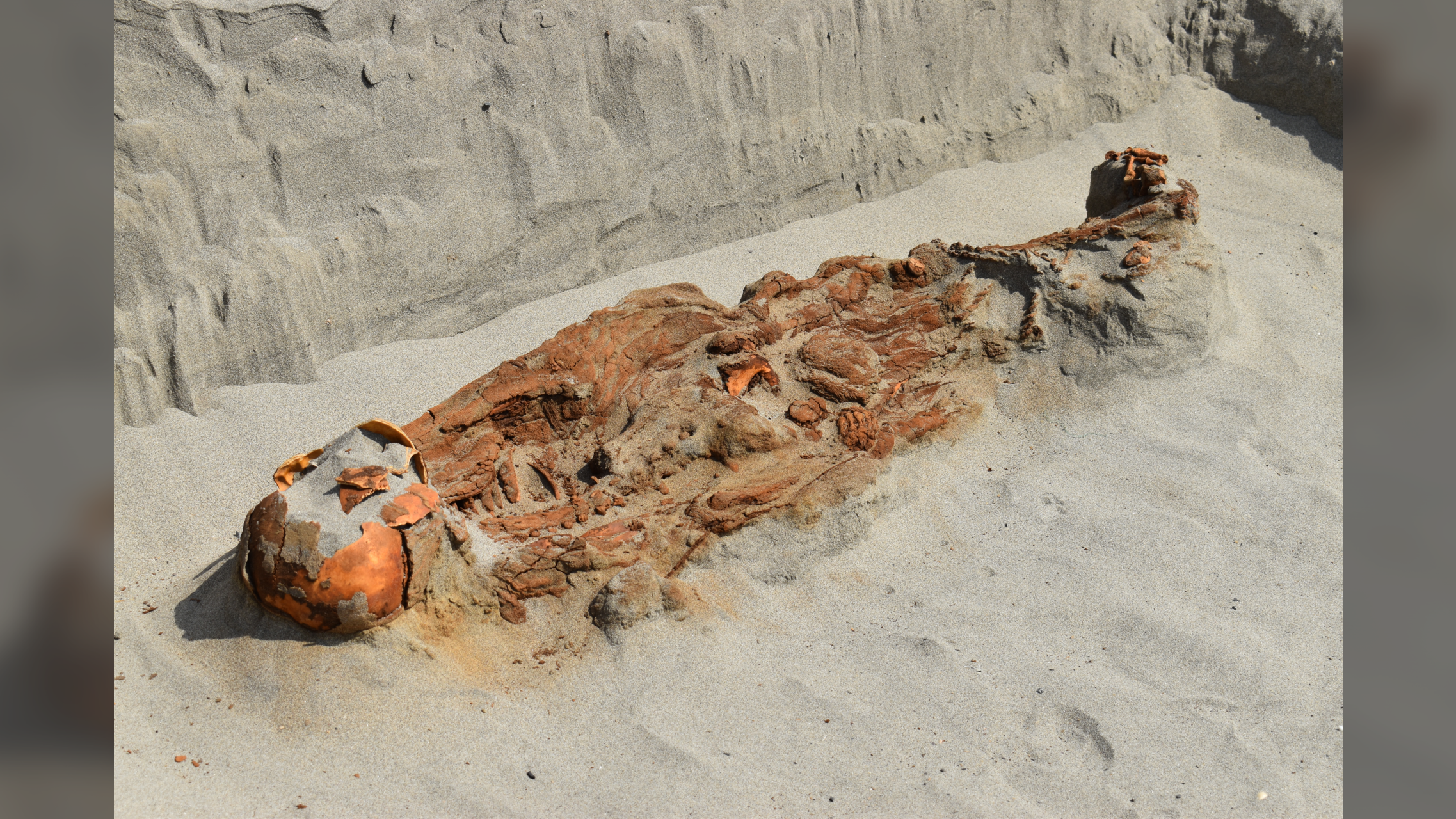
Archaeologists in Peru have revealed the skeletal remains of an adult man believed to have been sacrificed as a ritual offering near the base of Huaca Pucllana, an ancient adobe pyramid in the heart of Lima, according to AP News. The man is thought to have been buried when a canal connected to a ceremonial pool was deliberately sealed shut, marking the end of a key ritual.
The find is expected to help researchers understand the religious practices of the Lima culture, a civilization that thrived between the 1st and 7th centuries CE, according to Las Vegas Sun. Huaca Pucllana served as one of ancient Peru's most important ceremonial and administrative centers — long before Spanish conquistadors founded the modern city of Lima in 1535.
A Buried Man and a Sealed Canal
The skeletal remains were found near the base of the pyramid, not inside it. Researchers believe the man was placed there as an offering during a specific moment in time — when workers closed off a canal tied to a ceremonial pool. The act of sealing the canal appears to have been a major ritual event, AP News reported.
The burial position and location of the remains suggest this was not a simple grave. Archaeologists believe the man may have been sacrificed as part of the ceremony. The discovery gives researchers a rare, direct link between a human burial and a specific ritual act, according to WBAL.
Who Were the Lima Culture People?
The Lima culture flourished from roughly the 1st century to the 7th century CE along Peru's central coast. They built Huaca Pucllana using millions of small adobe bricks. The pyramid rose high enough to dominate the surrounding landscape and served as a hub for both religion and government, according to Click on Detroit.
The Lima culture eventually declined before the Wari Empire expanded into the region. Centuries later, Spanish forces arrived and founded the colonial city of Lima nearby in 1535. Today, Huaca Pucllana sits in the middle of a modern residential neighborhood, and excavations there continue to yield major finds.
What the Discovery Tells Us About Ancient Ceremonies
Researchers say this find could help them reconstruct rituals performed hundreds of years ago, according to Journal News. Finding a human burial directly tied to a construction or closing event — like sealing a canal — is unusual. It suggests the Lima people marked major changes to their sacred spaces with human sacrifice.
The ceremonial pool and its canal system point to water playing a central role in Lima culture religion. Closing the canal may have symbolized the end of one ritual cycle and the start of another. Archaeologists hope further study of the bones will reveal the man's age, health, and possibly his role in society, according to Click Orlando.
Ongoing Excavations at a Pyramid in the City
Huaca Pucllana is one of Peru's most actively excavated archaeological sites. It sits in the Miraflores district of Lima, one of the city's busiest neighborhoods. Excavations there have been ongoing for decades, and each new find adds another layer to the story of pre-Columbian life in coastal Peru, according to News4Jax.
This latest discovery is significant because it ties ritual practice directly to infrastructure — a canal, a pool, a pyramid. It shows that for the Lima culture, building and closing structures was not just practical work. It was sacred. Researchers say more analysis of the site and the remains is still ongoing.
Sentiment
NeutralPublishers
7
Articles
6
Reach
7


