UAE Gas Boost
ADNOC Approves $6.2 Billion Umm Shaif Gas Project to Expand UAE's Energy Output
Anonymous
Key Points
1
ADNOC's Umm Shaif development includes a 14-well drilling and integrated drilling services program valued at about $365 million, to be delivered by ADNOC Drilling over 18 months using three existing rigs.
2
Bab Gas Cap concession award by the Supreme Council for Financial and Economic Affairs is expected to add around 1.5 billion standard cubic feet per day of natural gas and associated liquids, expanding Abu Dhabi’s onshore gas resources.
3
The UAE’s broader LNG push includes a Ruwais plant aiming to reach 9.6 million tonnes per year by 2028 and potential additional LNG capacity at Fujairah, as part of diversifying exports.
4
The Habshan gas-processing complex is not expected to return to full capacity until next year due to damage from regional conflict, highlighting near-term domestic supply constraints.
5
The Umm Shaif field is part of Abu Dhabi’s Umm Shaif and Nasr concession and is described as Abu Dhabi’s longest-operating offshore field, underscoring the asset’s long-running development.
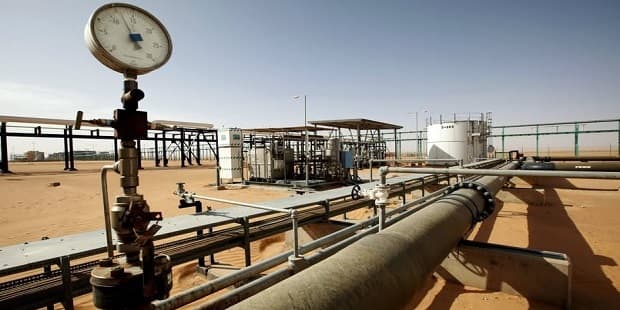
ADNOC has approved a $6.2 billion final investment decision to develop the Umm Shaif Gas Cap off Abu Dhabi, targeting more than 600 million standard cubic feet per day of natural gas and associated liquids by 2030, according to LNG Prime. The project partners ADNOC with TotalEnergies, Eni, and China National Petroleum Corporation, making it one of the UAE's largest recent upstream gas commitments.
The development is central to the UAE's push to reach domestic gas self-sufficiency and expand its LNG export platform as global demand for natural gas rises, Economy Middle East reported. The 600 million scfd output would represent roughly 10% of the UAE's current daily gas consumption.
Three EPC Contracts and an 18-Month Drilling Push
The $6.2 billion package is split into three engineering, procurement, and construction contracts worth about $5.1 billion combined, ARN News Centre reported. A separate drilling program adds roughly $365 million more. ADNOC Drilling will deliver it over 18 months using three existing rigs across 14 wells.
The Umm Shaif field sits within Abu Dhabi's Umm Shaif and Nasr concession and is described as Abu Dhabi's longest-running offshore field, according to International Business Magazine. That long operational history gives engineers detailed subsurface data, reducing technical risk for the gas cap development.
UAE Racing to Cut Import Dependence Before 2030
The UAE currently imports gas to meet peak demand. Near-term supply is under added pressure because the Habshan gas-processing complex is not expected to return to full capacity until next year, after damage from regional conflict, Economy Middle East reported. That outage has tightened domestic supply at exactly the wrong moment.
A separate onshore award is also in the pipeline. The Bab Gas Cap concession, approved by the Supreme Council for Financial and Economic Affairs, is expected to add around 1.5 billion standard cubic feet per day of natural gas and associated liquids, expanding Abu Dhabi's onshore gas resources significantly, according to LNG Prime.
Ruwais LNG Plant and Fujairah Capacity Aim at Export Markets
The UAE is not just chasing self-sufficiency — it wants a bigger slice of global LNG markets. The Ruwais LNG plant is targeting 9.6 million tonnes per year by 2028, Dubai Eye reported. Additional LNG capacity at Fujairah is also under consideration as part of a broader export diversification plan.
Analysts say the Gulf's strategy is deliberate. Rich gas reserves, combined with rising demand from Asia and Europe, give producers like the UAE a long window to lock in supply contracts. The Umm Shaif FID signals ADNOC is moving quickly to monetize those reserves before competing LNG projects from the US and Qatar crowd the market.
Gulf Tensions Add Urgency to Energy Security Investments
Regional risk is accelerating investment timelines. Attacks on oil infrastructure and threats to the Strait of Hormuz — the narrow waterway through which roughly 20% of the world's oil flows — have exposed supply vulnerabilities across the Gulf, according to Economy Middle East. The UAE wants gas infrastructure that sits outside that chokepoint risk.
The Umm Shaif project, with its 2030 production target, is designed to answer that need. By combining offshore gas development with expanded LNG terminals and onshore processing, the UAE is building a domestic energy system that is less exposed to import disruptions and transit risks, ARN News Centre reported.
Sentiment
Mostly PositiveNEGATIVENEUTRALPOSITIVE
Publishers
47
Articles
62
Reach
109
A
AnonymousAuthor