Expanding Edge AI Tech
Analog Devices Agrees to Acquire Alif Semiconductor in $1.35 Billion Deal
Anonymous
Key Points
1
Alif’s silicon is already shipping in production and has secured design wins with both consumer and industrial customers, indicating the company has products deployed beyond the development stage.
2
Alif’s heterogeneous architecture combines dedicated low-power neural processing with connectivity, security and intelligent power-management functions—features Analog Devices said will complement its existing portfolio.
3
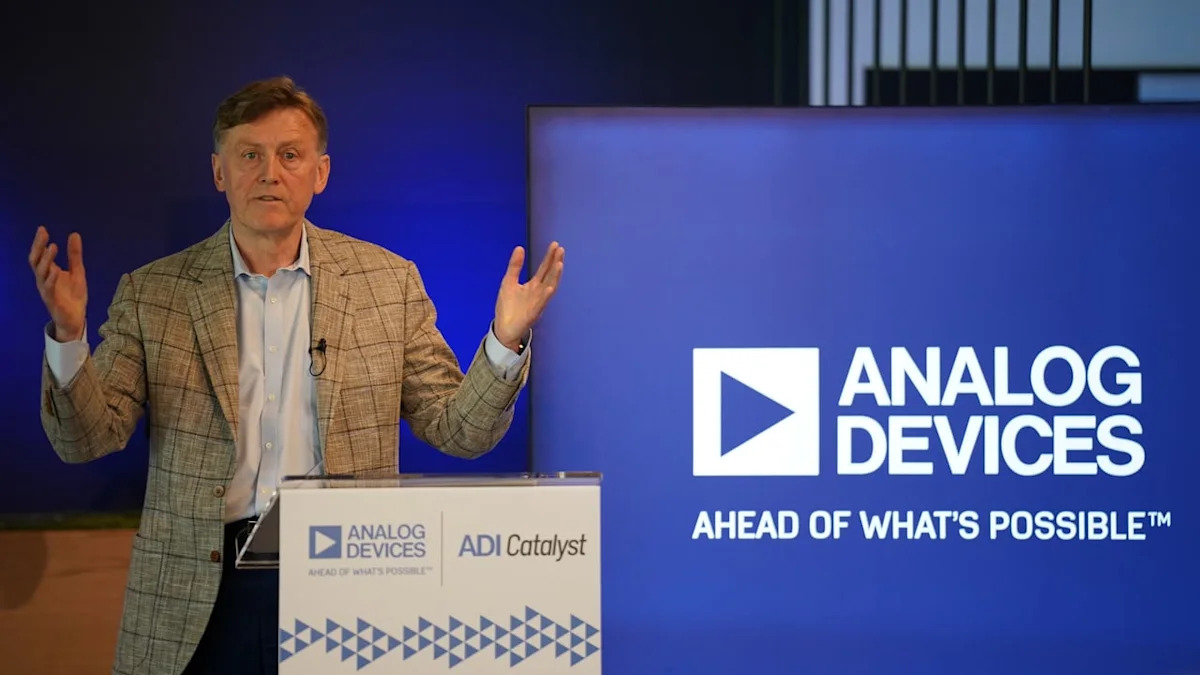
Analog Devices CEO Vincent Roche described the transaction as part of a shift in AI from data centers to physical systems where power consumption, latency, security and reliability are critical, calling it “the next frontier of AI: embodied and deterministic.”
4
PJT Partners and Wachtell, Lipton, Rosen & Katz advised Analog Devices, while Qatalyst Partners and DLA Piper advised Alif on the transaction.
Analog Devices agreed to acquire Alif Semiconductor for $1.35 billion in cash, plus up to $200 million in additional payments tied to performance milestones grafa. The deal, expected to close in late 2026, combines Analog Devices' sensor and power technology with Alif's low-power AI processors designed to run machine learning directly on devices rather than in distant data centers unite.ai.
Alif makes microcontrollers and fusion processors that pack artificial intelligence into edge devices—gadgets like robots, factory equipment, and medical sensors that need to think and act instantly without constant cloud connection hackster.io. CEO Vincent Roche called this shift 'the next frontier of AI: embodied and deterministic,' marking a move away from data-center computing toward autonomous, real-time decision-making at the device level hackster.io.
Why Analog Devices Wants Alif's Edge AI Chips
Alif's processors combine neural processing, connectivity, and security in a single low-power package designed for devices that must operate independently and reliably thenextweb. Analog Devices specializes in sensing and signal processing—reading data from the physical world. Adding Alif's AI acceleration means Analog Devices can now offer complete systems that sense, think, and act locally unite.ai.
The pairing targets robotics, industrial automation, healthcare equipment, defense systems, and data centers—markets where power consumption, latency, and security matter far more than raw computing speed grafa. Alif's technology already has real production wins with consumer and industrial customers, proving the silicon works beyond the lab grafa.
Alif's Path From Startup to $1.35 Billion Acquisition
Alif developed a heterogeneous processor architecture that separates power-hungry general computation from ultra-efficient neural processing, allowing devices to run AI models using minimal battery power hackster.io. The company's design wins with both consumer and industrial customers show the technology has moved past research into actual production deployment grafa.
By selling to Analog Devices, Alif gains access to a massive customer base and manufacturing scale while Analog Devices accelerates its shift toward 'physical intelligence'—systems that respond to the real world in real time, not processed data streams thenextweb.
Regulatory Approval and Deal Timeline
Both boards have approved the all-cash transaction, but the deal still requires U.S. antitrust review under standard merger procedures grafa. Completion is targeted for the fourth quarter of 2026, giving regulators several months to assess whether the combination raises competitive concerns finance.yahoo.
PJT Partners and Wachtell, Lipton, Rosen & Katz advised Analog Devices on the deal, while Qatalyst Partners and DLA Piper represented Alif grafa. The contingent payments—up to $200 million—depend on Alif hitting future performance targets, common in acquisitions of smaller, early-stage tech companies thenextweb.
Sentiment
Mostly PositiveNEGATIVENEUTRALPOSITIVE
Publishers
13
Articles
96
Reach
109
A
AnonymousAuthor


