KT's AI Transformation
KT announces massive 18-trillion-won investment to transform into AI platform company
Key Points
KT's 4 trillion won investment in information security and IT innovation is deliberately structured around four key initiatives: ensuring stability; integrating governance for rapid crisis response; separating the roles of Chief Security Officer and Chief Privacy Officer; and fostering collaboration with external experts led by KT.
KT earmarks 1 trillion won within AX infrastructure specifically for subsea cables, as part of its push to expand AI data centers and connectivity.
In the network arena, KT plans about 8 trillion won to accelerate 6G, satellites, and data center interconnections, including an explicit aim to extend satellite coverage from GEO to low Earth orbit (LEO) to bolster resilience in disasters and security contexts.
There is a notable discrepancy in reported AX investments: some sources cite 12 trillion won over three years, while others report up to 18 trillion won, suggesting differences in scope or accounting across outlets.
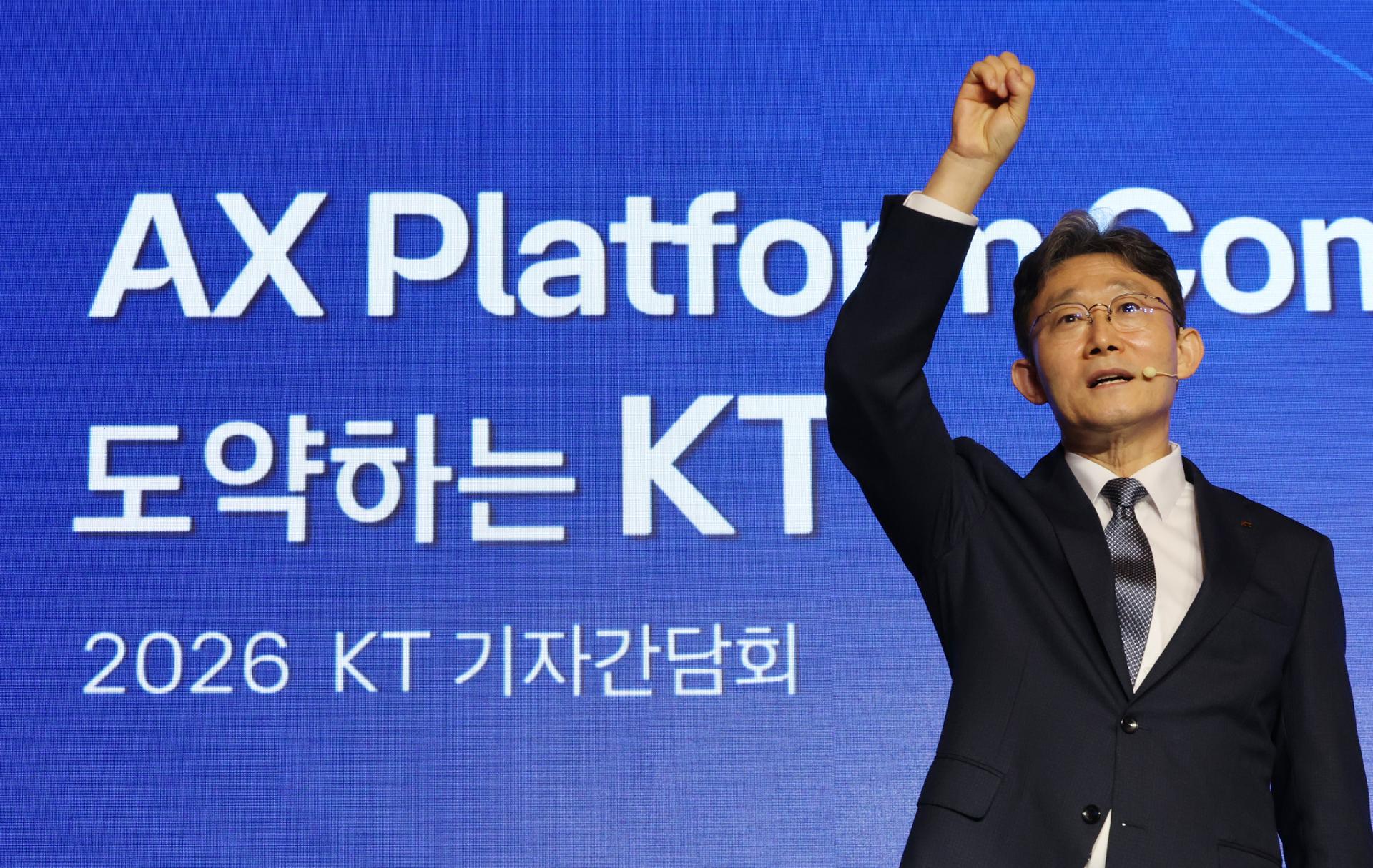
KT Corp. CEO Park Yoon-young has unveiled a plan to invest 18 trillion won — roughly $12 billion — over the next three years to transform the South Korean telecom giant into an AI-driven platform company, according to Korea Herald. The announcement came on the CEO's 100th day in office and centers on a strategy called AX, short for AI transformation.
The investment breaks into two main buckets: about 12 trillion won for cybersecurity, IT, and network infrastructure, and roughly 8 trillion won for next-generation network upgrades, according to Let's Data Science. Some outlets, including CEO Insights Asia, put the total at 18 trillion won, while others cite $13 billion — a gap that reflects differences in how the spending pools are counted.
AI Data Centers and the Token Factory Push
The heart of KT's AX strategy is building AI infrastructure at massive scale. The company is targeting a total AI computing capacity of around 1 gigawatt, according to Let's Data Science. That will require a major expansion of AI data centers across South Korea.
Two flagship projects sit inside the 12-trillion-won bucket. One is called Token Factory — an AI processing service built for enterprise clients. The other is a Stablecoin initiative tied to AI financial services. KT is also earmarking 1 trillion won specifically for subsea cables to link its data centers globally, per Bloomingbit.
Security Overhaul Built on Zero-Trust Framework
KT plans to spend 4 trillion won on information security and IT. The company is adopting a zero-trust security model — meaning no user or device is trusted by default, even inside the network. This is a significant shift from older approaches that assumed internal traffic was safe.
The security plan has four pillars: keeping systems stable, merging governance so the company can respond to crises faster, splitting the Chief Security Officer and Chief Privacy Officer into two separate roles, and bringing in outside experts to work alongside KT teams, according to Bloomingbit. KT says expanding its security headcount is also part of the push.
8 Trillion Won to Leap From 6G to Satellite Networks
KT is setting aside about 8 trillion won for network upgrades. The priorities include 6G research, data center interconnections, and satellite coverage, according to Korea Herald. The company wants to extend satellite service from geostationary orbit — roughly 36,000 kilometers up — all the way down to low Earth orbit, or LEO, which sits a few hundred kilometers above ground.
LEO satellites offer much lower signal delay than traditional satellites, making them useful for disaster response and security operations. KT says the expanded network will improve everyday customer experience while also future-proofing its core infrastructure, per Bloomingbit.
KT Targets Public, Industrial, and Consumer AI Markets
Beyond infrastructure, KT wants to sell AI services across three sectors: government and public services, industrial clients, and everyday consumers. The company plans to launch new AI-focused ventures and strike partnerships to grow these businesses, according to CEO Insights Asia.
CEO Park framed the AX strategy as a way to keep KT's core telecom business strong while layering AI on top of it. The plan signals that South Korea's major telecoms see AI infrastructure — not just connectivity — as the next big revenue driver.
Sentiment
Mostly PositivePublishers
13
Articles
3
Reach
16


