U.S.-Jordan Trade Boost
U.S. and Jordan Sign Pact to Boost Bilateral Trade and Regional Stability
Anonymous
Key Points
1
Tariff framework tightens reciprocal limits: the United States will cap reciprocal tariffs on Jordanian imports at 10%, while Jordan will maintain duty-free treatment for U.S. exports under the 2001 U.S.–Jordan Free Trade Agreement; signing took place in Washington with Jordanian Minister Yarub Qudah and U.S. Trade Representative Jamieson Greer.
2
The White House emphasizes that the pact removes non-tariff barriers and expands market access for U.S. goods, including agricultural products and motor vehicles, signaling a broader access agenda beyond tariffs.
3
In addition to tariff changes, the agreement includes commitments to address non-market policies of third countries and to cooperate on investment security, export controls, and duty evasion to strengthen supply chain resilience and regional economic security.
4
Trade rules restrict quotas and import licensing hurdles: Jordan will not impose quotas on U.S. originating goods, and any non-automatic import licensing must be transparent, nondiscriminatory, and not unduly burdensome or discriminatory.
5
Sectoral emphasis and momentum: the agreement targets growth in ready-made garments and textiles for Jordanian exports to the United States, with recent trade data showing Jordanian exports to the U.S. reaching about 595 million Jordanian dinars in the first four months of the year.
The United States and Jordan have signed a new Reciprocal Trade Agreement designed to tear down trade barriers and expand market access for exporters on both sides. Times of Israel reported that Jordan will remove non-tariff barriers for critical U.S. industries, while the U.S. will cap reciprocal tariffs on Jordanian imports at just 10%.
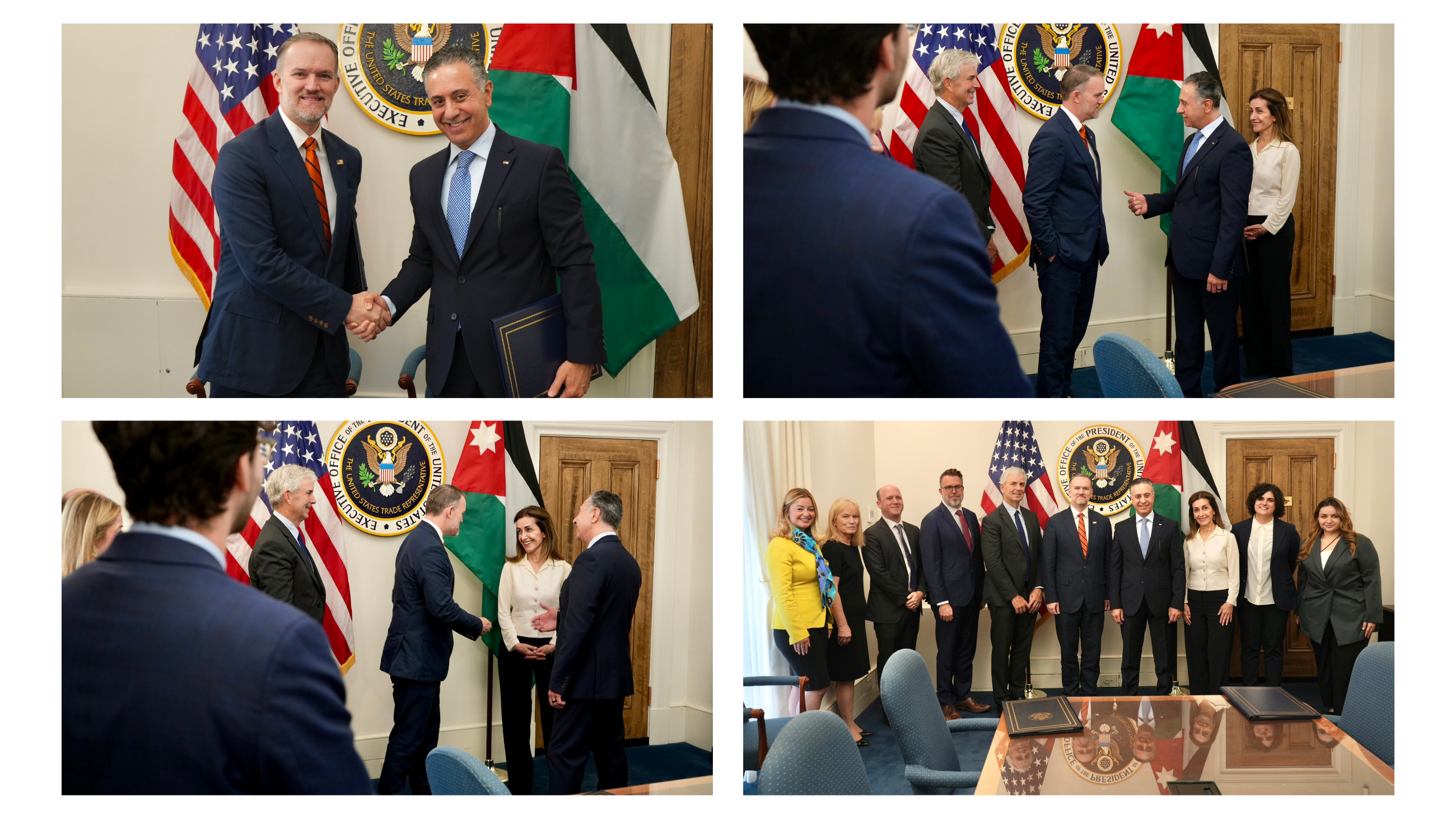
The deal was signed in Washington by Jordanian Minister Yarub Qudah and U.S. Trade Representative Jamieson Greer. It builds on the original 2001 U.S.–Jordan Free Trade Agreement, which already gives most American goods duty-free entry into Jordan. Columbus Jewish News noted that the pact also deepens economic and security cooperation between the two allies.
Jordan Gets 10% Tariff Cap, U.S. Gains Duty-Free Access
Under the deal, the U.S. will cap tariffs on Jordanian imports at 10%. In return, Jordan keeps duty-free treatment for U.S. goods, a commitment that dates back to the 2001 free trade pact. That original deal already covers most American exports. This new agreement locks in stronger terms and adds fresh protections on top.
Crypto Briefing reported that the agreement reaffirms Jordan's duty-free access framework for American products. It also targets key sectors. U.S. agricultural goods and motor vehicles are among the industries set to get new or expanded access to the Jordanian market. Both governments called the terms a clear win for exporters on each side.
Non-Tariff Barriers Cut to Open Trade Further
Tariffs are only part of the story. Non-tariff barriers — things like quotas, hidden fees, and complex import rules — can block trade just as effectively. The new agreement tackles those directly. Jordan agreed not to impose quotas on U.S.-origin goods. Any import licensing rules must be clear, fair, and not overly burdensome.
Times of Israel reported that the deal pushes Jordan to simplify customs procedures and cut red tape for American companies. The agreement also sets rules on intellectual property, labor rights, and environmental protections. These commitments are meant to create a level playing field and keep trade flowing without hidden obstacles.
Jordanian Garment Exports Surge Amid Sectoral Focus
For Jordan, the biggest opportunity lies in textiles and garments. Ready-made clothing is one of the country's top export products to the U.S. Recent trade data shows Jordanian exports to the United States hit about 595 million Jordanian dinars in just the first four months of this year. That figure signals strong momentum heading into the new deal.
Mirage News noted that the agreement is expected to boost growth in these sectors further. Jordan has built a significant garment industry over the past two decades, partly thanks to the 2001 free trade pact. The new terms are designed to keep that industry competitive and expand its reach in the American market.
Deal Targets Supply Chain Security and Regional Stability
The agreement goes beyond trade rules. Both sides committed to cooperating on investment security, export controls, and stopping duty evasion. They also agreed to address non-market policies from third countries — a pointed reference to economic practices that distort fair competition. These steps are meant to build stronger, more resilient supply chains.
Columbus Jewish News reported that U.S. and Jordanian officials framed the deal as a tool for regional peace and economic stability. Discussions on services trade and broader investment flows are ongoing. Crypto Briefing noted the deal adds to a growing list of trade agreements the Trump administration has pursued, extending its trade agenda deeper into the Middle East.
Sentiment
Mostly PositiveNEGATIVENEUTRALPOSITIVE
Publishers
12
Articles
102
Reach
114
A
AnonymousAuthor


