US-Iran Conflict
U.S. Reports Nearly 100 Troops Injured in Iran Strikes as Conflict Escalates; Transparency Questioned
Anonymous
Key Points
1
Two U.S. service members were killed in Jordan during Iran’s attacks: 1st Lt. Tyler Feehan (killed on Friday) and Pvt. Isabella Gonzales (killed on Saturday); a third service member died in northern Iraq during a controlled detonation of unexploded ordnance from a downed Iranian drone.
2
Iranian state media reported explosions in Isfahan and Chabahar, and Tehran also carried out strikes on U.S. allies Kuwait and Jordan.
3
Diplomatic mediators proposed a 10-day ceasefire between the United States and Iran as tensions escalate.
4
Houthi rebels threatened to widen the conflict by announcing plans to blockade Saudi ports.
5
CENTCOM is not required to publicly disclose casualty information, and The New York Times reported that the Pentagon concealed attack details, with officials arguing that releasing such information could aid adversaries or compromise security.
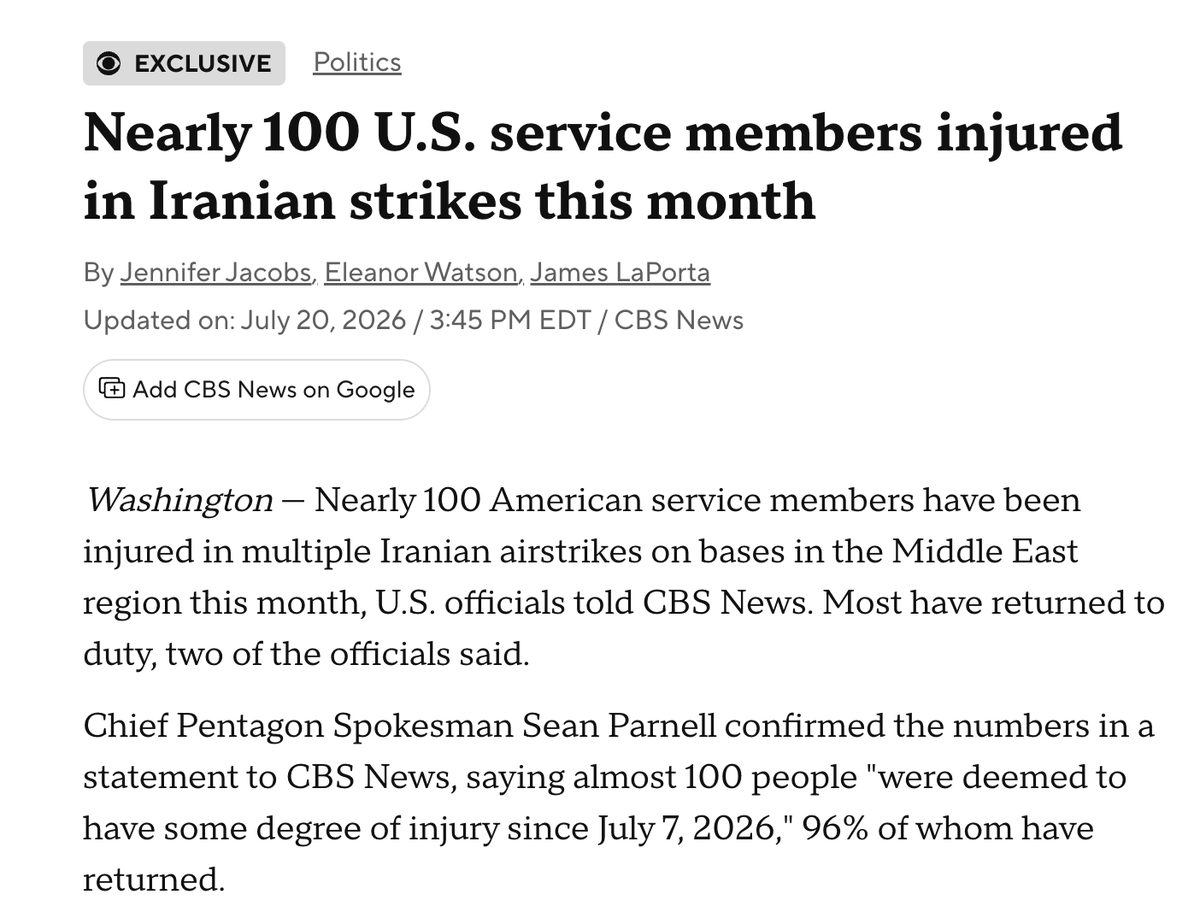
Nearly 100 U.S. troops have been injured in the Iran war this month, the Pentagon confirmed, as Operation Epic Fury enters roughly its tenth consecutive day of airstrikes. The Pentagon put the total injury count at about 427 since the operation began, with 17 American deaths recorded so far.
Pentagon chief spokesperson Sean Parnell said 96% of the injured have already returned to duty. The vast majority of wounds are minor concussions, suggesting the current pace of combat remains sustainable — for now. The Nightly described the toll as a sign of just how significant Iran's strikes on U.S. military installations across the region have become.
Two Soldiers Killed in Jordan, One in Iraq
Three U.S. service members have died in recent days. 1st Lt. Tyler Feehan was killed in Jordan on Friday. Pvt. Isabella Gonzales died there the following day. A third soldier was killed in northern Iraq during a controlled detonation of unexploded ordnance from a downed Iranian drone, The Pentagon confirmed.
Iran has also struck U.S. allies in the region. Iranian state media reported explosions in the cities of Isfahan and Chabahar. Tehran separately launched strikes against Kuwait and Jordan, widening the geographic reach of its retaliation against American forces and their partners.
Pentagon Accused of Hiding Attack Details from Public
Transparency has become a flashpoint in the conflict. The New York Times reported that the Pentagon concealed details of specific attacks from the public. Officials argued that releasing such information could help adversaries or compromise ongoing operations.
CENTCOM pushed back, noting it is not legally required to publicly disclose casualty information. Still, the dispute has drawn scrutiny from lawmakers and press freedom advocates who say the public has a right to know the true cost of the conflict, according to Mahoning Matters.
Mediators Push 10-Day Ceasefire as Houthis Threaten Saudi Ports
Diplomatic efforts are underway to stop the fighting. Mediators have proposed a 10-day ceasefire between the United States and Iran. The proposal comes as both sides show no clear sign of backing down, with the U.S. continuing its strike campaign and Iran retaliating across multiple fronts, according to The Nightly.
Meanwhile, Houthi rebels — backed by Iran — threatened to blockade Saudi ports, a move that could further destabilize the region and choke off vital shipping routes. The threat signals that the conflict risks pulling in more actors beyond the U.S. and Iran directly.
Trump Says Strikes Aim to Stop Iran Getting a Nuclear Weapon
President Trump has repeatedly stated the goal of the campaign: prevent Iran from getting a nuclear weapon. He has framed the strikes as necessary and deliberate, not an escalation for its own sake. The U.S. has now carried out roughly ten days of back-to-back airstrikes against Iranian targets, The Pentagon confirmed.
With 427 total injuries and 17 deaths, the human cost is climbing. But with 96% of the wounded back on duty, U.S. officials argue the military remains fully operational. How long that holds depends on whether diplomats can turn a proposed 10-day pause into something lasting, according to Mahoning Matters.
Sentiment
Mostly NegativeNEGATIVENEUTRALPOSITIVE
Publishers
15
Articles
36
Reach
51
A
AnonymousAuthor


