Colorado Tax Ballot Battle
Colorado voters will decide between competing flat and graduated income tax measures this November.
Anonymous
Trending on XColorado graduated income tax debate and political accusations
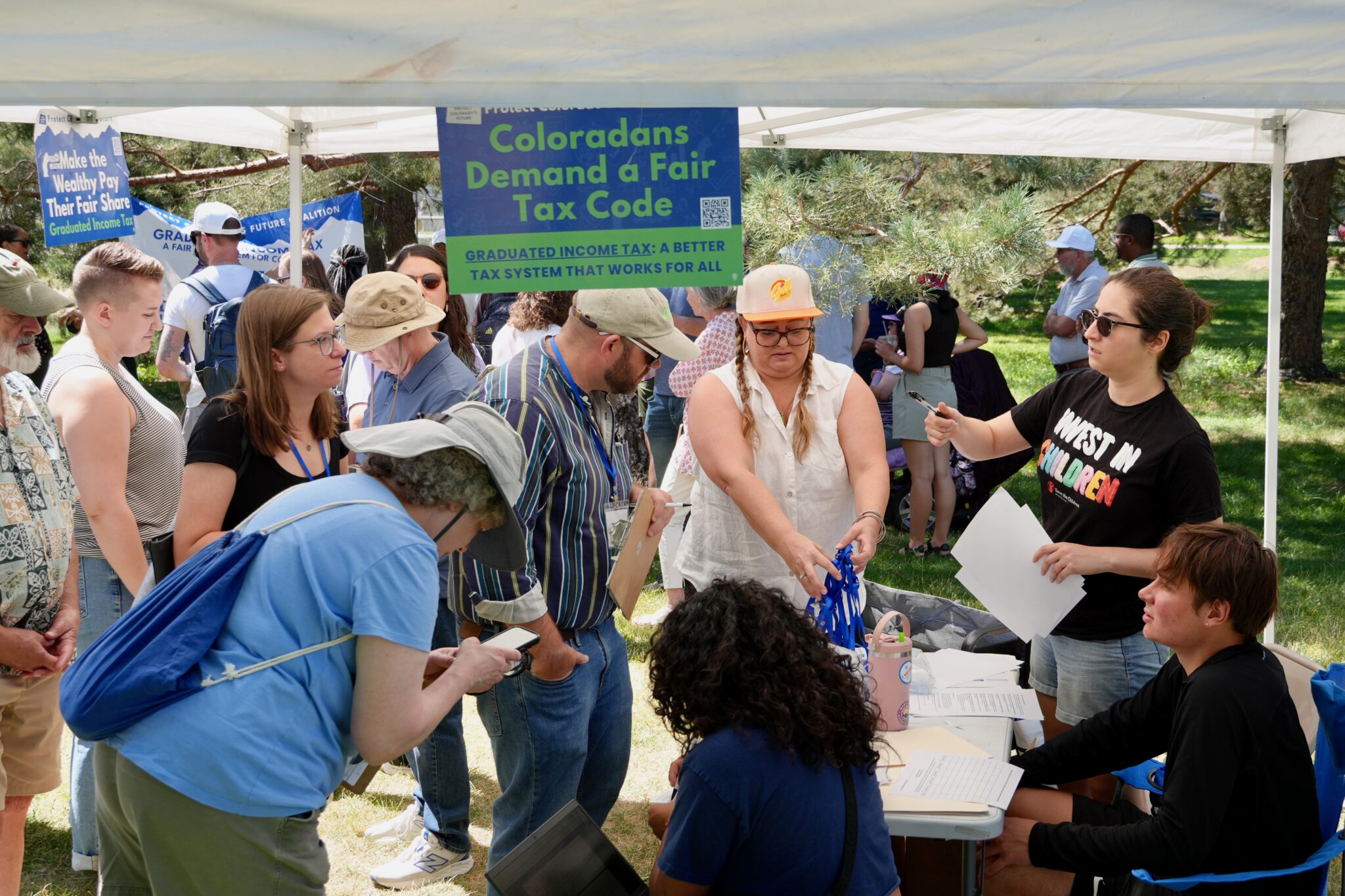
Colorado voters will see competing tax proposals on the November 2026 ballot, with Initiative 195 seeking to replace the 4.4% flat income tax with a graduated system that taxes high earners at higher rates and would raise about $2 billion annually for education, healthcare, and childcare. The measure is backed by Protect Colorado’s Future, a coalition of progressive groups, and would impose rates up to 8.4% for top earners while reducing taxes for many lower- and middle-income households. Because it would amend the state constitution, Initiative 195 requires 2% of valid signatures from each of Colorado’s 35 Senate districts in addition to a statewide threshold, which proponents met with roughly 130,938 valid signatures. In parallel, another ballot measure, Initiative 232, would keep Colorado’s current 4.4% flat tax, setting up a direct voter decision on which tax structure the state should adopt. Supporters of Initiative 195 argue the changes would rebalance the tax system and fund key programs, while opponents contend it could impose higher costs on businesses and the wealthy. Multiple articles note the certification of Initiative 195 and detail signature totals and fundraising dynamics that helped place the measure on the ballot.
Key Points
1
Initiative 195 requires 2% of valid signatures from voters in each of Colorado's 35 Senate districts. Supporters submitted 165,765 signatures with 130,938 deemed valid, well above the statewide threshold of 124,632.
2
The measure would mandate an annual, independent public audit to ensure that any new revenue is spent on the specifically designated programs (education, healthcare, and childcare).
3
If approved, Initiative 195 would undercut Colorado's Taxpayer's Bill of Rights (TABOR) by repealing the flat 4.4% rate and replacing it with a graduated tax structure; the changes would be enacted through statute rather than a constitutional amendment.
4
The proposed rate schedule would set 3.7% for incomes up to $25,000, 4.2% for $25,000–$100,000, and no change for $100,000–$500,000, with top brackets at 7.4% ($500,000–$750,000), 7.9% ($750,000–$1,000,000), and 8.4% (over $1,000,000). A median-earner household would save about $316, while a $1 million earner would pay roughly $15,925 more annually.
5
Revenue from the graduated tax would be earmarked for K-12 education, healthcare, and early childhood programs, with Medicaid addressed as part of the funding plan.
Sentiment
Mostly NegativeNEGATIVENEUTRALPOSITIVE
Publishers
7
Articles
50
Reach
57
A
AnonymousAuthor


