AI Memory Boost
Micron Begins Construction of Hiroshima AI Memory Fab with Billions Invested
Anonymous
Key Points
1
Sanjay Mehrotra said, 'Memory demand is increasing like never before,' underscoring the urgency of HBM capacity and noting that the industry needs greenfield capacity because those clean rooms take a long time to build from shovel in the ground to first wafers out.
2
Construction of the Hiroshima facility is planned to begin in May 2026, with initial chip shipments and production expected around the summer of 2028.
3
Japan is providing subsidies in the range of about ¥500–¥536 billion to support the project, a substantial share of the total investment.
4
Micron chose the Hiroshima site partly to leverage an existing workforce and supplier network, reducing execution risk compared with building a greenfield facility elsewhere.
5
Investor signals around Micron include a valuation concern, with GF Value showing the stock as significantly overvalued (about 99% above GF Value) and notable insider selling of about $126.4 million in the last three months.
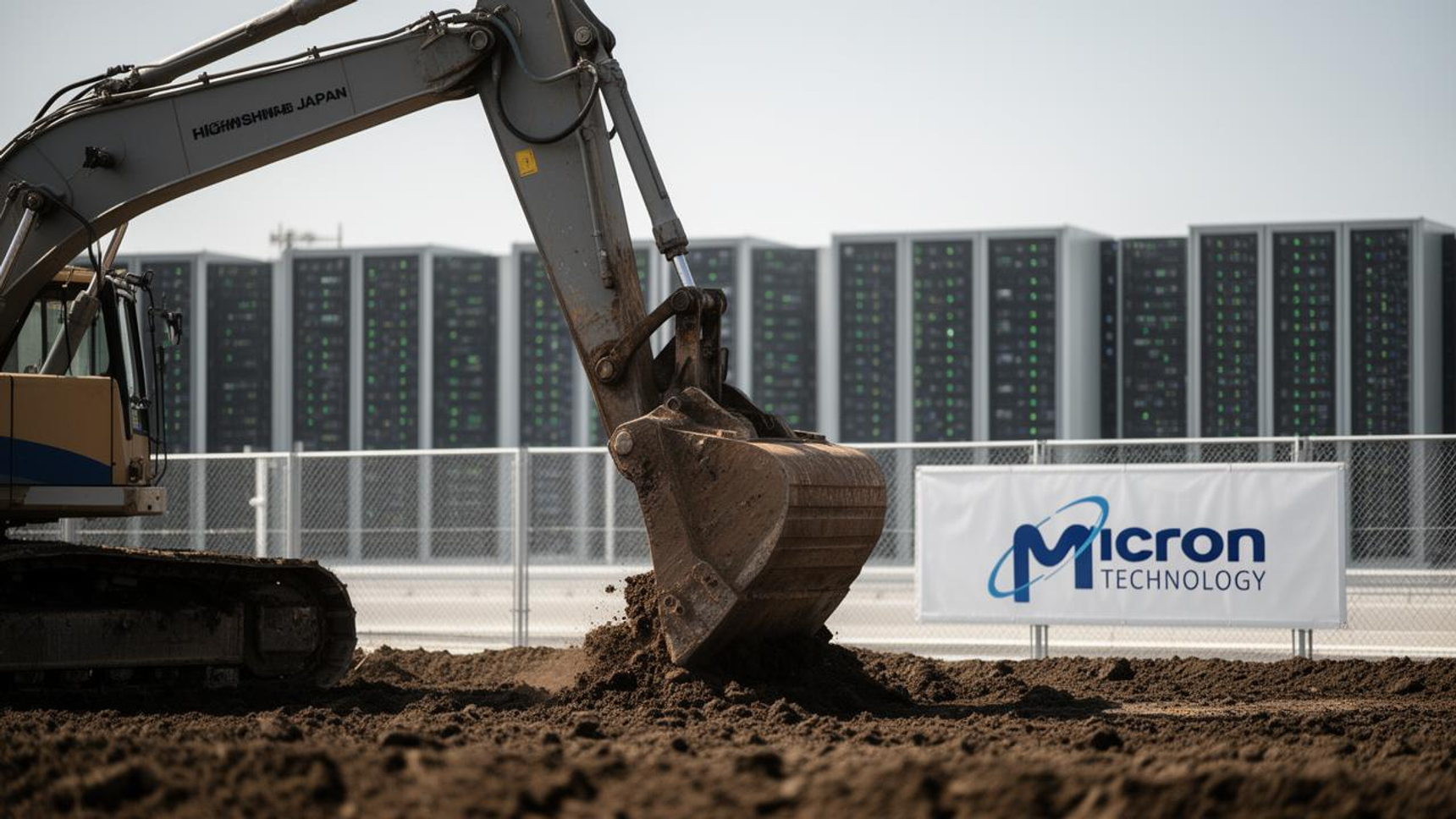
Micron Technology has broken ground on a massive new memory chip facility in Hiroshima, Japan, pledging roughly ¥1.5 trillion — about $9.3 billion — to ramp up production of high-bandwidth memory (HBM) for AI systems, according to BigGo Finance. The plant is expected to ship its first chips in summer 2028, making it one of the largest chip manufacturing investments in Japan's history.
HBM is the specialized memory that powers AI chips made by companies like Nvidia. CEO Sanjay Mehrotra said, "Memory demand is increasing like never before," adding that the industry needs new factories now because clean rooms "take a long time to build from shovel in the ground to first wafers out," Cryptopolitan reported.
Japan Chips In ¥500 Billion to Back the Deal
The Japanese government is contributing subsidies of roughly ¥500 to ¥536 billion — about one-third of the total project cost — to help Micron build the facility, according to Crypto Briefing. That makes it one of the largest state-backed chip investments Japan has made, as Tokyo pushes to secure its own position in the global semiconductor supply chain.
Construction is set to begin in May 2026. Micron chose Hiroshima deliberately. The city already hosts an existing Micron fab, giving the company a ready workforce and an established network of local suppliers. That cuts execution risk sharply compared to building a brand-new factory from scratch in an unfamiliar location, BigGo Finance noted.
AI Boom Drives a Global Race for HBM Chips
HBM is not like ordinary computer memory. It stacks memory chips on top of each other to move data much faster — exactly what AI systems need when training large models. Demand has surged as companies race to build more powerful AI. Micron, Samsung, and SK Hynix are the three main suppliers, but Samsung and SK Hynix have been making HBM longer and currently lead the market, according to Cryptopolitan.
The pandemic exposed how fragile global chip supply chains are. That shock pushed governments and companies to build more chip capacity closer to home. Micron's Hiroshima expansion is part of that broader push, Bitget reported. The company is also investing heavily in the United States, making Hiroshima one piece of a larger global strategy.
Investor Caution Shadows an Otherwise Bold Bet
Not everyone is cheering without reservation. GuruFocus data flagged a valuation concern: Micron's stock is trading roughly 99% above its GF Value — a metric used to gauge fair value. That signals the stock may be significantly overpriced relative to its fundamentals, according to GuruFocus.
Insiders have also been selling. Over the last three months, Micron insiders sold about $126.4 million worth of shares, GuruFocus noted. That does not mean the Hiroshima project is a bad bet — big capital projects often take years to pay off. But investors watching Micron will need patience. The first chips from this new fab won't arrive until 2028.
Sentiment
Mostly PositiveNEGATIVENEUTRALPOSITIVE
Publishers
19
Articles
22
Reach
41
A
AnonymousAuthor


