Louisiana Terminal Approved
Federal Permit Granted for Louisiana International Terminal, Boosting U.S. Trade Infrastructure
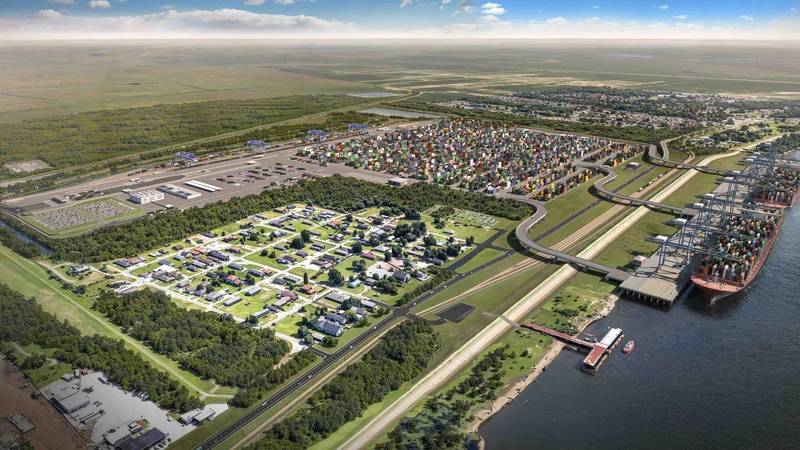
Key Points
Location and engineering rationale: The Louisiana International Terminal will be built in Violet, about 17 miles downriver from New Orleans, to accommodate post-Panamax ships that cannot safely pass upriver under the Crescent City Connection bridge.
Projected cost: The terminal is expected to cost at least $2.3 billion, underscoring the scale of investment behind the project.
MSC connection and structure of the partnership: Terminal Investment Limited (TiL), the port terminal operating arm of MSC, is a key partner in the Port NOLA–led public-private partnership alongside Ports America.
Current economic impact of Port NOLA activity: Independent analysis indicates cargo activity through Port NOLA currently supports more than $101 billion in total nationwide economic value and more than 122,000 jobs in Louisiana.
Executive framing of the project’s significance: Port officials and local leadership have framed the permit as nationally significant infrastructure that will expand American export capacity and position Louisiana as a key gateway to global trade.
The U.S. Army Corps of Engineers has granted a federal permit to build the Louisiana International Terminal (LIT) in St. Bernard Parish, clearing the biggest regulatory hurdle yet for what officials call the only new greenfield container port under development in the United States, according to Maritime Professional. The $2.3 billion terminal will sit in Violet, Louisiana, about 17 miles downriver from New Orleans on the Lower Mississippi River.
Port NOLA, the terminal operating arm of global shipping giant MSC, and Ports America are partnering on the project. New Orleans City Business reported the approval follows years of engineering and environmental reviews by federal agencies and state officials. Governor Jeff Landry called it a defining moment for Louisiana and the nation's trade infrastructure.
Why Louisiana Needs a New Port 17 Miles Downriver
Today's largest container ships — called post-Panamax vessels — are too tall to safely pass under the Crescent City Connection bridge in New Orleans. That single bottleneck blocks the biggest ships in global commerce from reaching existing port facilities. Building LIT downriver in Violet solves that problem entirely, according to Houma Today.
The terminal will connect more than 30 states to global markets through direct rail lines and interstate highways. Shreveport Times reported that the project is designed to expand Gulf Coast container capacity at a time when American supply chains are under intense pressure to diversify away from West Coast ports.
MSC, Ports America, and a $2.3 Billion Public-Private Bet
The partnership behind LIT brings together three major players. Port NOLA leads the effort as a public authority. Terminal Investment Limited (TiL), the port terminal arm of MSC — the world's largest container shipping line — is a core private partner. Ports America, one of the biggest U.S. terminal operators, rounds out the group.
The total project cost is expected to reach at least $2.3 billion, according to Maritime Professional. That price tag reflects the scale of construction needed to build a fully new terminal from scratch on undeveloped land. Officials say the public-private model spreads financial risk while keeping Louisiana in control of a strategic national asset.
Thousands of Jobs and $101 Billion in Economic Stakes
Port NOLA's current operations already punch well above their weight. Independent analysis shows cargo activity through the port supports more than $101 billion in total nationwide economic value and more than 122,000 jobs in Louisiana alone, according to Yahoo News. LIT is expected to push those numbers significantly higher.
Port leaders say LIT will generate thousands of new direct and indirect jobs and drive major tax revenue for Louisiana and the broader country. Officials also frame the terminal as a tool for boosting American manufacturing exports. Governor Landry said LIT will position Louisiana as "a key gateway to global trade" for generations to come.
Bipartisan Support Propels Project Toward Groundbreaking
The permit approval drew praise from Louisiana's bipartisan political leadership and regional business groups. New Orleans City Business noted that sustained collaboration among state officials, federal agencies, and private partners made the multi-year review process possible. The Army Corps permit was widely seen as the hardest regulatory milestone to clear.
With the federal permit now in hand, the project moves toward the construction phase. No groundbreaking date has been announced yet. But Port NOLA leaders say the approval puts LIT firmly on track to reshape how American goods move to and from global markets over the next several decades.
Sentiment
Mostly PositivePublishers
10
Articles
12
Reach
22


