JetBlue Downgrade
JetBlue Downgraded: Seaport Global Cites Mounting Debt and Geopolitical Risks
Key Points
JetBlue operates roughly 100 destinations across the U.S., the Caribbean, Latin America, Canada, and England, underscoring the airline's broad geographic footprint.
GuruFocus values JBLU at about $5.15 (GF Value) while the current price is around $5.65, implying roughly a 9.7% premium to intrinsic value; the stock's price-to-sales ratio is about 0.64, near its historical level of ~0.6x.
JetBlue carries about $9.4 billion in total debt with a current ratio of 0.7, highlighting balance-sheet stress that underpins the downgrade.
Beyond JBLU, several analysts have issued notable moves: Susquehanna lifted its target to $6 while remaining neutral; Bank of America raised its target to $4 with an underperform rating; Citi cut to sell with a $5.30 target; Goldman Sachs raised its target to $4.50 but kept a sell rating; BMO increased to $6.75 with a market-perform stance.
JetBlue Airways shares dropped as much as 6.1% after Seaport Global Securities analyst Daniel McKenzie downgraded the stock from Buy to Neutral, citing growing geopolitical risks and the airline's heavy debt load. Investing.com reported that McKenzie pointed specifically to the end of an Iran ceasefire and rising tensions around the Strait of Hormuz as key triggers for the change in stance.
The move comes even as JetBlue posted a narrower-than-expected quarterly loss of about $0.66 per share on revenue near $2.7 billion. Management said it sees a path to stronger margins in the second half of the year and that demand remains solid. But analysts remain cautious, with the broader Wall Street consensus clustering around Hold and Reduce ratings and a price target near $5.40.
Geopolitical Risk Triggers the Seaport Downgrade
Seaport Global's McKenzie did not change his earnings or free cash flow forecasts for JetBlue. That detail matters. The downgrade was not about the airline's operations. It was about the world around it. Investing.com noted that McKenzie flagged the end of the Iran ceasefire and risks tied to the Strait of Hormuz as reasons to step back from a bullish call.
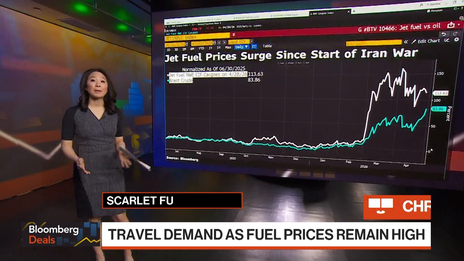
The Strait of Hormuz is a narrow waterway critical to global oil shipping. Any disruption there can spike fuel costs fast. For airlines, fuel is one of the biggest expenses. A sustained rise in oil prices would squeeze JetBlue's already thin margins and make its debt harder to manage.
JetBlue's $9.4 Billion Debt Pile Adds to the Pressure
Beyond geopolitics, JetBlue carries about $9.4 billion in total debt. Its current ratio sits at just 0.7. A current ratio below 1.0 means the airline owes more in short-term bills than it holds in short-term assets. That is a sign of financial stress. GuruFocus values the stock at roughly $5.15, while shares trade near $5.65 — about a 9.7% premium to that estimated intrinsic value.
The stock's price-to-sales ratio is about 0.64, close to its historical average of around 0.6 times. That means the valuation is not dramatically cheap on that measure. Insider activity adds another cautious signal. Over the past three months, insiders have net sold about $0.6 million worth of shares with zero buys, according to Watchlist News.
Wall Street Is Broadly Skeptical — But Not Panicking
Seaport is not alone in its caution. Several firms recently updated their views on JetBlue. Susquehanna raised its price target to $6 but stayed neutral. Bank of America lifted its target to $4 but kept an underperform rating. Citi cut its rating to Sell with a $5.30 target. Goldman Sachs raised its target to $4.50 but also held a Sell rating. BMO moved to $6.75 with a market-perform stance.
That is a wide spread of targets — from $4 to $6.75 — reflecting real uncertainty. Most analysts land somewhere between cautious and bearish. No major firm is waving a strong Buy flag right now.
JetBlue's Network Is Wide But Margins Remain Thin
JetBlue flies to roughly 100 destinations across the U.S., Caribbean, Latin America, Canada, and England. That is a broad footprint for a mid-size carrier. Management says demand is strong and expects margins to improve in the back half of 2025. The industry pricing backdrop remains solid, and that is genuinely good news for the airline.
But good demand alone does not erase a $9.4 billion debt load or shield the airline from a fuel-price shock. Until JetBlue shows it can cut debt meaningfully or until geopolitical tensions ease, most analysts appear content to watch from the sidelines rather than buy in.
Sentiment
Mostly PositivePublishers
10
Articles
17
Reach
27


