Meta AI Image Generator
Meta Rolls Out Muse Image AI, Igniting Privacy Concerns Over User Content
Anonymous
Key Points
1
Muse Image is internally code-named Mango during development.
2
The rollout is initially limited to select countries/regions and WhatsApp, with plans to broaden to Facebook and Messenger later.
3
Muse Image will bring more than 30 AI-powered effects to Instagram Stories.
4
Meta previewed Muse Video, with public availability expected in coming months via the Meta AI app.
5
Advertisers and agencies are expected to gain access to Muse Image through Meta’s Advantage+ creative offering.
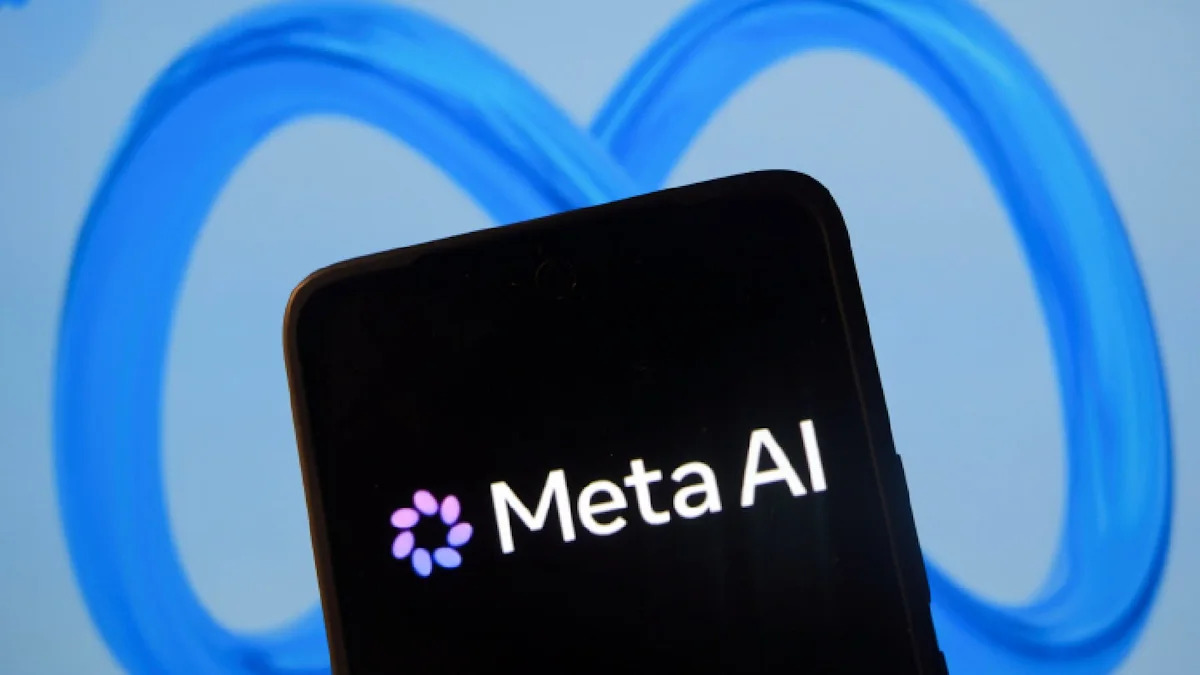
Meta launched Muse Image on July 7, 2026 — its first in-house AI image generator, built by Meta Superintelligence Labs — rolling it out for free across the Meta AI app, Instagram, and WhatsApp, Yahoo Tech reported. The tool lets users create images from text, edit photos, and pull in public Instagram profiles to generate new visuals. Within hours of launch, a sharp privacy debate erupted over one feature in particular: it was turned on by default.
Meta's stock closed up 2.55% at $615.58 on launch day, according to AllMind AI research. But the market cheer was met with public backlash. A CNET reporter generated a deepfake of a colleague — depicted as a pirate — in under a minute using only her Instagram handle, with no notification sent to the subject. Critics quickly called the tool "a privacy landmine."
What Muse Image Can Do Across Meta's Apps
Muse Image is more than a basic text-to-image tool. Mobile World Live reported it supports multi-reference images, room transformations, and a presets panel with guided prompts. Users can restore old family photos, try new hairstyles, or reimagine themselves in styles like claymation or 16-bit video games. Meta also added more than 30 new AI-powered effects directly inside Instagram Stories in the US.
The tool is being rolled out in select countries first, with Facebook and Messenger coming later, Business AM Live noted. Advertisers will get access through Meta's Advantage+ Creative suite — letting brands turn one product photo into dozens of ad variants for Reels, Feed, and Stories. Meta One subscribers, paying $7.99 or $19.99 per month, unlock unlimited high-speed generations. A preview of Muse Video was also shown, with public availability expected in the coming months.
The Instagram Privacy Feature That Sparked Immediate Backlash
The most controversial part of Muse Image is its social integration. Any user can tag a public Instagram account in a prompt, and Muse pulls that profile's photos into a new AI-generated image — without asking the account holder first. Cybernews reported the feature is enabled by default, meaning roughly 3 billion monthly active Instagram users are opted in automatically unless they dig into settings to turn it off.
Meta says users "retain complete control" by toggling off sharing under Instagram's "Sharing and reuse" settings. But privacy advocates say that is not enough. True consent, they argue, means opting in — not having to find a buried switch to protect your own photos. The Daily Jagran noted that the default-on setup drew the loudest criticism, particularly for users who may not know the feature exists.
Meta's $14 Billion AI Bet Behind the Muse Launch
Muse Image did not come out of nowhere. In June 2025, Meta spent $14.3 billion to buy a 49% stake in Scale AI. As part of that deal, Scale AI's 28-year-old co-founder Alexandr Wang joined Meta as its first-ever Chief AI Officer, leading the newly formed Meta Superintelligence Labs. Wang wrote on X that Muse Image "invokes search and coding tools to improve accuracy, self-refines its own generations, and improves through scaling test-time compute."
The model ranks second on the public Image Arena benchmark, just behind OpenAI's GPT Image 2, Mobile World Live reported. Technically, it acts as an AI agent — writing Python code for precise graphics, using live web search to ground images in real data like correct brand logos, and fixing errors before showing a final result. The launch also follows Google cutting Meta's access to Gemini token capacity in March 2026, pushing Meta to run fully on its own models.
Regulators Are Already Eyeing a Collision Course
The opt-out default puts Meta on a potential collision course with European law. Under the EU's GDPR and the newer EU AI Act, default opt-in for scraping personal or biometric data is heavily restricted. Privacy experts expect regulators to scrutinize the feature closely, which could force a mandatory opt-in setup — or delay the EU rollout entirely.
Critics also draw a direct line to Meta's past. In 2019, Meta paid a $5 billion FTC settlement over user data failures tied to Cambridge Analytica. In 2021, it shut down Facebook's facial recognition system and deleted over a billion user faceprints under regulatory pressure. Cybernews noted that allowing strangers to generate likenesses from public Instagram handles echoes the same kind of unconsented data use that triggered those earlier crises.
Sentiment
Mostly PositiveNEGATIVENEUTRALPOSITIVE
Publishers
82
Articles
140
Reach
222
A
AnonymousAuthor


