Sakarya Gas Field Expansion
Saipem secures a new contract to commission the Osman Gazi floating production unit in Türkiye.
Anonymous
Key Points
1
The 298.5-meter-long Osman Gazi FPU can process up to 10.5 million cubic meters of gas per day and transfer 10 million cubic meters. It will be linked to 10 wells through two manifolds and a 161-kilometer export line.
2
Türkiye’s Energy Ministry expects Osman Gazi to depart Filyos at the end of September and enter service in the fourth quarter after offshore installation, testing and commissioning.
3
The Sakarya field is located about 170 kilometers offshore in approximately 2,150 meters of water. It reached first gas in April 2023 with initial production capacity of roughly 10 million cubic meters per day.
4
Osman Gazi began as a South Korean-built cargo ship in 1989 and was converted into an FPU in Singapore in 2008. After leaving Singapore in July 2024, it underwent steel renewal, deck strengthening and equipment overhauls in Türkiye before completing its production modules at Filyos.
5
The second development phase includes subsea production systems and subsea umbilicals, risers and flowlines, under an EPCI contract awarded in 2023 to a consortium of SLB, Subsea7 and Saipem.
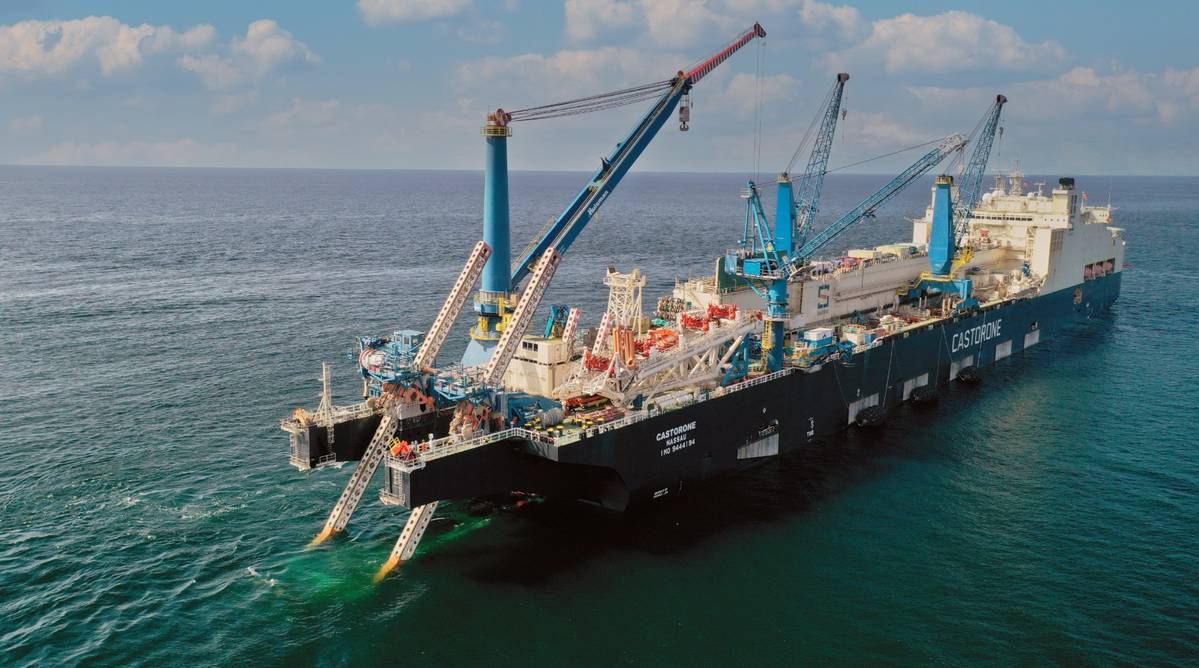
Saipem has won an eight-month contract to commission Turkey's Osman Gazi floating production unit in the Black Sea, expanding the Italian firm's role in the Sakarya gas field development. Offshore Magazine reports the work follows Saipem's April 2026 operation-readiness contract and positions the 298.5-meter FPU to begin offshore operations in the fourth quarter, processing up to 10.5 million cubic meters of gas daily.
The Osman Gazi FPU is central to Turkey's push to boost domestic gas production and cut import dependence. Streamline Feed notes the platform will support Sakarya's second development phase, helping the field reach about 20 million cubic meters per day—roughly double the current 10 million cubic meters from first production in April 2023.
A Former Cargo Ship Becomes Turkey's Gas Platform
The Osman Gazi began as a South Korean-built cargo vessel in 1989 before undergoing a dramatic transformation. Splash247 reports it was converted into a floating production unit in Singapore in 2008, then departed Singapore in July 2024 for Turkey. Upon arrival, the vessel underwent steel renewal, deck strengthening, and equipment overhauls before completing its production modules at Filyos.
The FPU's design specifications reflect its offshore mission: it connects to 10 wells through two manifolds and a 161-kilometer export line. According to OE Digital, the platform can transfer 10 million cubic meters of gas daily, with Turkey's Energy Ministry expecting the unit to depart Filyos at the end of September before entering service after offshore installation and testing.
Deepwater Challenge in the Black Sea
The Sakarya field sits roughly 170 kilometers offshore in approximately 2,150 meters of water. Ocean Energy Resources explains the field reached first gas in April 2023 with initial production of about 10 million cubic meters per day. Expanding to 20 million cubic meters daily requires both new infrastructure and careful installation in challenging deepwater conditions.
The second development phase includes subsea production systems and specialized subsea equipment under a contract awarded in 2023 to a consortium of SLB, Subsea7, and Saipem. This coordinated approach allows for staged development while managing the technical complexity of Black Sea operations.
Turkey's Push for Energy Independence
Sakarya is a linchpin in Turkey's strategy to expand domestic gas output and reduce reliance on imports. The field development represents a major capital investment and demonstrates Turkey's commitment to leveraging its own offshore resources. Saipem's multiple contract awards show the project's scale and complexity.
The Osman Gazi's entry into service before year-end will mark a critical milestone. With two development phases underway and production capacity set to double, the Sakarya field is becoming one of Turkey's most important energy assets for meeting domestic demand and supporting long-term energy security goals.
Sentiment
Mostly PositiveNEGATIVENEUTRALPOSITIVE
Publishers
14
Articles
4
Reach
18
Topics
A
AnonymousAuthor