Targeting Young Moroccan Voters
Moroccan political parties woo disillusioned youth with job promises ahead of elections.
Anonymous
Key Points
1
The July 30 rush toward Ceuta had a deadly toll: at least 145 people died in stampedes or after being submerged by sea currents.
2
Morocco’s High Commission for Planning reported that youth unemployment among 15- to 24-year-olds reached 36.7% in 2024, while 1.5 million people in that age group—25.6%—were neither employed nor in education or training in 2023.
3
An Afrobarometer survey published in March found that only one-third of Moroccans aged 18 to 35 trusted parliament, the prime minister or political parties, illustrating the depth of institutional distrust among young adults.
4
The election follows the collapse of the moderate Islamist Justice and Development Party, which governed for roughly a decade before suffering a major defeat in 2021 and being replaced by the RNI and PAM.
5
Nabila Mounib of the Unified Socialist Party said young people who risked crossing to Ceuta were seeking “the dignity they cannot get in their country,” arguing that rejecting the political system can itself be understood as a political stance.
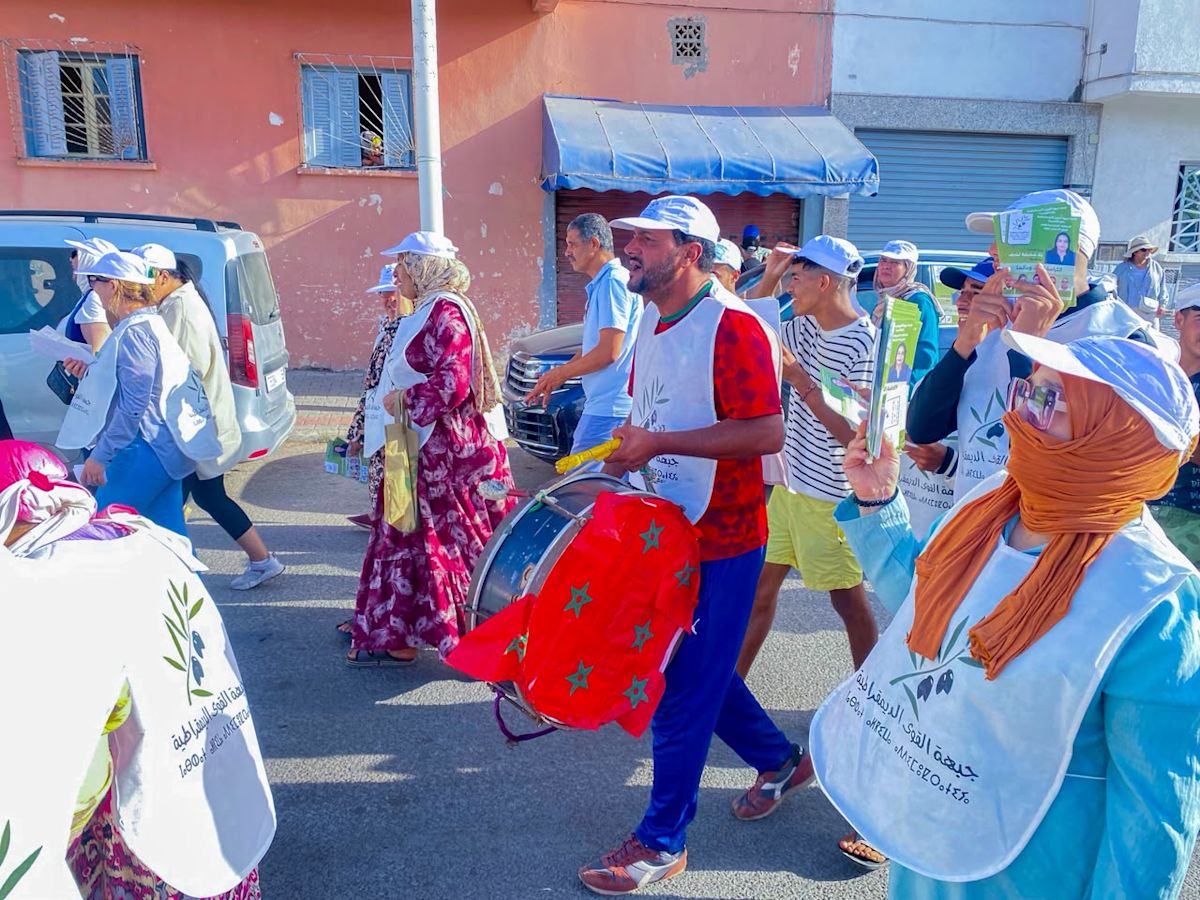
Moroccan political parties are racing to win over young voters before the September 23 parliamentary election, dangling promises of jobs and affordable housing. The push comes after a deadly stampede in July when at least 145 young Moroccans died trying to rush into Spain's Ceuta enclave—a stark sign of their desperation and anger. France24 reports that the major parties, including the National Rally of Independents and the Authenticity and Modernity Party, have pledged roughly one million new jobs and highlighted about $20 billion in infrastructure spending tied to Morocco's 2030 World Cup preparations.
Yet young Moroccans remain deeply skeptical. Youth unemployment hit 36.7% in 2024 for ages 15 to 24, while 1.5 million young adults—25.6% of that group—were neither working nor in school as of 2023, according to Morocco's High Commission for Planning. An Afrobarometer survey found that only one-third of Moroccan youth aged 18 to 35 trusted parliament, the prime minister, or political parties. Though young people make up 12% of Morocco's population, they represent just 3% of registered voters, exposing the parties' challenge in re-engaging a deeply disillusioned generation.
The Ceuta Stampede Exposed Youth Despair
On July 30, young Moroccans staged a mass attempt to cross into Ceuta, Spain's North African enclave. The rush turned tragic. At least 145 people died in stampedes or were swept away by sea currents, according to Al Jazeera. The incident stunned the nation and revealed the depth of youth frustration—many were willing to risk their lives to leave.
Analysts saw the stampede as more than a migration crisis. Unified Socialist Party politician Nabila Mounib argued that young people who rushed Ceuta were seeking "the dignity they cannot get in their country." For many, the act itself was a political statement—a rejection of Morocco's ruling system and its failure to deliver opportunity.
Youth Unemployment and Exclusion Drive Frustration
Morocco's economy has grown and attracted major manufacturing and infrastructure investment. But young people have been left behind. Nearly 37 out of every 100 Moroccans aged 15 to 24 are unemployed. One in four young adults—1.5 million people—are idle, neither working nor studying. This exclusion fuels anger and hopelessness.
The pattern repeats across the region. Yahoo News reports that young Moroccans demand better public healthcare, education, jobs, and living standards. Many see the political system as broken—elections happen, governing parties change, but nothing meaningfully improves for ordinary youth. Distrust has calcified into apathy.
Major Parties Compete With Job Promises and World Cup Plans
The National Rally of Independents and the Authenticity and Modernity Party have each promised roughly one million new jobs. Both parties highlight $20 billion in infrastructure spending linked to Morocco hosting the 2030 World Cup. They hope big numbers will convince skeptical youth that change is coming.
This campaign marks a turning point. The moderate Islamist Justice and Development Party governed Morocco for about a decade before collapsing in 2021. The new contenders want to prove they can deliver where the old guard failed. But Afrobarometer surveys show only one in three young Moroccans trusts any of them.
The Voter Registration Gap Threatens Turnout
Young Moroccans represent a huge untapped voting bloc. Roughly 12% of Morocco's total population is aged 18 to 24. Yet they make up just 3% of registered voters. That gap reveals either apathy or active withdrawal—many young people have simply stopped believing the system deserves their participation.
Parties face a two-part problem: register more young voters, then convince them to show up. North Africa Post notes that Moroccan political parties are struggling to restore public trust in the political process itself. Without that trust, job promises and infrastructure projects sound hollow to a generation that has heard similar pledges before.
Sentiment
Mostly NegativeNEGATIVENEUTRALPOSITIVE
Publishers
24
Articles
148
Reach
172
A
AnonymousAuthor


