Climate Finance Shortfall
Africa Faces Severe Climate Finance Gap Despite Renewable Energy and Agricultural Innovation
Anonymous
Key Points
1
A study covering annual data from 1971 to 2022 found that a 1% increase in energy depletion in South Africa was associated with a 0.666% rise in its carbon footprint, compared with 0.134% for mineral depletion; the analysis also accounted for urbanization, trade openness and economic growth.
2
Heifer International’s Safia Boly said concessional capital should be used primarily to absorb lenders’ agricultural risks, enabling climate finance to reach businesses as usable credit rather than grants that farmers must wait for.
3
A Ugandan dairy example presented at the forum showed that solar-powered cooling eliminated milk losses at a collection centre handling about 197,321 litres of milk per month.
4
ECA Executive Secretary Claver Gatete said Africa needs an estimated $277 billion annually through 2030 to implement its national climate pledges, while current climate-finance flows cover only about 11% of that requirement.
5
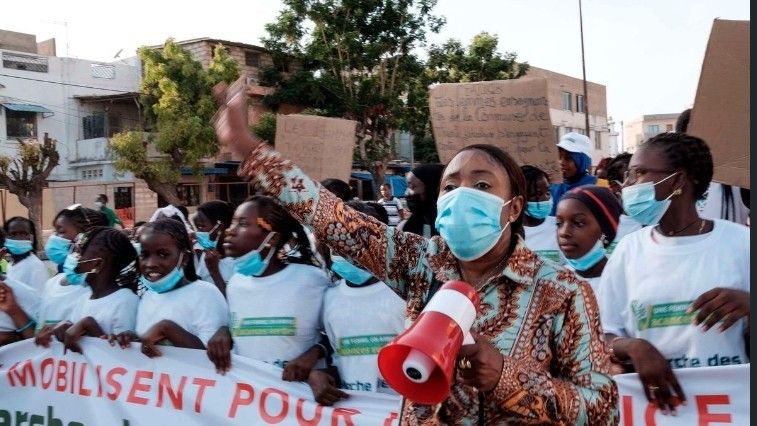
Women environmental activists marched in Dakar ahead of COP27, calling for greater inclusion of feminist groups in climate-action decision-making.
Africa faces a $277 billion annual climate-finance gap, receiving only about 11% of the funding needed to meet its climate pledges through 2030, according to ECA. The shortage comes as farmers and small businesses struggle with high borrowing costs and loan-heavy financing models that drain resources rather than build resilience. African Sustainability Matters reports the core issue isn't a lack of solutions—it's access to affordable credit that accounts for agricultural risk.
Africa is receiving only 23% of the climate finance it needs, while facing some of the highest borrowing costs globally, according to MjengoHub. Meanwhile, resource-rich nations face distinct environmental challenges: coal depletion drives emissions in South Africa, while mineral extraction and weak governance compound climate pressures in Nigeria.
Coal Extraction Outpaces Minerals as Africa's Emission Driver
Research covering data from 1971 to 2022 reveals stark differences in how resource depletion affects emissions across African economies. In South Africa, a 1% increase in energy depletion—primarily coal—was linked to a 0.666% rise in carbon emissions, according to the analysis. Mineral depletion showed a much smaller effect at 0.134%. The study controlled for urbanization, trade, and economic growth.
Nigeria faces a different profile. There, mineral depletion and weak mining governance create compounding environmental risks. The continent's uneven resource wealth means climate solutions must be tailored to each nation's specific emissions sources, not applied as one-size-fits-all policies.
Concessional Capital Must Absorb Risk, Not Replace Credit
The financing gap isn't solved by grants alone. Safia Boly of Heifer International argues that concessional capital—low-interest funds from donors—should be used to absorb lenders' agricultural risks. This makes climate finance accessible as usable credit rather than waiting for grant approval. Small businesses need working capital now, not promises of future funding.
A Uganda dairy example demonstrates the payoff. Solar-powered cooling at a milk collection centre handling 197,321 litres monthly eliminated spoilage losses. When financing enables technology adoption instead of stalling it, farmers see immediate returns. Yet high borrowing costs prevent most African businesses from accessing even modestly-priced loans.
African Leaders Urge Global Finance to Align With Development
ECA Executive Secretary Claver Gatete called on African nations to lead global climate action by leveraging renewable energy, critical minerals, and human capital. But international finance must become more accessible and better aligned with Africa's development priorities. Current lending models prioritize external agendas over local needs.
Women environmental activists marched in Dakar ahead of COP27, demanding greater inclusion of feminist groups in climate-action decision-making. Their call underscores a broader message: Africa's climate solutions must be shaped by African voices, not imposed from abroad.
Sentiment
Mostly NegativeNEGATIVENEUTRALPOSITIVE
Publishers
13
Articles
3
Reach
16
A
AnonymousAuthor


