Spacecraft Rescue Mission Aborted
NASA Cancels Swift Observatory Rescue Mission After Private Spacecraft Suffers Technical Control Failures
Key Points
LINK launched July 3 on a Northrop Grumman Pegasus XL to grapple and relocate the Swift Observatory to a higher orbit, but it soon entered an uncontrollable spin and faced ongoing attitude-control and pointing problems; NASA ultimately canceled the capture plan and will focus on proximity operations to study rescue concepts. NASA Administrator Jared Isaacman said, 'This is not the outcome we were working toward, but it does not change why this mission was worth attempting.'
The mission's cancellation also underscores that Hubble Space Telescope could have been next in line for a rescue if Swift had worked; discussions about future aid involving Hubble have intensified in the wake of Swift’s failure, though the outcome may alter those plans.
Swift’s current status shows the telescope has no propulsion to raise its own orbit and had fallen to an altitude around 216 miles (347 kilometers) as of late last week, with its science instruments turned off to slow descent.
NASA says it will pursue rapid-response options using current missions to mitigate science gaps and will apply lessons from LINK’s attempt to future servicing efforts, aiming to improve readiness for the next rescue scenarios—even as the Swift mission ends. The effort provided valuable capabilities for satellite servicing and proximity operations that could inform future missions.
NASA has cancelled its plan to rescue the Neil Gehrels Swift Observatory from re-entry after a privately built spacecraft called LINK suffered critical control problems in orbit. The decision ends a $30 million attempt to save the 20-year-old telescope, which will now burn up in Earth's atmosphere later this year Aerospace America. NASA Administrator Jared Isaacman said the outcome was unexpected, but "it does not change why this mission was worth attempting" — the effort provided valuable lessons for future satellite servicing Aerospace America.
LINK spacecraft enters uncontrollable spin
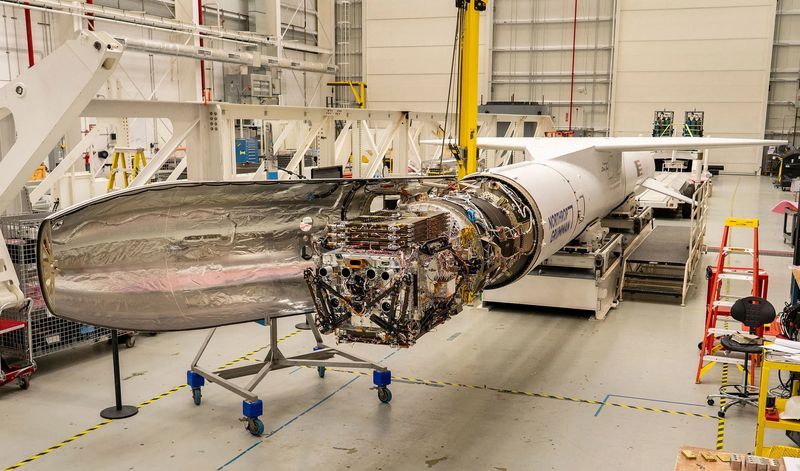
LINK launched on July 3 aboard a Northrop Grumman Pegasus XL rocket carrying just one goal: grapple Swift and push it to a higher orbit. Instead, the spacecraft quickly entered an uncontrollable spin Space.com. Engineers also battled persistent pointing problems — LINK couldn't aim steadily enough to secure the telescope Space.com. After weeks of troubleshooting, NASA concluded the mission could not succeed safely.
Swift's rapid descent leaves no time for alternatives
The Swift Observatory has no onboard engines to lift itself higher. Its altitude dropped to 216 miles (347 kilometers) as solar activity intensified in recent weeks Aerospace America. NASA shut down the telescope's science instruments to reduce drag and slow the descent Aerospace America. With limited time and LINK unable to reach it, cancelling the rescue became the only option.
NASA eyes rapid-response missions to fill the science gap
Swift revolutionized high-energy astronomy over two decades. It detected gamma-ray bursts, tracked black holes, and made over 100,000 observations. Losing it will leave gaps in those fields. NASA says it will now use existing missions to do some of Swift's work and will study lessons from LINK's failure to improve future servicing Aerospace America. The agency aims to be ready faster the next time an aging satellite needs help.
Hubble Space Telescope rescue now in question
Swift's failure raises urgent questions about other aging observatories. The Hubble Space Telescope was being discussed as a potential next rescue target Space.com. Hubble is also in a decaying orbit and has no way to boost itself. NASA and Katalyst will now focus on proximity operations and studying new servicing concepts rather than attempting live rescues Space.com. These lessons could reshape plans to save Hubble or other critical satellites in the coming years.
Sentiment
Mostly NegativePublishers
23
Articles
164
Reach
187


