China's Reusable Rocket Breakthrough
LandSpace Recovers ZQ-3 Rocket Stage, Advancing China's Private Reusable Space Ambitions
Key Points
Honghu-03 satellite was built by LandSpace's satellite-manufacturing affiliate Hongqing Technology, which had raised more than $191 million in funding prior to the Aug. 18 launch.
The Long March-10B booster had its recovery at sea using a drone vessel with a net-capture system, marking China as the second country to recover an orbital booster.
LandSpace is pursuing a STAR Market IPO to raise 7.5 billion yuan ($1.11 billion) to support development and the scaling of reusable-launch services.
Project manager Dai Zheng explained that on the December 2025 first flight, the booster exploded due to the first-stage engine failing to reignite at an altitude of about 3 kilometers.
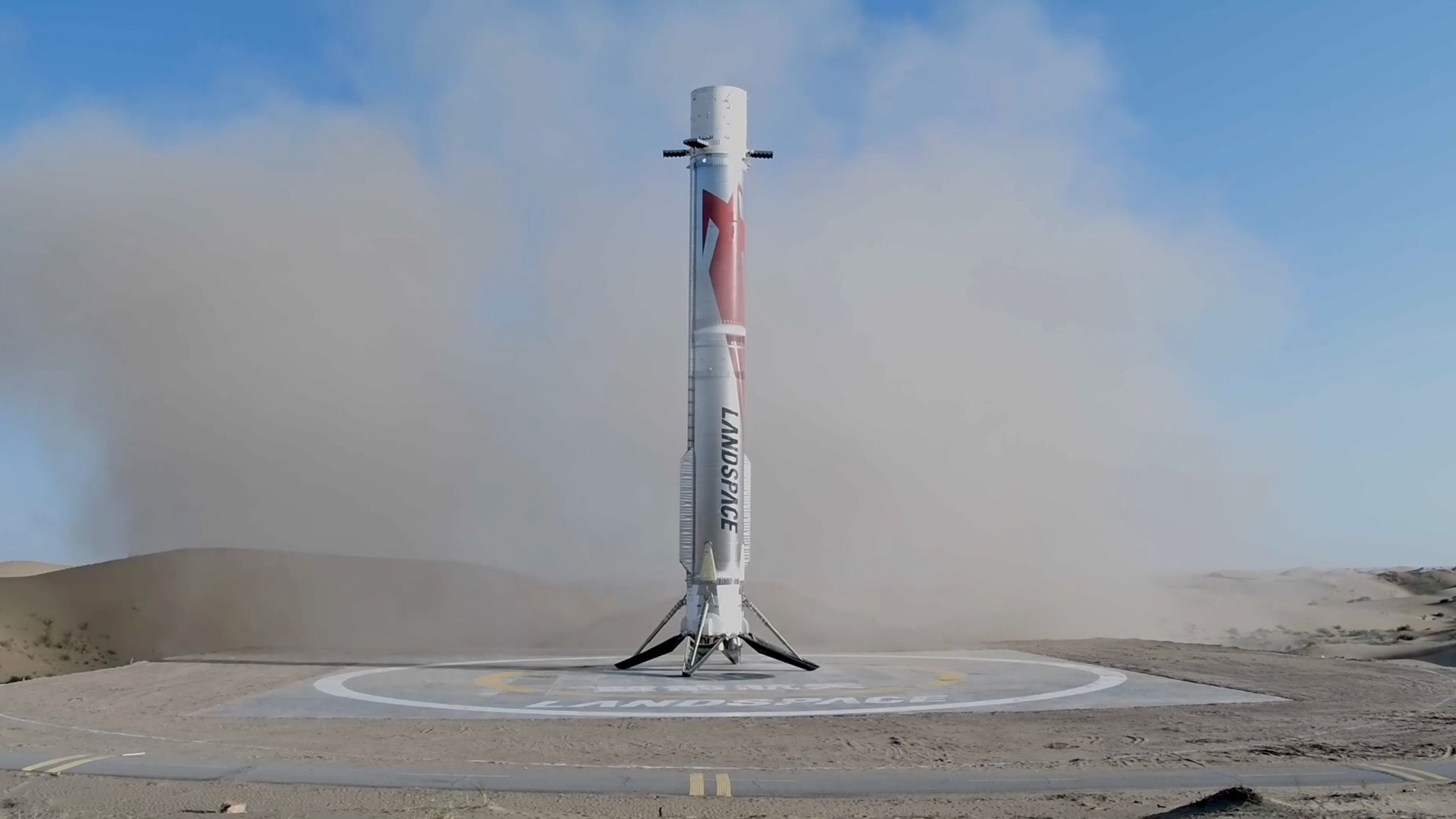
Chinese startup LandSpace successfully landed the first stage of its Zhuque-3 rocket on August 18, becoming the first private Chinese company to recover an orbital-class booster. The 66-meter rocket touched down vertically on land about 390 kilometers southeast of the Jiuquan launch site, according to Space.com.
The feat puts LandSpace in rare company. Only SpaceX and Blue Origin had done this before, according to MarketScreener. The milestone comes just months after the rocket's first flight ended in a crash in December 2025.
What Went Wrong on the First Flight
The December 2025 debut of the Zhuque-3 ended in failure. Project manager Dai Zheng explained that the booster exploded when its first-stage engine failed to reignite at about 3 kilometers above the ground. The rocket hit the ground and was destroyed before it could land safely.
LandSpace moved quickly after that crash. The team fixed the engine problem and returned to the launch pad in less than eight months. That fast turnaround signals serious capability in China's growing private space sector, according to SpaceNews.
Zhuque-3 Delivers Satellite, Then Sticks the Landing
The rocket lifted off from the Dongfeng Commercial Space Innovation Test Zone in the Gobi Desert. It carried the Honghu-3 satellite into orbit before sending its first stage back to Earth. The booster landed on legs in an open area roughly 390 kilometers from the launch site, SpaceNews reported.
The Honghu-3 satellite was built by Hongqing Technology, a satellite-manufacturing company linked to LandSpace. Hongqing had raised more than $191 million in funding before the launch. The Zhuque-3 uses stainless steel and burns methane and liquid oxygen — a design similar to SpaceX's Starship.
How LandSpace Compares to SpaceX and Blue Origin
LandSpace's booster is smaller than SpaceX's Falcon 9. It carries less payload to low Earth orbit. But the company says it plans to reuse the booster up to 20 times, which would cut production costs sharply. Reuse is what makes rockets like the Falcon 9 so profitable for SpaceX.
China's state-backed space program also made a similar move recently. The Long March-10B rocket recovered its booster at sea using a drone ship with a net-capture system — making China the second country overall to recover an orbital booster, according to Space.com. LandSpace's landing marks the private-sector version of that progress.
LandSpace Eyes a $1.1 Billion IPO to Scale Up
LandSpace is not just building rockets — it is building a business. The company is pursuing a listing on China's STAR Market stock exchange. It plans to raise 7.5 billion yuan, or about $1.11 billion, to fund development and expand its reusable-launch services, according to Whalesbook.
That fundraising push comes at the right moment. A successful booster recovery makes the company far more attractive to investors. Reusable rockets can fly again and again, turning each launch into a fraction of the cost of a throwaway rocket. LandSpace is betting that model will work in China just as it has for SpaceX in the United States.
Sentiment
Mostly PositivePublishers
13
Articles
80
Reach
93


